
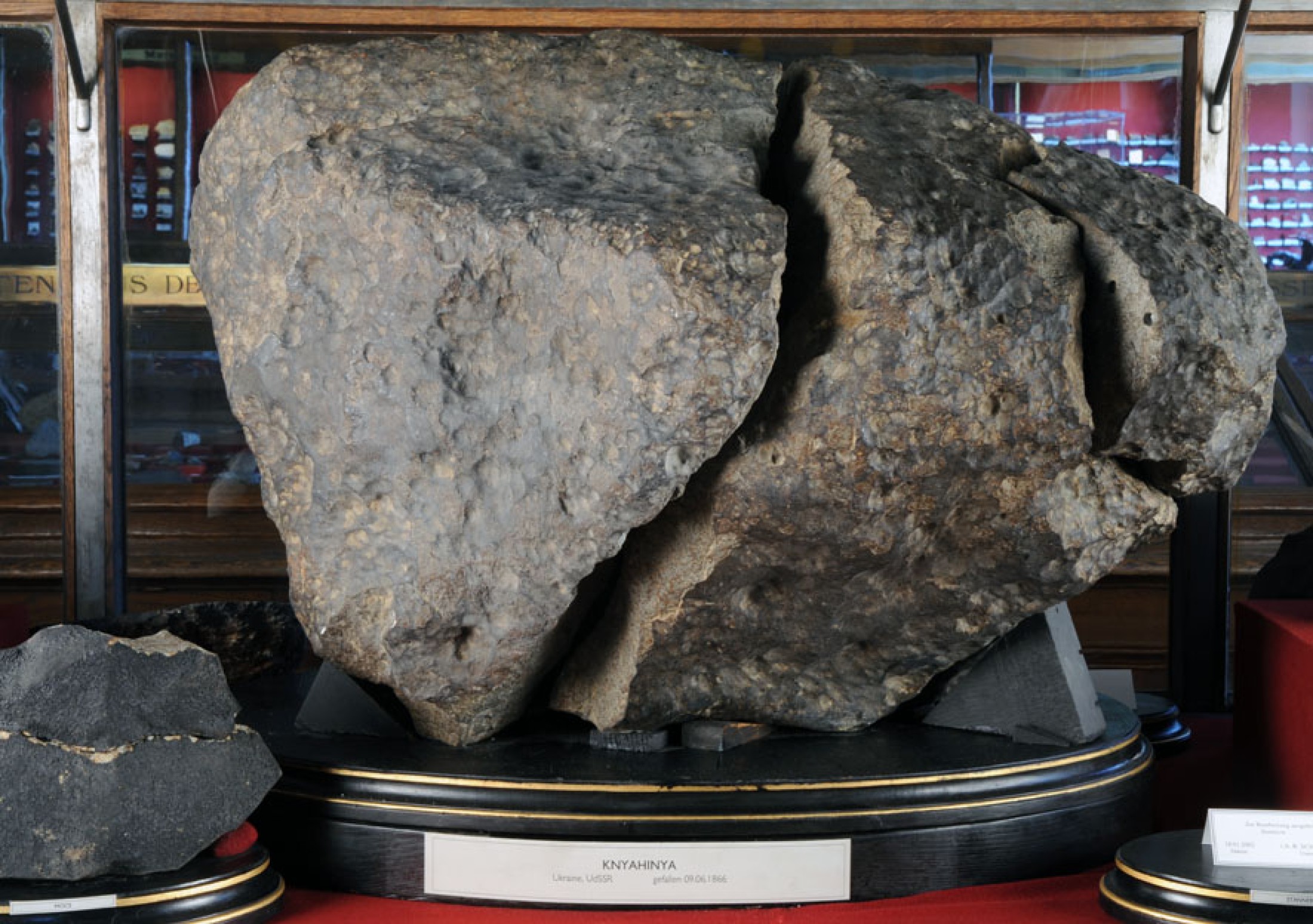
Knyahinya
An ordinary chondrite (L5), which fell on 9 June 1866 in the Ukrainian Carpathians. With a mass of almost 300 kg, this piece remained for a long time as the largest known stone meteorite.
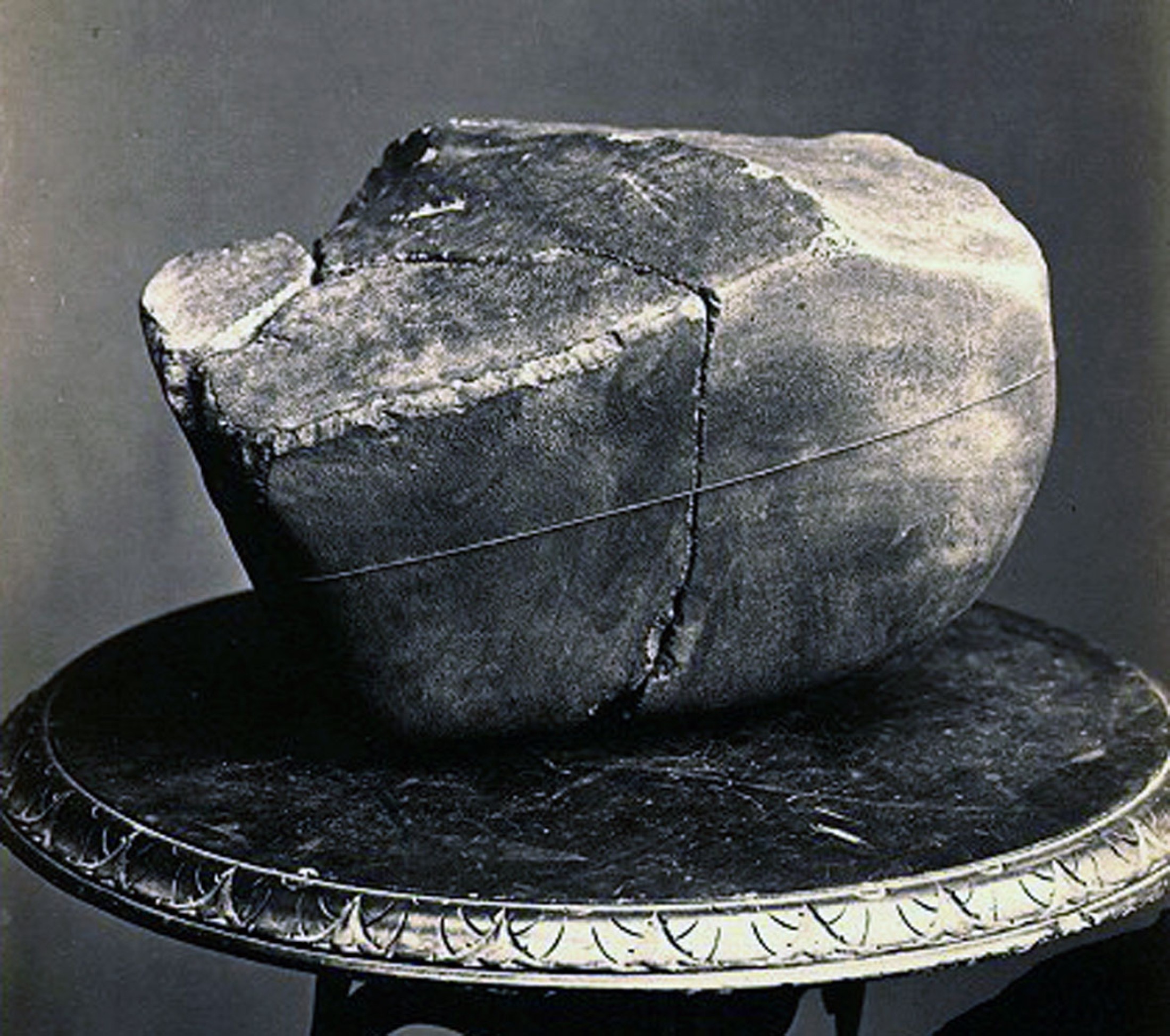
Lancé
A carbonaceous chondrite (CO3), which fell on 23 July 1872 in France. The main piece weighs 47 kg.
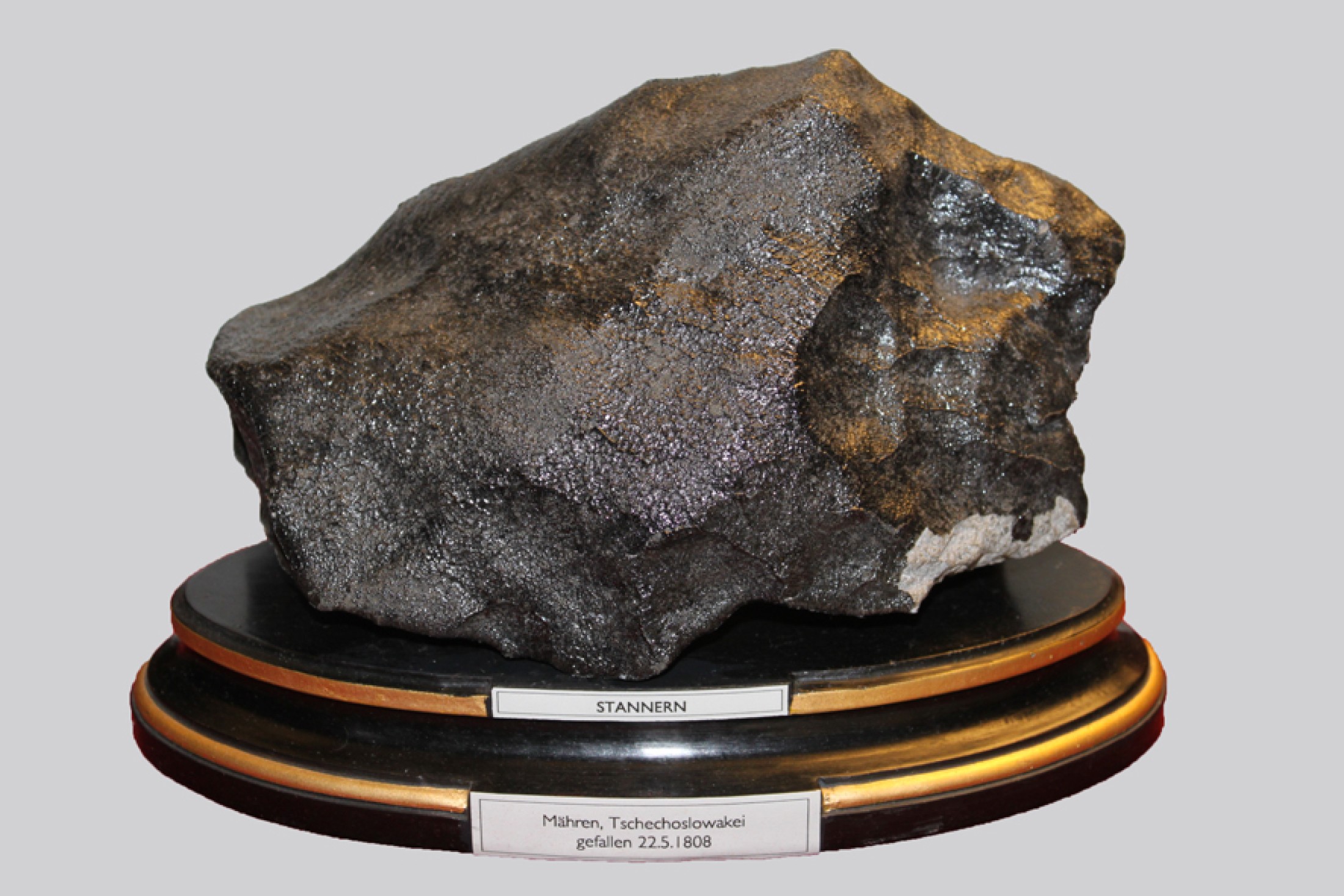
Stannern
A basaltic achondrite (eucrite), which fell on May 22, 1808 in Moravia, Czech Republic. Carl von Schreibers immediately travelled to the site of the fall of this stone shower and returned with a large number of pieces as well as a map showing of the sites where the individual pieces had fallen. This particular piece is covered with a shiny black fusion crust (surficial melting caused by entry in the earth's atmosphere).
Stannern
A basaltic achondrite (eucrite), which fell on May 22, 1808 in Moravia, Czech Republic. Carl von Schreibers immediately travelled to the site of the fall of this stone shower and returned with a large number of pieces as well as a map showing of the sites where the individual pieces had fallen. This particular piece is covered with a shiny black fusion crust (surficial melting caused by entry in the earth's atmosphere).
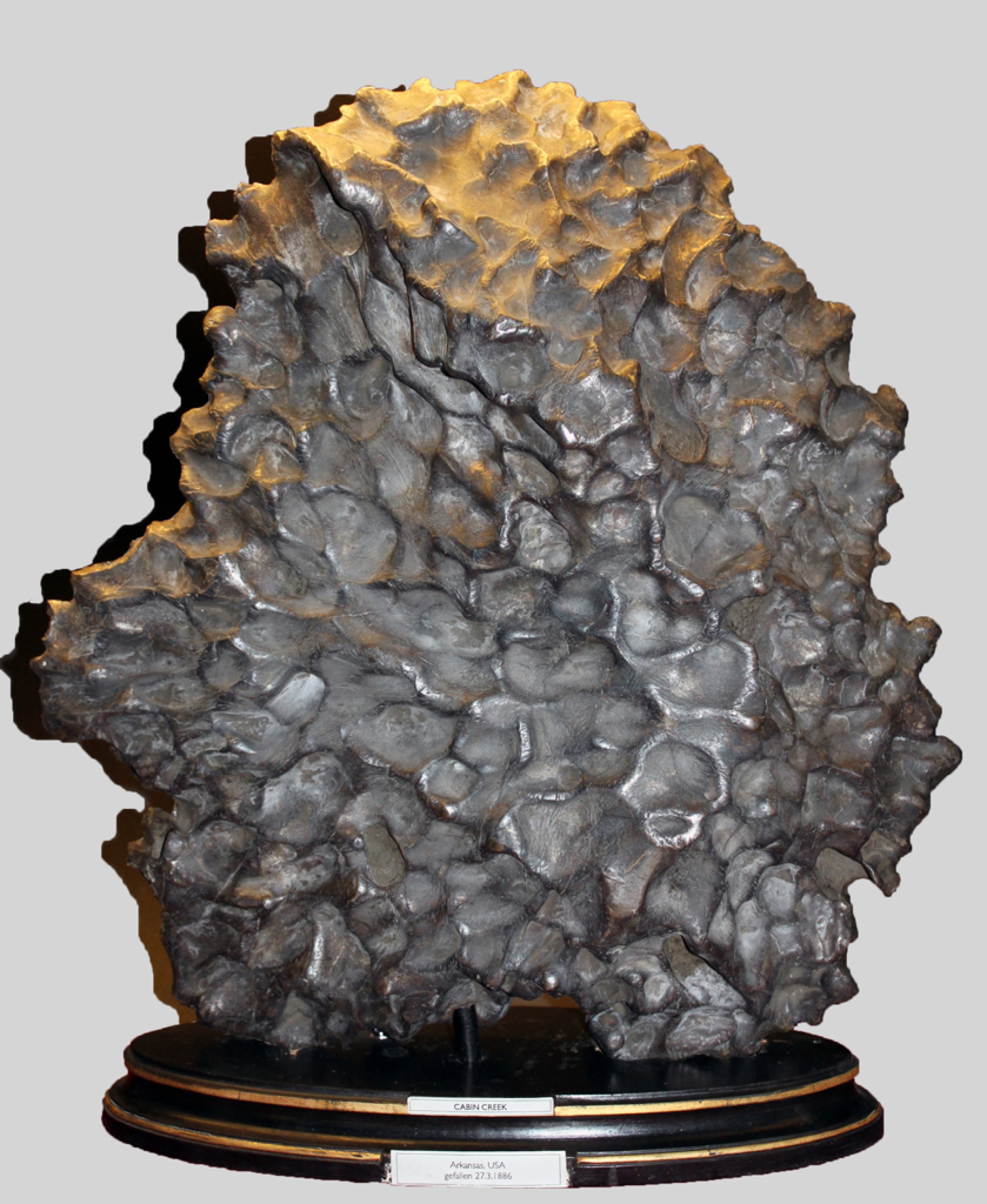
Cabin Creek
Iron meteorite which fell on 27 March 1886, in Arkansas, USA. It is a perfect exemple of an oriented meteorite and is regarded as one of the most “beautiful” meteorites in the world. A few years after its fall in 1886, it was generously donated to the NHM by the factory-owner Albert Mayer von Gunthof.
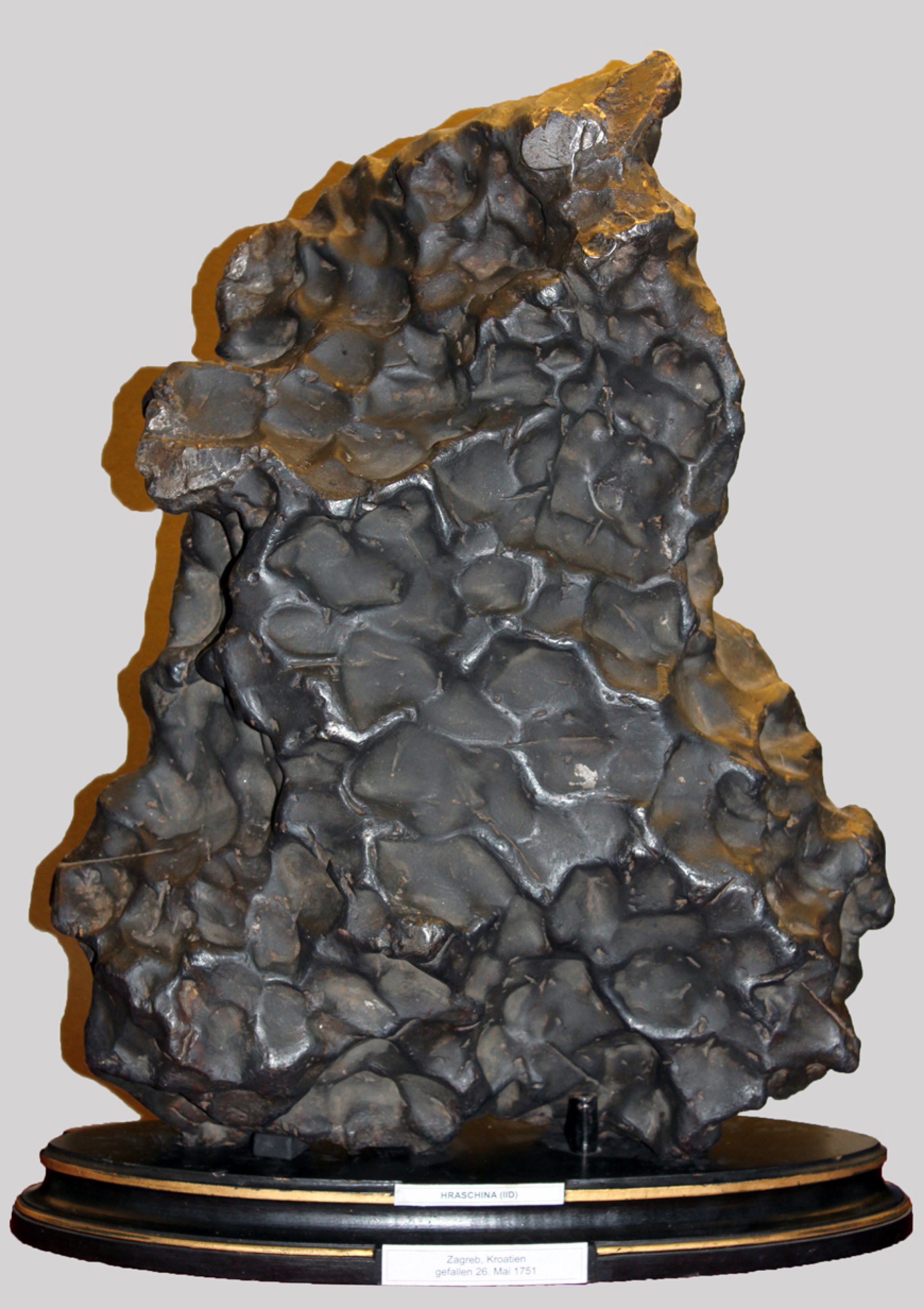
Hraschina
Iron meteorite from Zagreb, Croatia. Displayed is the main piece of the fall of 26 May 1751. On request of Emperor Franz I Stephan it was transported to Vienna and placed in the imperial treasury. It was then transferred in 1778 to the Natural History Cabinet and became, together with the Tabor meteorite, the foundation of the meteorite collection.
Peekskill
One of the most spectacular recent meteorite falls; an ordinary chondrite (H6), which fell on 9 October 1992 in New York, USA; before it smashed through the trunk of a parked car in Peekskill, a huge greenish fireball was witnessed by thousands of people across the East Coast of the USA. Video recordings of its descent have allowed scientists to calculate the meteorite's flight path.
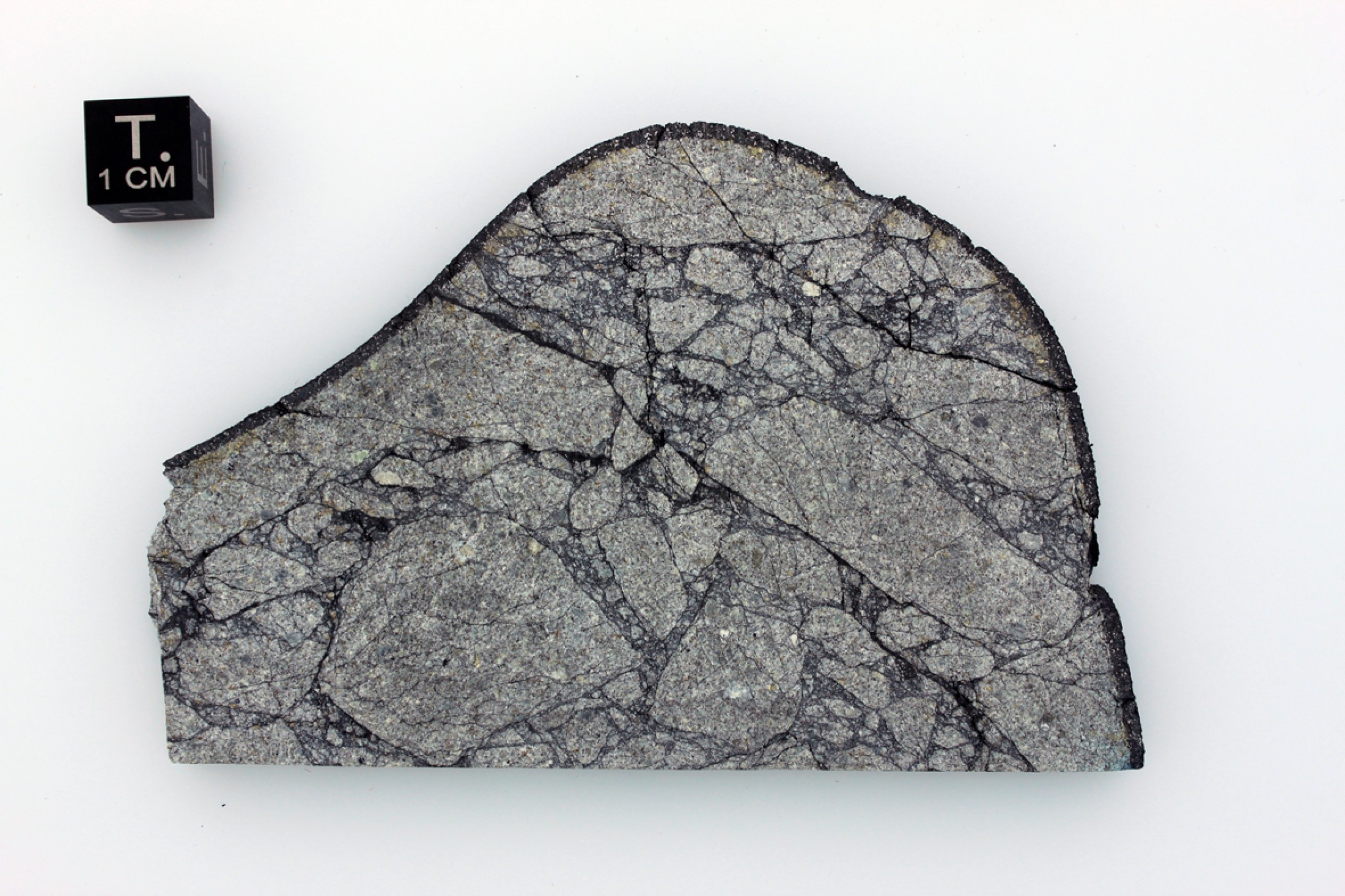
Chassigny
Martian meteorite which fell on 3 October 1815 in France. The Chassigny meteorite is the first Martian meteorite that has entered meteorite collections, in 1815-1820s, even though its Martian origin was only recognized in the 1980s. The displayed piece is the second largest known worldwide.
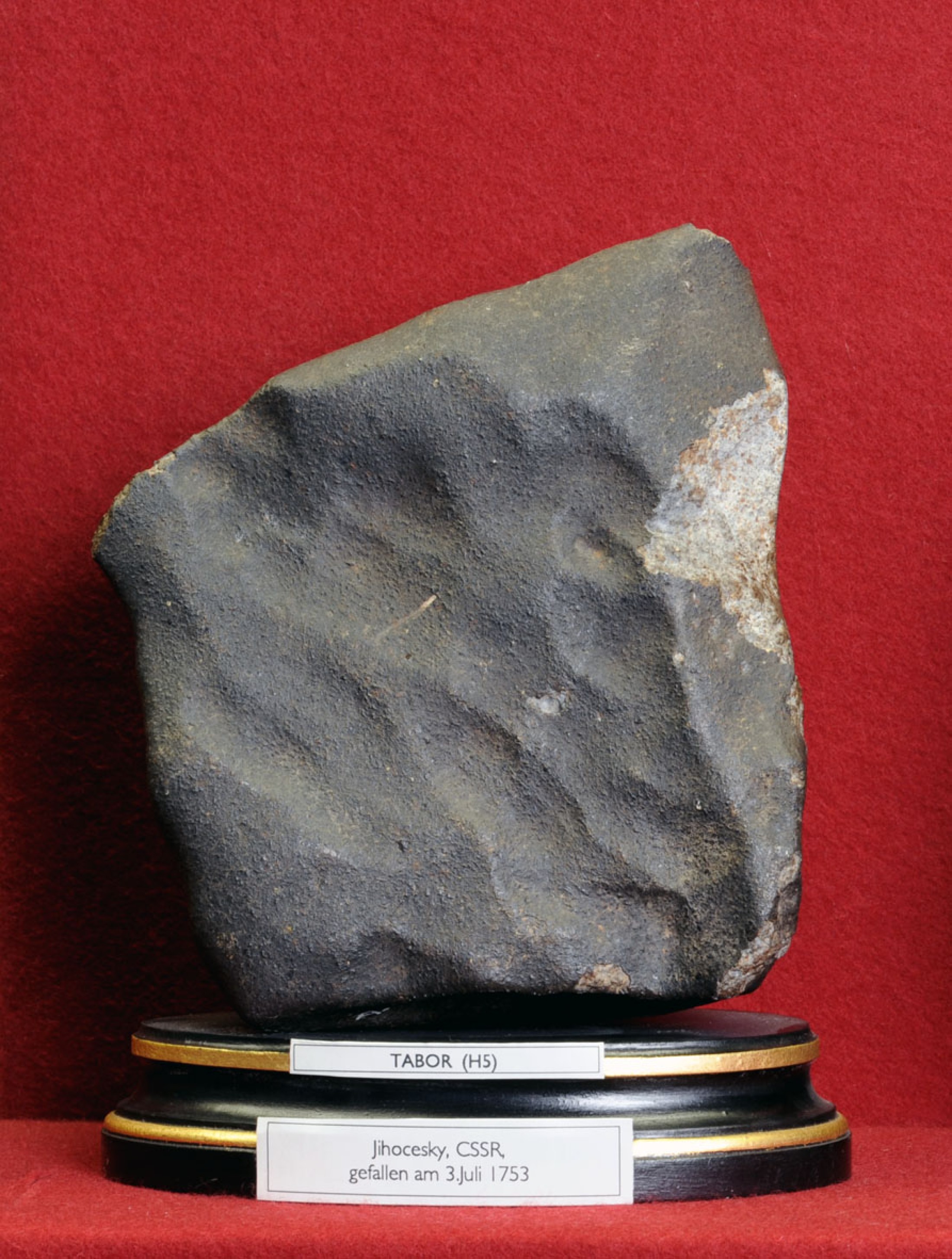
Tabor
The displayed 3 kg stone of the Tabor meteorite, that fell in 1753 in Czech Republic, is the largest piece of this fall. The Hraschina and Tabor meteorite were the foundation objects of the Vienna meteorite collection.
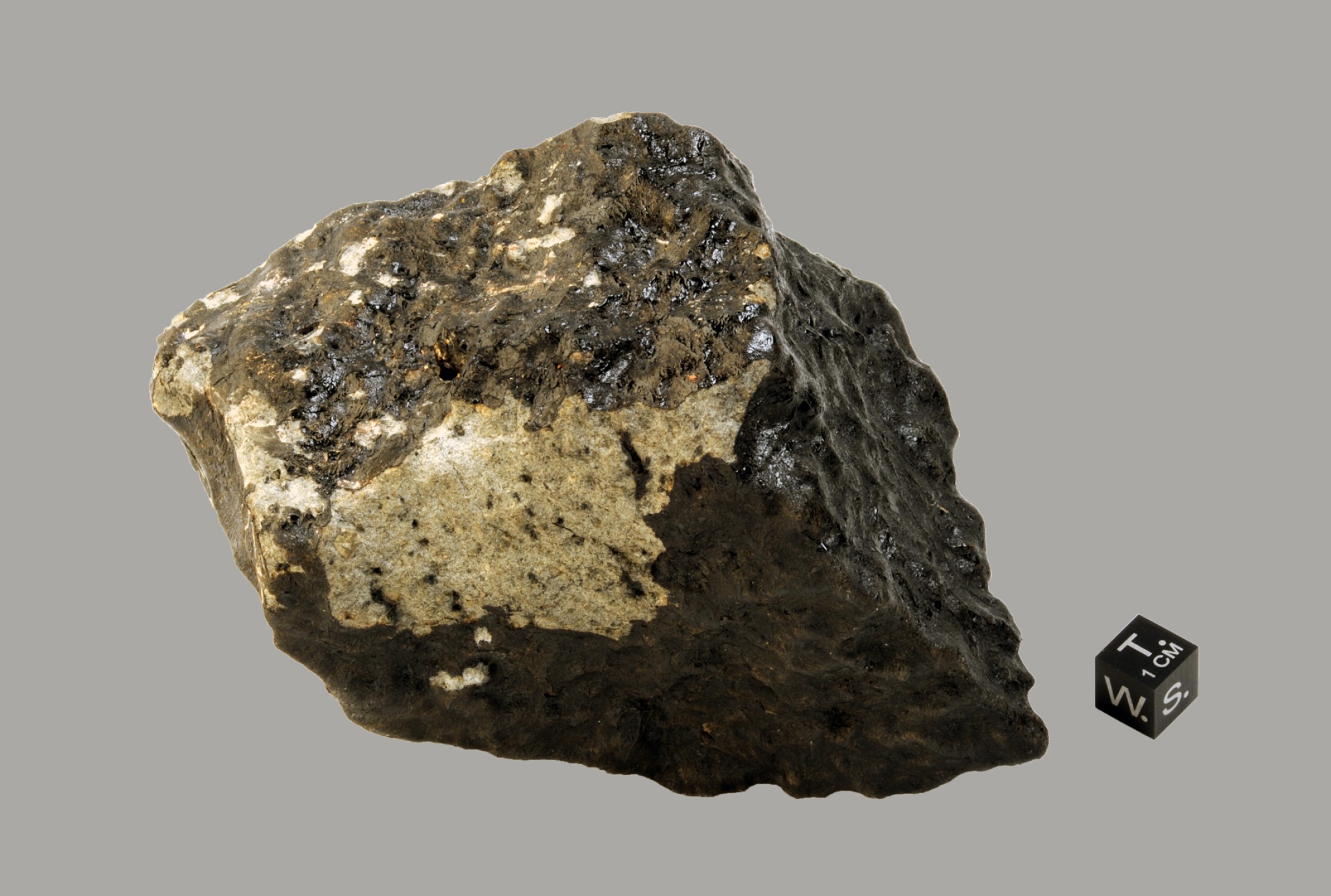
Tissint
A martian meteorite (shergottite). Fell in the Oued Drâa valley, near Tata, Morocco, at ~2 am on 18 July 2011 after observation of a bright fireball. The displayed sample (908,7 g) is the largest known almost fully encrusted, single stone of this fall.
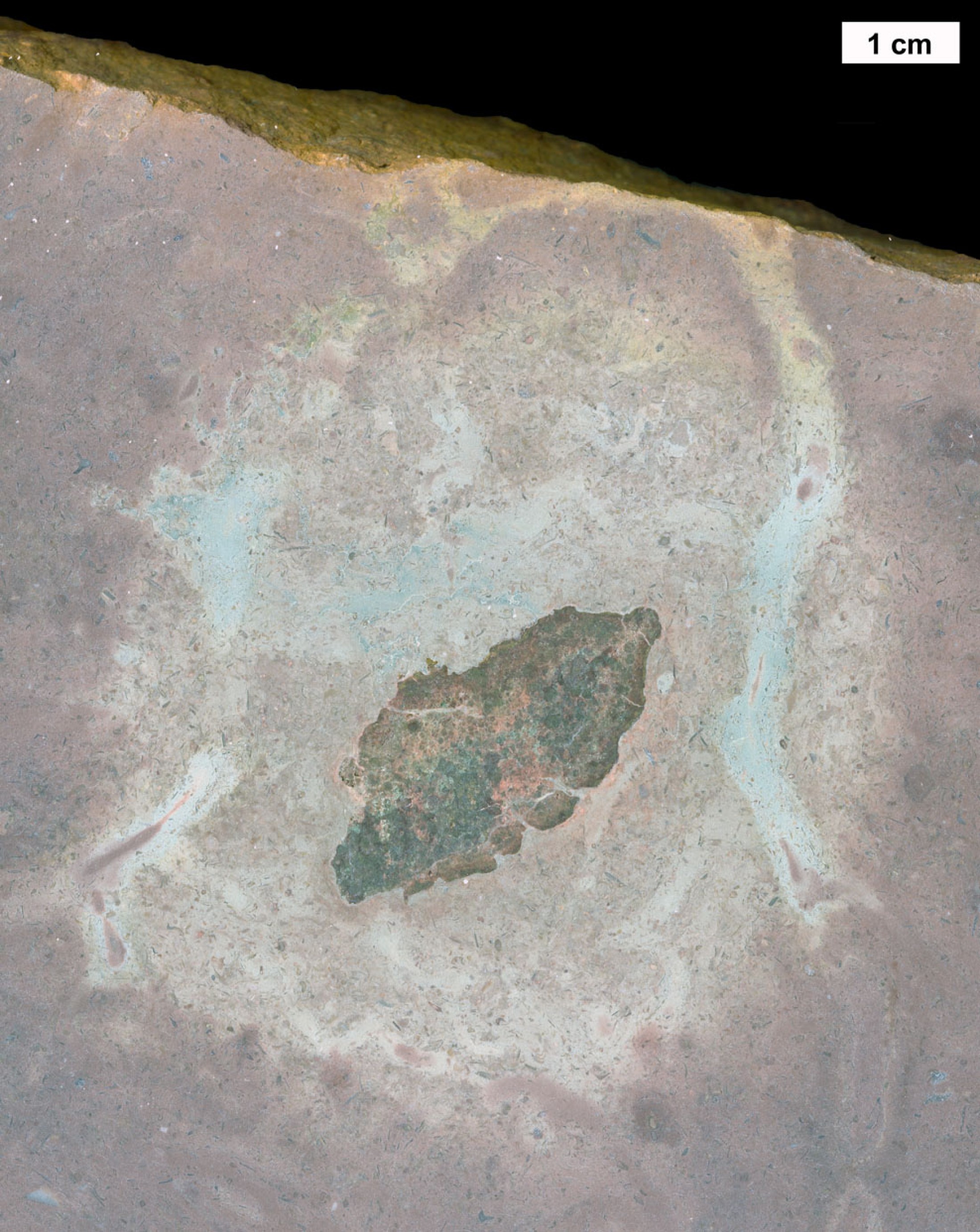
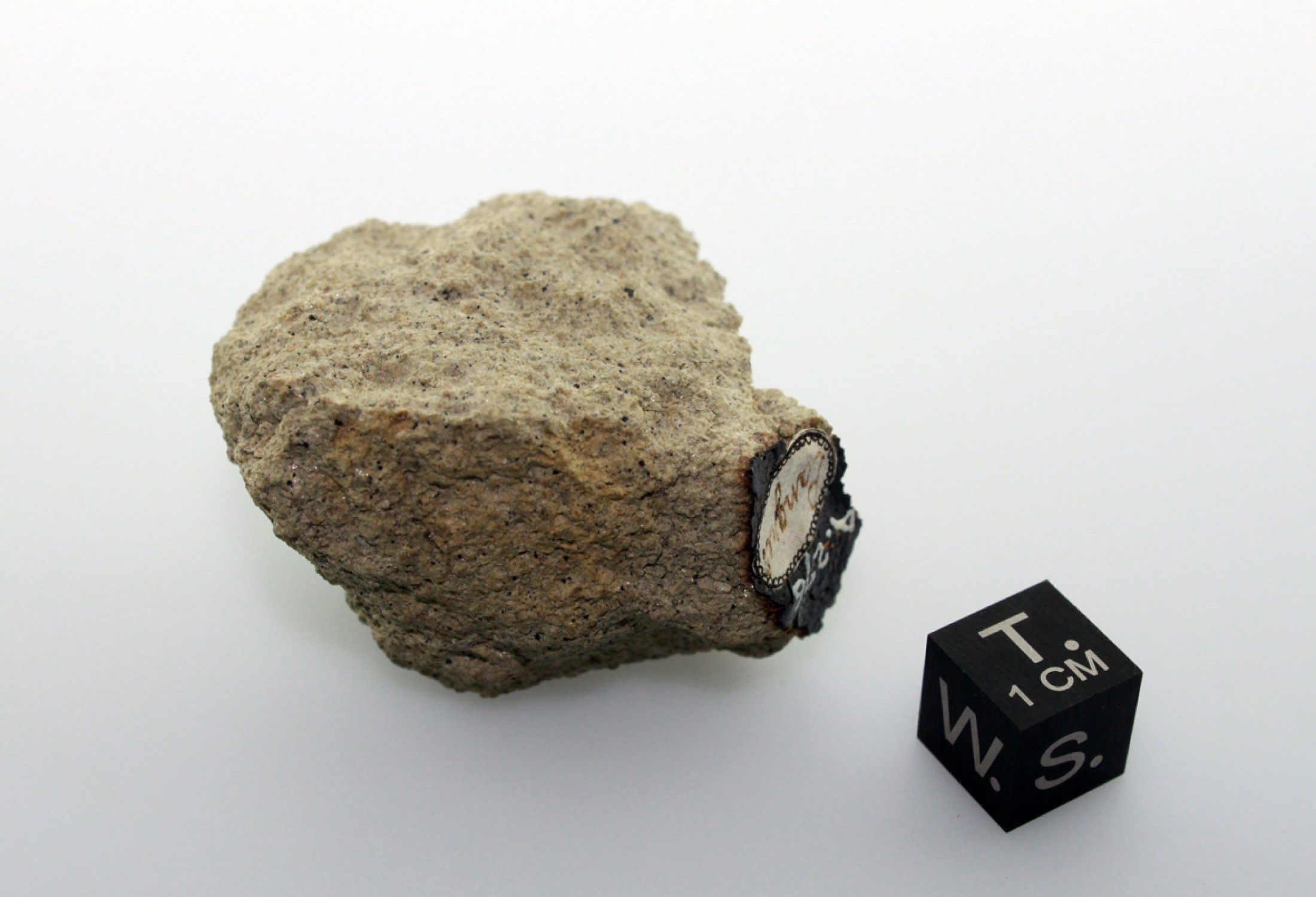
Fossil Meteorites
The displayed two samples are fossils of meteorites that fell about 470 million years ago, in today's Sweden. Most of the meteoritic material has been replaced by other minerals, whilst the original shape of the meteorite has been retained; all that remains of the original meteoritic material are tiny crystals of the iron-chromium-oxide mineral chromite. Similar samples are on public display only at two other institutions worldwide.
Do you want to know more about the meteorite collection and meteorites in general?
Brandstätter, F., Ferrière, L. & Köberl, C. (2012): Meteoriten - Zeitzeugen der Entstehung des Sonnensystems / Meteorites - Witnesses of the origin of the solar system. Verlag des Naturhistorischen Museums & Edition Lammerhuber, 270 pp. (bilingual).
