New book on the Carnic Crisis: A climate catastrophe about 233 million years ago almost destroyed the world
16. September 2026
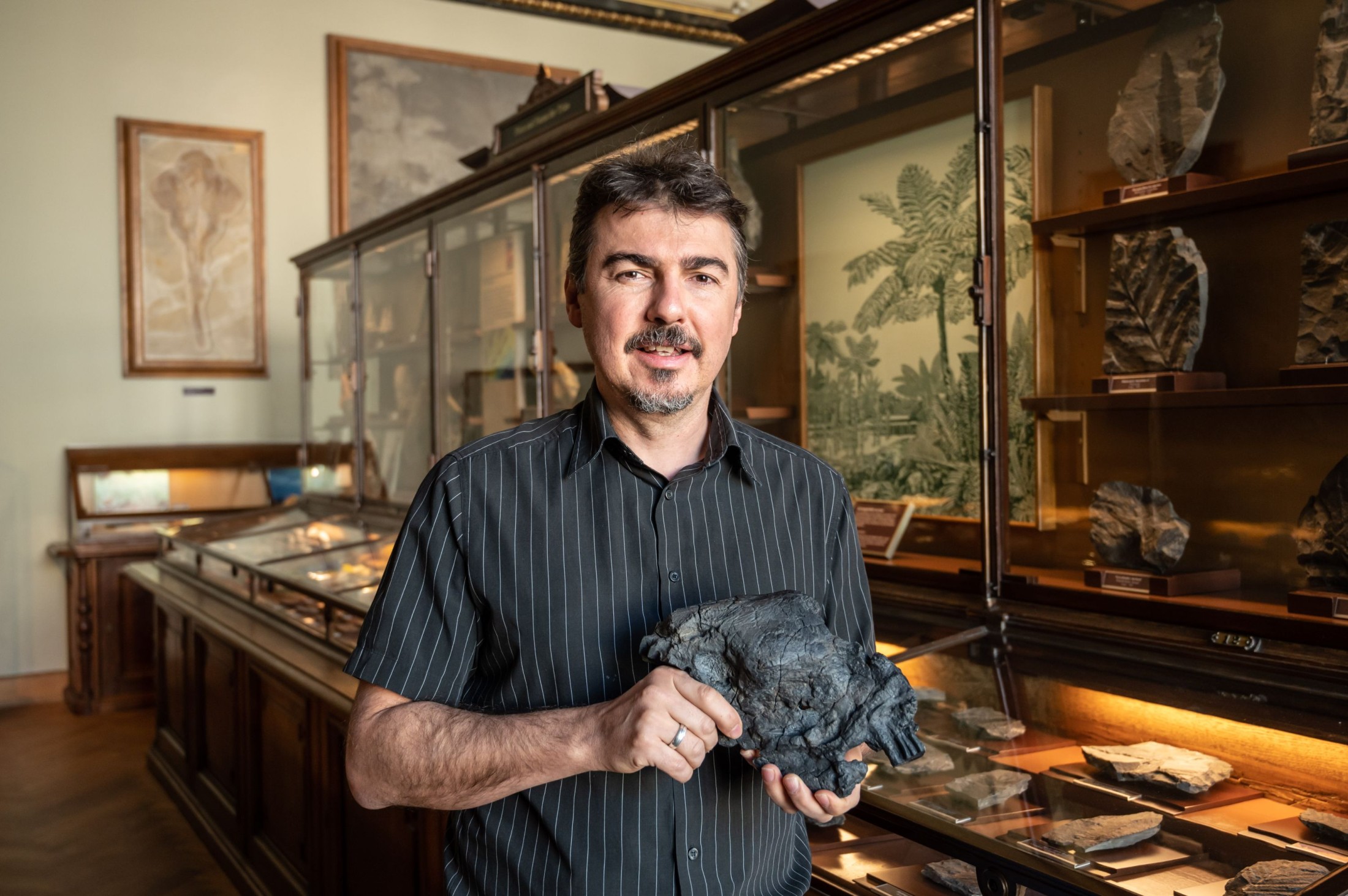
The Carnic Crisis was a global climate crisis during the Upper Triassic 233-235 million years ago, triggered by massive volcanic eruptions and massive CO2 emissions. The new book by Alexander Lukeneder, paleontologist at the NHM Vienna, combines 150 years of research history and shows how this geological catastrophe caused dramatic climate changes and a mass extinction in the oceans.
Through historical collections of the NHM Vienna and collections of recent years, more than 20,000 fossils from the Alpine Triassic period have been researched as witnesses to one of the greatest environmental disasters in Earth's history, the Carnic Crisis. The research results will now be presented online and freely accessible on 600 pages.
For several years now, the NHM Vienna has been researching deposits of the late Triassic period in the area of Lunz am See, Göstling and Großreifling as part of several projects funded by the State of Lower Austria, the Association of Friends of the NHM Vienna and the Austrian Academy of Sciences.
With the anthology "Late Triassic Conservate Deposits within the Carnian Pluvial Episode. 150 Years of Scientific Excavations in Austria", a scientific lighthouse project by the State of Lower Austria and the Natural History Museum Vienna has now been completed. The work is the result of the two Land-Niederösterreich projects: "Drilling into the Earth's History" and Polzberg – a world-renowned conservat deposit in the heart of Lower Austria – both led by Dr Alexander Lukeneder, paleontologist at NHM Vienna.
The collection and systematic research of the extensive Carnic Crisis fossil collection – the largest in the world at NHM Vienna – has reconstructed an unexpectedly complex ecosystem that had established itself at the intersection of rainforest and tropical seas. Elaborate geophysical and geochemical analyses enabled Lukeneder and his international team for the first time to clarify the climatic conditions of the Triassic period of this region and to reconstruct a powerful monsoon system, as it characterizes the coasts of Asia today.
According to today's view, massive volcanism led not only to the deposit of a layer of basalt more than a thousand meters thick in Canada and the USA, but also to an enormous increase in CO2 in the atmosphere. This in turn led to a strong global warming with a much more humid climate in the late Triassic period. Worldwide, monsoon-like rains washed sediment into the seas and the reefs suffocated in the mud. The global carnic crisis lasted over two million years. During this period, entire ecosystems collapsed.
In order to investigate this phase, a core drilling on layers of the Carnic crisis was carried out for the first time. As a result, chemically unchanged rocks could be recovered and the layers examined millimeter by millimeter. The area around Lunz am See offers deep insights into the Mesozoic earth history of the country. In 235 million old, finely laminated rock layers, treasures of the Earth's Middle Ages are found here. The black, calcareous to clayey marine deposits contain fossil sites in which the fossil organisms are particularly well and completely preserved.
Only a narrow geological zone in Austria contains sedimentary rocks of the Carnic crisis and crosses the limestone alps of Lower Austria and Styria. This ranges from the Lower Austrian Mödling in the east to northern Styria near Großreifling, i.e. to the area of the Steirische Eisenwurzen Nature and UNESCO Geopark in the west. In the sea deposits of the so-called Reiflinger Basin, excellently preserved ammonites, squid, mussels, snails, crabs, bristle worms, various fish, tassel fins and lung fish of the late Triassic period can be found. The world's first evidence of fossil octopus cartilage also comes from these rocks.
The great diversity of the discovered fauna as well as the fantastic preservation of the fossils of these conservate deposits make this zone a unique opportunity to explore the environment of the late Triassic period in the best possible way and thus gain new insights into the climate of this time. The fossils of such conservate deposits even show the preservation of soft tissues such as muscle or cartilage residues. References to the Carnic Crisis are known all over the world. However, the formation of this exceptionally well-preserved conservate deposit belt in the Alps of Austria is unique in the world.
The involvement of citizen scientists was of great importance for this work. Through their tireless collecting activities, Birgitt and Karl Aschauer from Waidhofen an der Ybbs have excavated hundreds of valuable fossils and left them to the scientists for processing. The fossils have been extensively studied and the results are presented in the book. For the first time, new species of fossil squid and bristle worms could be described.
The book, which was published as a special volume in the Topics in Geobiology series, is a good example of how the bundling of individual projects and the targeted involvement of international researchers and citizen scientists reveal completely new aspects and derive global connections from the detailed knowledge of regional processes. The anthology represents a milestone in the scientific research of Lower Austria and Styria.
In the book presented, the discoverers of the Carnic Crisis, Alastair Ruffel, Michael Simms and Paul Wignall, as well as another 50 international scientists, will have their say.
The publication was co-financed by the State of Lower Austria (Science and Research), the Association of Friends of the Natural History Museum Vienna, the Natural History Museum Vienna, the Technical University of Leoben and Alexander Lukeneder's own resources. The new work with 24 chapters is open access, i.e. freely accessible, as well as available as a printed book.
Lukeneder A ed. (2026) Late Triassic Conservat deposits within the Carnian Pluvial Episode: 150 Years of Scientific Excavations in Austria. Topics in Geobiology. Special Volume 55, 24 Chapters, 600 pages, Springer Verlag.
Related links
Press photos can be found here.
Scientific inquiry notice
Priv.-Doz. Dr. Alexander Lukeneder
Department of Geology and Paleontology
Tel. +43 1 52177-251
alexander.lukeneder@nhm.at
General request for information
Mag. Irina Kubadinow
Head of Press & Public Relations, Press Spokesperson
Tel.: + 43 1 521 77-410
irina.kubadinow@nhm.at
Mag. Klara Vakaj
Press officer
Tel.: +43 1 521 77-626
klara.vakaj@nhm.at
For several years now, the NHM Vienna has been researching deposits of the late Triassic period in the area of Lunz am See, Göstling and Großreifling as part of several projects funded by the State of Lower Austria, the Association of Friends of the NHM Vienna and the Austrian Academy of Sciences.
With the anthology "Late Triassic Conservate Deposits within the Carnian Pluvial Episode. 150 Years of Scientific Excavations in Austria", a scientific lighthouse project by the State of Lower Austria and the Natural History Museum Vienna has now been completed. The work is the result of the two Land-Niederösterreich projects: "Drilling into the Earth's History" and Polzberg – a world-renowned conservat deposit in the heart of Lower Austria – both led by Dr Alexander Lukeneder, paleontologist at NHM Vienna.
The collection and systematic research of the extensive Carnic Crisis fossil collection – the largest in the world at NHM Vienna – has reconstructed an unexpectedly complex ecosystem that had established itself at the intersection of rainforest and tropical seas. Elaborate geophysical and geochemical analyses enabled Lukeneder and his international team for the first time to clarify the climatic conditions of the Triassic period of this region and to reconstruct a powerful monsoon system, as it characterizes the coasts of Asia today.
According to today's view, massive volcanism led not only to the deposit of a layer of basalt more than a thousand meters thick in Canada and the USA, but also to an enormous increase in CO2 in the atmosphere. This in turn led to a strong global warming with a much more humid climate in the late Triassic period. Worldwide, monsoon-like rains washed sediment into the seas and the reefs suffocated in the mud. The global carnic crisis lasted over two million years. During this period, entire ecosystems collapsed.
In order to investigate this phase, a core drilling on layers of the Carnic crisis was carried out for the first time. As a result, chemically unchanged rocks could be recovered and the layers examined millimeter by millimeter. The area around Lunz am See offers deep insights into the Mesozoic earth history of the country. In 235 million old, finely laminated rock layers, treasures of the Earth's Middle Ages are found here. The black, calcareous to clayey marine deposits contain fossil sites in which the fossil organisms are particularly well and completely preserved.
Only a narrow geological zone in Austria contains sedimentary rocks of the Carnic crisis and crosses the limestone alps of Lower Austria and Styria. This ranges from the Lower Austrian Mödling in the east to northern Styria near Großreifling, i.e. to the area of the Steirische Eisenwurzen Nature and UNESCO Geopark in the west. In the sea deposits of the so-called Reiflinger Basin, excellently preserved ammonites, squid, mussels, snails, crabs, bristle worms, various fish, tassel fins and lung fish of the late Triassic period can be found. The world's first evidence of fossil octopus cartilage also comes from these rocks.
The great diversity of the discovered fauna as well as the fantastic preservation of the fossils of these conservate deposits make this zone a unique opportunity to explore the environment of the late Triassic period in the best possible way and thus gain new insights into the climate of this time. The fossils of such conservate deposits even show the preservation of soft tissues such as muscle or cartilage residues. References to the Carnic Crisis are known all over the world. However, the formation of this exceptionally well-preserved conservate deposit belt in the Alps of Austria is unique in the world.
The involvement of citizen scientists was of great importance for this work. Through their tireless collecting activities, Birgitt and Karl Aschauer from Waidhofen an der Ybbs have excavated hundreds of valuable fossils and left them to the scientists for processing. The fossils have been extensively studied and the results are presented in the book. For the first time, new species of fossil squid and bristle worms could be described.
The book, which was published as a special volume in the Topics in Geobiology series, is a good example of how the bundling of individual projects and the targeted involvement of international researchers and citizen scientists reveal completely new aspects and derive global connections from the detailed knowledge of regional processes. The anthology represents a milestone in the scientific research of Lower Austria and Styria.
In the book presented, the discoverers of the Carnic Crisis, Alastair Ruffel, Michael Simms and Paul Wignall, as well as another 50 international scientists, will have their say.
The publication was co-financed by the State of Lower Austria (Science and Research), the Association of Friends of the Natural History Museum Vienna, the Natural History Museum Vienna, the Technical University of Leoben and Alexander Lukeneder's own resources. The new work with 24 chapters is open access, i.e. freely accessible, as well as available as a printed book.
Lukeneder A ed. (2026) Late Triassic Conservat deposits within the Carnian Pluvial Episode: 150 Years of Scientific Excavations in Austria. Topics in Geobiology. Special Volume 55, 24 Chapters, 600 pages, Springer Verlag.
Related links
- Short video with Alexander Lukeneder on the Carnic Crisis in the show collection of the NHM Vienna
- Research to participate: "Fossilfinder"
Press photos can be found here.
Scientific inquiry notice
Priv.-Doz. Dr. Alexander Lukeneder
Department of Geology and Paleontology
Tel. +43 1 52177-251
alexander.lukeneder@nhm.at
General request for information
Mag. Irina Kubadinow
Head of Press & Public Relations, Press Spokesperson
Tel.: + 43 1 521 77-410
irina.kubadinow@nhm.at
Mag. Klara Vakaj
Press officer
Tel.: +43 1 521 77-626
klara.vakaj@nhm.at