
Book Presentation & Press background discussion at the Archaeozoological Collection of the NHM Vienna
16. June 2026
On the occasion of the new publication of the children’s book "Knochen-Detektive. Wir entziffern die Geschichte unserer Haustiere" by NHM Vienna archaeozoologist Konstantina Saliari, we invite you to take a behind-the-scenes look at the scientific collection, which is not open to the public, and get to know the work of the archaeozoologists.
[Translated by eTranslation]
The Archaeological-Zoological Collection of the Natural History Museum of Vienna deals with the interdisciplinary research of animal remains from archaeological excavations. Her interests include the history of domestication, livestock farming and the history of domestic and wild fauna during the last ten millennia. Archaeozoology combines the methods of zoology with those of archaeology, biology and environmental research to reconstruct the relationship between humans and animals in the past. It is a cross-faculty institution between zoology, pet science, paleontology and archaeology.
Most of the investigations are carried out at the request of archaeological sites. Archaeological research bases essential conclusions on scientific foundations, including archaeozoological findings.
Archaeozoology develops its results primarily by examining animal remains from archaeological excavations. In most cases, the bone waste, which has been preserved in large numbers at many places in prehistoric and early history, is the only material basis. Only exceptionally can more or less complete animal skeletons be found. Even in prehistoric human graves, animal bones from former food items or, more rarely, entire skeletons of buried animals are recovered again and again.
In any case, the analysis of the finds first requires a determination of the bone pieces. As far as possible, animal species, sex, age, size, shape, pathological phenomena and taphonomy, i.e. which processes began after the death of the animal, are examined. It is also important to distinguish between the wild and the domestic form of an animal species. The totality of the results makes it possible to draw conclusions in terms of faunal history, pet history and economic archaeology.
Dr. Konstantina Saliari has been an archaeozoologist at the NHM Vienna since 2014. She studied archaeology and art history in Athens (GR). Her additional experience includes working at the Medical University of Athens at the Institute of Forensic Anthropology and Toxicology. In 2017, she disseminated an archaeozoological analysis of Sand Castle (10th century). Jhdt. n. Chr., Lower Austria) at the University of Vienna. At the National Archaeological Museum in Athens, she has designed educational programs for children for several years.
Newly published is her children's book "Knochen-Detektive. Wir entziffern die Geschichte unserer Haustiere", which they shared with Andrea Krapf (Digital Media & Publications), Melanie Pilat and Brigitta Schmid (both Science Communication) and Andreas Kroh (Stellv. Scientific Director and Head of the Department of Central Research Institutions).
The texts with illustrations by Alena Boucher invite you to discover past eras and their pets.
Mag. Andrea Krapf, Deputy Head of Digital Media & Publications and Publishing Director, NHM Vienna
The book is available for € 9.90 in the NHM Vienna shop as well as in bookstores. A review copy in PDF format is available upon request by emailing: presse@nhm.at
For children from 6 to 12 accompanied by an adult
How long have pets been around? How did they come to man? Our new children's book tells the story of pets in Austria. On Deck50 you will get to know this story. Take a journey into the history of mankind and you will soon meet dog, cat, cow and Co. Examine old animal bones and search in the collection for the wild ancestors of our pets. What are the similarities and differences?
Wed–Fri, 8–10 July
9:30 a.m., 10:30 a.m., 1:00 p.m., 1:45 p.m., and 2:30 p.m.
Duration: 90 minutes
Dates & Ticket purchase
Mini-Treff ab 3 Jahren: Vom Wildtier zum Haustier
Cat, dog and guinea pig – there are many different pets that live with us humans. But where do they come from? Why did they come to man? Learn the history of some pets and find out what the difference is between a wild animal and a pet. Discover, marvel, research – for our youngest museum visitors aged 3 and over.
Sat/Sun, 4/5 July
Sat/Sun, 11/12 July
Sat/Sun, 18/19 July
Sat/Sun, 25/26 July
Sat/Sun, 1/2 August
Dates & Ticket purchase July
Dates & Ticket purchase August
Kids & Co ab 6 Jahren: Vom Wildtier zum Haustier
Join us on a journey into the history of our pets. How and why did humans and animals come together? And what traces can we still find of early pets in human history today? Short guided tour in the exhibition collection and activities for research and self-discovery.
Sat/Sun, 4/5 July
Sat/Sun, 11/12 July
Sat/Sun, 18/19 July
Sat/Sun, 25/26 July
Sat/Sun, 1/2 August
Dates & Ticket purchase July
Dates & Ticket purchase August
Open Deck: Vom Wildtier zum Haustier
Deck 50 is open to all visitors and invites you to join in. In the lab, you can examine bones of pets found during excavations. Also, look at animal parasites under the microscope. In the creative sector, the focus is on your own pet. Shape your animal out of clay and introduce it to everyone. Together we create an exhibition about our favorite roommates.
Sat/Sun, 4/5 July
Sat/Sun, 11/12 July
Sat/Sun, 18/19 July
Sat/Sun, 25/26 July
Sat/Sun, 1/2 August
11:45–15:15 each
Dates & Ticket purchase July
Dates & Ticket purchase August
Inquiry note:
Mag. Irina Kubadinow
Head of Press & Public Relations, Press Spokesperson
Tel.: +43 (1) 521 77-410
irina.kubadinow@nhm.at
Mag. Klara Vakaj
Press officer
Tel.: +43 (1) 521 77-626
klara.vakaj@nhm.at
The Archaeological-Zoological Collection of the Natural History Museum of Vienna deals with the interdisciplinary research of animal remains from archaeological excavations. Her interests include the history of domestication, livestock farming and the history of domestic and wild fauna during the last ten millennia. Archaeozoology combines the methods of zoology with those of archaeology, biology and environmental research to reconstruct the relationship between humans and animals in the past. It is a cross-faculty institution between zoology, pet science, paleontology and archaeology.
Most of the investigations are carried out at the request of archaeological sites. Archaeological research bases essential conclusions on scientific foundations, including archaeozoological findings.
Archaeozoology develops its results primarily by examining animal remains from archaeological excavations. In most cases, the bone waste, which has been preserved in large numbers at many places in prehistoric and early history, is the only material basis. Only exceptionally can more or less complete animal skeletons be found. Even in prehistoric human graves, animal bones from former food items or, more rarely, entire skeletons of buried animals are recovered again and again.
In any case, the analysis of the finds first requires a determination of the bone pieces. As far as possible, animal species, sex, age, size, shape, pathological phenomena and taphonomy, i.e. which processes began after the death of the animal, are examined. It is also important to distinguish between the wild and the domestic form of an animal species. The totality of the results makes it possible to draw conclusions in terms of faunal history, pet history and economic archaeology.
Dr. Konstantina Saliari has been an archaeozoologist at the NHM Vienna since 2014. She studied archaeology and art history in Athens (GR). Her additional experience includes working at the Medical University of Athens at the Institute of Forensic Anthropology and Toxicology. In 2017, she disseminated an archaeozoological analysis of Sand Castle (10th century). Jhdt. n. Chr., Lower Austria) at the University of Vienna. At the National Archaeological Museum in Athens, she has designed educational programs for children for several years.
Newly published is her children's book "Knochen-Detektive. Wir entziffern die Geschichte unserer Haustiere", which they shared with Andrea Krapf (Digital Media & Publications), Melanie Pilat and Brigitta Schmid (both Science Communication) and Andreas Kroh (Stellv. Scientific Director and Head of the Department of Central Research Institutions).
The texts with illustrations by Alena Boucher invite you to discover past eras and their pets.
Press background meeting on 16 June
The meeting point is punctually at 10.15 o'clock at the doorman of the NHM Vienna, Burgring 7, 1010 Vienna, from where we start together in the archaeozoological collection in the attic.Opening remarks
Dr. Katrin Vohland, Director General and Scientific Director, NHM Vienna
Authors
Dr. Konstantina Saliari, Director of the Archaeozoological Collection, 1. Department of Zoology, NHM ViennaMag. Andrea Krapf, Deputy Head of Digital Media & Publications and Publishing Director, NHM Vienna
The book is available for € 9.90 in the NHM Vienna shop as well as in bookstores. A review copy in PDF format is available upon request by emailing: presse@nhm.at
Mentoring program for children (available only in German)
Ferienspiel: Vom Wildtier zum HaustierFor children from 6 to 12 accompanied by an adult
How long have pets been around? How did they come to man? Our new children's book tells the story of pets in Austria. On Deck50 you will get to know this story. Take a journey into the history of mankind and you will soon meet dog, cat, cow and Co. Examine old animal bones and search in the collection for the wild ancestors of our pets. What are the similarities and differences?
Wed–Fri, 8–10 July
9:30 a.m., 10:30 a.m., 1:00 p.m., 1:45 p.m., and 2:30 p.m.
Duration: 90 minutes
Dates & Ticket purchase
Mini-Treff ab 3 Jahren: Vom Wildtier zum Haustier
Cat, dog and guinea pig – there are many different pets that live with us humans. But where do they come from? Why did they come to man? Learn the history of some pets and find out what the difference is between a wild animal and a pet. Discover, marvel, research – for our youngest museum visitors aged 3 and over.
Sat/Sun, 4/5 July
Sat/Sun, 11/12 July
Sat/Sun, 18/19 July
Sat/Sun, 25/26 July
Sat/Sun, 1/2 August
11:15–11:45 a.m. each day
Dates & Ticket purchase July
Dates & Ticket purchase August
Kids & Co ab 6 Jahren: Vom Wildtier zum Haustier
Join us on a journey into the history of our pets. How and why did humans and animals come together? And what traces can we still find of early pets in human history today? Short guided tour in the exhibition collection and activities for research and self-discovery.
Sat/Sun, 4/5 July
Sat/Sun, 11/12 July
Sat/Sun, 18/19 July
Sat/Sun, 25/26 July
Sat/Sun, 1/2 August
2:00–2:30 p.m. each day
Dates & Ticket purchase July
Dates & Ticket purchase August
Open Deck: Vom Wildtier zum Haustier
Deck 50 is open to all visitors and invites you to join in. In the lab, you can examine bones of pets found during excavations. Also, look at animal parasites under the microscope. In the creative sector, the focus is on your own pet. Shape your animal out of clay and introduce it to everyone. Together we create an exhibition about our favorite roommates.
Sat/Sun, 4/5 July
Sat/Sun, 11/12 July
Sat/Sun, 18/19 July
Sat/Sun, 25/26 July
Sat/Sun, 1/2 August
11:45–15:15 each
Dates & Ticket purchase July
Dates & Ticket purchase August
Related links:
Press photosThe Archaeozoological Collection
Inquiry note:
Mag. Irina Kubadinow
Head of Press & Public Relations, Press Spokesperson
Tel.: +43 (1) 521 77-410
irina.kubadinow@nhm.at
Mag. Klara Vakaj
Press officer
Tel.: +43 (1) 521 77-626
klara.vakaj@nhm.at
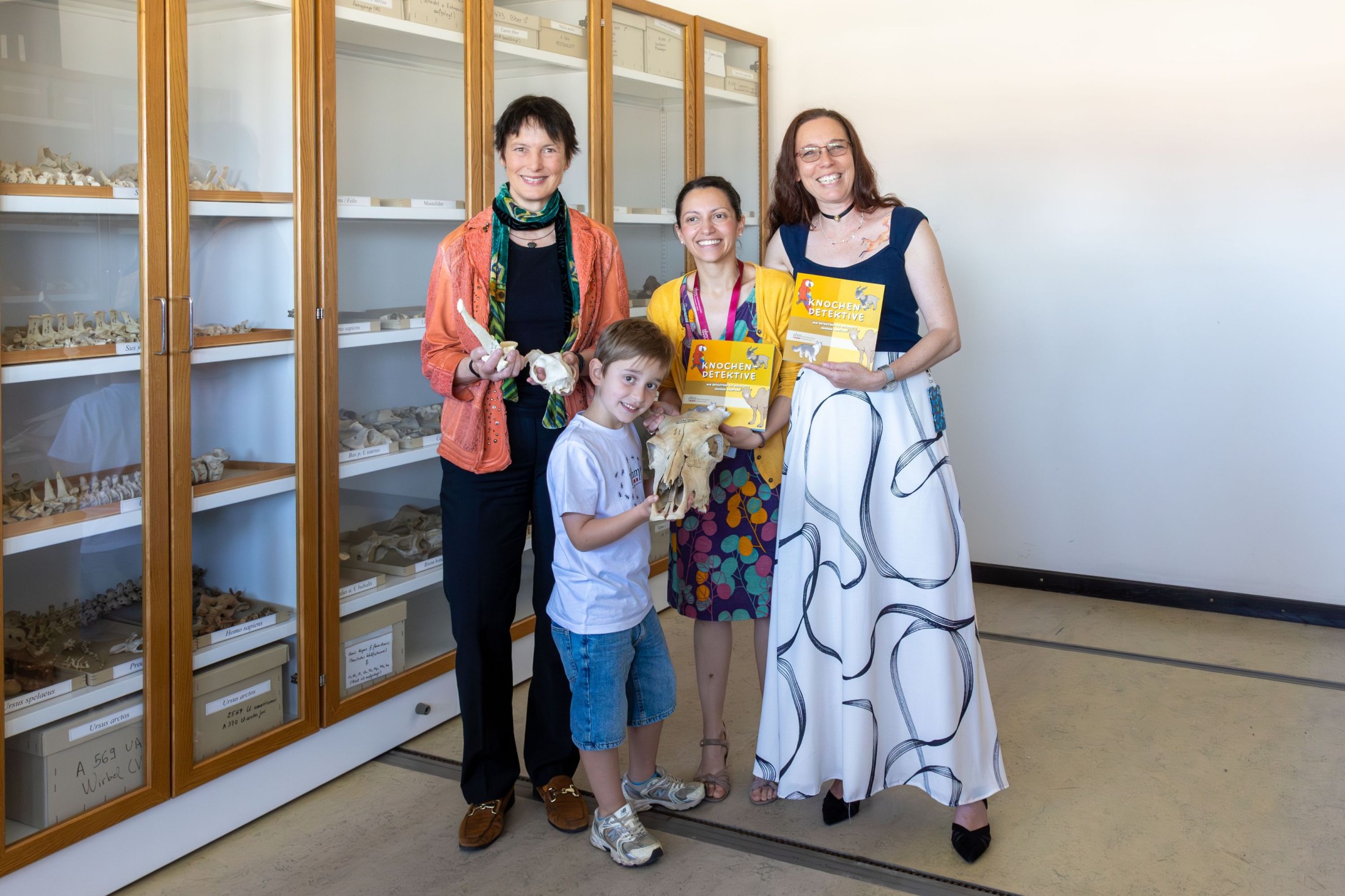
Presentation of the children's book "Knochen-Detektive. Wir entziffern die Geschichte unserer Haustiere"
© NHM Wien, Wilhelm Bauer-Thell
Alle Bilder zum Download: https://nhm.px.media/share/1781617151X4tLT425JJyV2H
Alle Bilder zum Download: https://nhm.px.media/share/1781617151X4tLT425JJyV2H

