
Invitation to the press conference and presentation of the exhibition "Resistance – Death – Survival. The Archaeological Excavations of the Gusen Concentration Camp"
29. October 2025
The Natural History Museum Vienna and the Consciousness Region Mauthausen – Gusen – St. Georgen invite you to a press conference at 3.30 p.m. on Thursday 6 November 2025 at the House of Remembrance in St. Georgen an der Gusen.
[Translated by eTranslation]
The "Platform Johann Gruber" and the "Papa Gruber Circle" of the parish of St. Georgen an der Gusen have been dealing for many years with the biography of the priest and educator Dr. Johann Gruber, who was murdered in April 1944 in the Gusen concentration camp. In the course of an art project in memory of Dr. Johann Gruber at the Private University of Education of the Diocese of Linz, the artist Christian Kosmas Meyer discovered the finds of the archaeological excavations in the Gusen concentration camp, which are now preserved in the Natural History Museum Vienna.
In the Gusen concentration camp, archaeological excavations had to be carried out by prisoners from 1940 to 1945 with the significant participation of the Polish prisoner and archaeologist Kaszimierz Gelinek. About 200 groats were found. Prehistoric finds, finds from the Bronze Age, the early Middle Ages and remains of mammoth bones were excavated.
In 1942, a museum was set up in the Gusen concentration camp and the finds were exhibited. Kapo Johann Gruber was entrusted with the management of the museum. The finds also met with great interest from SS Reichsführer Heinrich Himmler, who visited the museum twice. The archaeological finds were sent to Vienna and back for inventory. Johann Gruber used this for smuggling operations in order to set up a secret relief agency in the concentration camp, which, according to survivors, was able to save the lives of several prisoners.
Three boxes with finds were stored at the beginning of October 1943 by the "Ahnenerbe" in Pottenstein (Karsthöhle Oberfranken). After the liberation by American troops, the boxes were confiscated and transported to Bamberg, in 1948 they appeared in the Bayerische Staatsbibliothek, in 1951 they were handed over to the Natural History Museum Vienna. So far, there are 150 objects found here. Several replicas of these finds were exhibited as part of the art project "Weather Lights on the Horizon" in the entrance area of the Pädagogische Hochschule in Linz.
During an excursion to the NHM Vienna with the artist Christian Kosmas Mayer, representatives of the region and the Private University of Education in Linz, great interest emerged in revising the history. To show objects found in the region and to explain how archaeology was misused for ideologizing during the Nazi period: The Late Bronze Age was glorified as "heroic antiquity".
The exhibition provides information about the "Kommando Spielberg" and pays tribute to four people: Austrian priest Johann Gruber and Polish prisoners Kazimierz Gelinek, Władysław Gębik and Józef Eugeniusz Iwinski. As part of the exhibition project, a catalogue, information boards, short films on the four biographies and a pedagogical educational concept were developed.
Mayor Thomas Punkenhofer, President of the Consciousness Region Mauthausen – Gusen – St. Georgen
Statements:
Mag. Andrea Wahl, MBA, Project Coordinator, Mauthausen Region of Consciousness – Gusen – St. Georgen
Zenon Kosiniak-Kamysz, Ambassador of the Republic of Poland to Austria
Dr. Katrin Vohland, Director General and Scientific Director, NHM Vienna
Univ. Prof. Dr. Claudia Theune, University of Vienna
Mag. Gudrun Blohberger, Pedagogical Director of Mauthausen Concentration Camp Memorial – Gusen
Dr. Christoph Bazill, President, Federal Monuments Office
Location: House of Memory, Marcel-Callo street 3, 4222 St. Georgen an der Gusen
Entry: from 3 p.m.
Start date: at 3.30 p.m.
Then: Tour of the exhibition at the House of Memory in Gusen
The late Bronze Age graveyard of Gusen in the lower Mühlviertel is one of the most important cemeteries of the time around 1,000 BC in Austria – not least due to the precious additions such as ceramics, swords or bronze vessels. A precious bronze cup even serves as a type specimen for archaeological research – the bronze cups type cast iron are a guiding principle for a certain time and region.
In 1941, the remains of this cemetery came to light again due to earthworks during the construction of a tow train between the Gusen concentration camp and the station of St. Georgen an der Gusen. For the excavation work at the archaeological site, but also for the documentation were used under the supervision of the then young monument office employee Hertha Orel, prisoners of the nearby concentration camp Gusen, subcamp to Mauthausen, these were mainly the Polish prisoners. From 1942, the priest Johann Gruber was commissioned to store and determine the archaeological findings.
Priv. Doz. Dr. Karina Grömer, Director of the Prehistoric Department of the NHM Vienna, gives the following thought: "In the inhumane system of the concentration camp, activities around the archaeological excavations, at least for some inmates, made the living situation a bit more humane – the alternative was the more or less deadly work in the armaments industry and in quarries (Mauthausen Todesstiege). The priest Johann Gruber used the work outside the camp above all the transport of the archaeological objects to Vienna to smuggle money and cigarettes for his relief actions.
The archaeological artifacts arrived after the 2. World War II to Vienna at the NHM in the Prehistoric Department. From the point of view that the National Socialists, above all, abused archaeology strongly for the ideologisation of the population with regard to the Aryan/Germanic racial delusion – especially the Bronze Age was considered to be the heroic period of the Ur-Germanic ones – it is now a conciliatory aspect that these archaeological excavation findings of the Gusen tomb field are first publicly shown with an appreciation of the prisoners from Gusen and also an attention is paid to the living conditions of the concentration camp prisoners.
The exhibition opens up several perspectives on archaeology in National Socialist times. The graveyard of Gusen is one of the important sites of the Bronze Age. However, it must be clearly emphasized that this grave field was excavated by prisoners in forced labour. The detainees, some of whom were archeologically trained, documented the findings and findings to the best of their knowledge and belief.
The excavations were under the supervision of the Institute for the Preservation of Monuments (now the Bundesdenkmalamt) and its director Kurt Willvonseder, also involved were Oswald Menghin (University of Vienna) and Eduard Beninger (Naturhistorisches Museum Wien). All three were convinced National Socialists and also propagated racist ideologies in archaeology and the exaltation of the "Germanic" or "Aryan race".
Excavations in former victims and crime scenes of the Nazi era have been taking place in Austria for around 25 years. Significant excavations and research were carried out under the direction of the University. Prof. Dr. Claudia Theune, Institute of Prehistory and Historical Archaeology, University of Vienna in cooperation with the Federal Monuments Office. The objects found during the excavations, such as barbed wire and insulators, but also porcelain tableware from SS-owned porcelain manufactories show the system of guarding. Simple shatterproof dishes, cutlery, homemade objects show the will to survive and coping strategies for physical and psychological survival. Archaeological objects have the potential to give an insight into the conditions of the forced camps, which go beyond the word-based and image-based traditions.
At the Memorial for Nazi Victims, care is taken for the preservation of the authentic place. The history of this place and the Nazi crime is documented and the victims are honorably commemorated. All the more the institutional care and education are asked to keep the memory alive in the public consciousness. Therefore, the culture of remembrance requires a sensitive cooperation in many areas, such as research, politics, education. With conviction, the State Archaeological Museum in Warsaw and the Embassy of the Republic of Poland in Vienna contributed to the preparation of the exhibition catalogue and to the deepening of Austrian-Polish research and memorial work. We believe that an objective dialogue helps to reach mutual understanding. With great respect we want to pay tribute to all the achievements of the four people from the Gusen concentration camp, namely the Austrian priest Johann Gruber as well as the Polish intellectuals Kazimierz Gelinek, Władysław Gębik and Józef Eugeniusz Iwiński. With the help of the exhibition, we would like to consider together what we could do even more to express the appreciation of the men from the Spielberg command posthumously.
The cooperation with the Consciousness Region Mauthausen – Gusen – St. Georgen arose during an excursion to the NHM Vienna and the Vienna Criminal Court of the platform Johann Gruber. Following the art project "Weather Lights on the Horizon" by the artist Christian Kosmas Mayer, an exhibition was worked on together that shows finds from the late Bronze Age from the grave field in Gusen and gives an insight into life in this period. It shows the connection with the concentration camp excavation and describes the conditions under which concentration camp prisoners had to perform forced labour. It provides information about the "Kommando Spielberg". It pays tribute to four people by way of example: Austrian priest Johann Gruber and Polish prisoners Kazimierz Gelinek, Władysław Gębik and Józef Eugeniusz Iwinski. It shows how archaeology was misused during the Nazi era. The Late Bronze Age was glorified as "heroic antiquity". As part of the project, an exhibition catalogue, information boards, four short films on the biographies and a pedagogical educational concept were developed.
The 9th The International Human Rights Festival will take place from 6 to 9 November 2025, this year under the motto: "Your right. Your protection. Your identity.
Article 8 of the Universal Declaration of Human Rights: Right to legal protection.
The festival offers workshops, tours, exhibitions, cultural events and discussions on current issues relating to social justice, access to justice and social participation.
Here you will find the detailed program.
Further information: https://www.consciousnessregion.at
The "Platform Johann Gruber" and the "Papa Gruber Circle" of the parish of St. Georgen an der Gusen have been dealing for many years with the biography of the priest and educator Dr. Johann Gruber, who was murdered in April 1944 in the Gusen concentration camp. In the course of an art project in memory of Dr. Johann Gruber at the Private University of Education of the Diocese of Linz, the artist Christian Kosmas Meyer discovered the finds of the archaeological excavations in the Gusen concentration camp, which are now preserved in the Natural History Museum Vienna.
In the Gusen concentration camp, archaeological excavations had to be carried out by prisoners from 1940 to 1945 with the significant participation of the Polish prisoner and archaeologist Kaszimierz Gelinek. About 200 groats were found. Prehistoric finds, finds from the Bronze Age, the early Middle Ages and remains of mammoth bones were excavated.
In 1942, a museum was set up in the Gusen concentration camp and the finds were exhibited. Kapo Johann Gruber was entrusted with the management of the museum. The finds also met with great interest from SS Reichsführer Heinrich Himmler, who visited the museum twice. The archaeological finds were sent to Vienna and back for inventory. Johann Gruber used this for smuggling operations in order to set up a secret relief agency in the concentration camp, which, according to survivors, was able to save the lives of several prisoners.
Three boxes with finds were stored at the beginning of October 1943 by the "Ahnenerbe" in Pottenstein (Karsthöhle Oberfranken). After the liberation by American troops, the boxes were confiscated and transported to Bamberg, in 1948 they appeared in the Bayerische Staatsbibliothek, in 1951 they were handed over to the Natural History Museum Vienna. So far, there are 150 objects found here. Several replicas of these finds were exhibited as part of the art project "Weather Lights on the Horizon" in the entrance area of the Pädagogische Hochschule in Linz.
During an excursion to the NHM Vienna with the artist Christian Kosmas Mayer, representatives of the region and the Private University of Education in Linz, great interest emerged in revising the history. To show objects found in the region and to explain how archaeology was misused for ideologizing during the Nazi period: The Late Bronze Age was glorified as "heroic antiquity".
The exhibition provides information about the "Kommando Spielberg" and pays tribute to four people: Austrian priest Johann Gruber and Polish prisoners Kazimierz Gelinek, Władysław Gębik and Józef Eugeniusz Iwinski. As part of the exhibition project, a catalogue, information boards, short films on the four biographies and a pedagogical educational concept were developed.
Program of the press conference
Welcome address:Mayor Thomas Punkenhofer, President of the Consciousness Region Mauthausen – Gusen – St. Georgen
Statements:
Mag. Andrea Wahl, MBA, Project Coordinator, Mauthausen Region of Consciousness – Gusen – St. Georgen
Zenon Kosiniak-Kamysz, Ambassador of the Republic of Poland to Austria
Dr. Katrin Vohland, Director General and Scientific Director, NHM Vienna
Univ. Prof. Dr. Claudia Theune, University of Vienna
Mag. Gudrun Blohberger, Pedagogical Director of Mauthausen Concentration Camp Memorial – Gusen
Dr. Christoph Bazill, President, Federal Monuments Office
Location: House of Memory, Marcel-Callo street 3, 4222 St. Georgen an der Gusen
Entry: from 3 p.m.
Start date: at 3.30 p.m.
Then: Tour of the exhibition at the House of Memory in Gusen
Context of the archaeological finds of Gusen
Karina Grömer, Natural History Museum of ViennaThe late Bronze Age graveyard of Gusen in the lower Mühlviertel is one of the most important cemeteries of the time around 1,000 BC in Austria – not least due to the precious additions such as ceramics, swords or bronze vessels. A precious bronze cup even serves as a type specimen for archaeological research – the bronze cups type cast iron are a guiding principle for a certain time and region.
In 1941, the remains of this cemetery came to light again due to earthworks during the construction of a tow train between the Gusen concentration camp and the station of St. Georgen an der Gusen. For the excavation work at the archaeological site, but also for the documentation were used under the supervision of the then young monument office employee Hertha Orel, prisoners of the nearby concentration camp Gusen, subcamp to Mauthausen, these were mainly the Polish prisoners. From 1942, the priest Johann Gruber was commissioned to store and determine the archaeological findings.
Priv. Doz. Dr. Karina Grömer, Director of the Prehistoric Department of the NHM Vienna, gives the following thought: "In the inhumane system of the concentration camp, activities around the archaeological excavations, at least for some inmates, made the living situation a bit more humane – the alternative was the more or less deadly work in the armaments industry and in quarries (Mauthausen Todesstiege). The priest Johann Gruber used the work outside the camp above all the transport of the archaeological objects to Vienna to smuggle money and cigarettes for his relief actions.
The archaeological artifacts arrived after the 2. World War II to Vienna at the NHM in the Prehistoric Department. From the point of view that the National Socialists, above all, abused archaeology strongly for the ideologisation of the population with regard to the Aryan/Germanic racial delusion – especially the Bronze Age was considered to be the heroic period of the Ur-Germanic ones – it is now a conciliatory aspect that these archaeological excavation findings of the Gusen tomb field are first publicly shown with an appreciation of the prisoners from Gusen and also an attention is paid to the living conditions of the concentration camp prisoners.
On the Context of Contemporary Archaeology from Two Different Perspectives
Claudia Theune, University of ViennaThe exhibition opens up several perspectives on archaeology in National Socialist times. The graveyard of Gusen is one of the important sites of the Bronze Age. However, it must be clearly emphasized that this grave field was excavated by prisoners in forced labour. The detainees, some of whom were archeologically trained, documented the findings and findings to the best of their knowledge and belief.
The excavations were under the supervision of the Institute for the Preservation of Monuments (now the Bundesdenkmalamt) and its director Kurt Willvonseder, also involved were Oswald Menghin (University of Vienna) and Eduard Beninger (Naturhistorisches Museum Wien). All three were convinced National Socialists and also propagated racist ideologies in archaeology and the exaltation of the "Germanic" or "Aryan race".
Excavations in former victims and crime scenes of the Nazi era have been taking place in Austria for around 25 years. Significant excavations and research were carried out under the direction of the University. Prof. Dr. Claudia Theune, Institute of Prehistory and Historical Archaeology, University of Vienna in cooperation with the Federal Monuments Office. The objects found during the excavations, such as barbed wire and insulators, but also porcelain tableware from SS-owned porcelain manufactories show the system of guarding. Simple shatterproof dishes, cutlery, homemade objects show the will to survive and coping strategies for physical and psychological survival. Archaeological objects have the potential to give an insight into the conditions of the forced camps, which go beyond the word-based and image-based traditions.
Embassy of the Republic of Poland
Thanks to research, the reappraisal of the history of concentration camp casting opens up new perspectives for understanding the time of German National Socialism using the example of concentration camps in Mauthausen and Gusen. It is up to us how we will work to ensure that the knowledge about the Mauthausen concentration camp and the Gusen concentration camp, as well as all other subcamps, is preserved. The history of that time shows what the Nazi system stood for and how it led to the exclusion of man through terror and contempt.At the Memorial for Nazi Victims, care is taken for the preservation of the authentic place. The history of this place and the Nazi crime is documented and the victims are honorably commemorated. All the more the institutional care and education are asked to keep the memory alive in the public consciousness. Therefore, the culture of remembrance requires a sensitive cooperation in many areas, such as research, politics, education. With conviction, the State Archaeological Museum in Warsaw and the Embassy of the Republic of Poland in Vienna contributed to the preparation of the exhibition catalogue and to the deepening of Austrian-Polish research and memorial work. We believe that an objective dialogue helps to reach mutual understanding. With great respect we want to pay tribute to all the achievements of the four people from the Gusen concentration camp, namely the Austrian priest Johann Gruber as well as the Polish intellectuals Kazimierz Gelinek, Władysław Gębik and Józef Eugeniusz Iwiński. With the help of the exhibition, we would like to consider together what we could do even more to express the appreciation of the men from the Spielberg command posthumously.
Consciousness Region Mauthausen – Gusen – St. Georgen
Christoph FreudenthalerThe cooperation with the Consciousness Region Mauthausen – Gusen – St. Georgen arose during an excursion to the NHM Vienna and the Vienna Criminal Court of the platform Johann Gruber. Following the art project "Weather Lights on the Horizon" by the artist Christian Kosmas Mayer, an exhibition was worked on together that shows finds from the late Bronze Age from the grave field in Gusen and gives an insight into life in this period. It shows the connection with the concentration camp excavation and describes the conditions under which concentration camp prisoners had to perform forced labour. It provides information about the "Kommando Spielberg". It pays tribute to four people by way of example: Austrian priest Johann Gruber and Polish prisoners Kazimierz Gelinek, Władysław Gębik and Józef Eugeniusz Iwinski. It shows how archaeology was misused during the Nazi era. The Late Bronze Age was glorified as "heroic antiquity". As part of the project, an exhibition catalogue, information boards, four short films on the biographies and a pedagogical educational concept were developed.
The 9th The International Human Rights Festival will take place from 6 to 9 November 2025, this year under the motto: "Your right. Your protection. Your identity.
Article 8 of the Universal Declaration of Human Rights: Right to legal protection.
The festival offers workshops, tours, exhibitions, cultural events and discussions on current issues relating to social justice, access to justice and social participation.
Here you will find the detailed program.
Further information: https://www.consciousnessregion.at
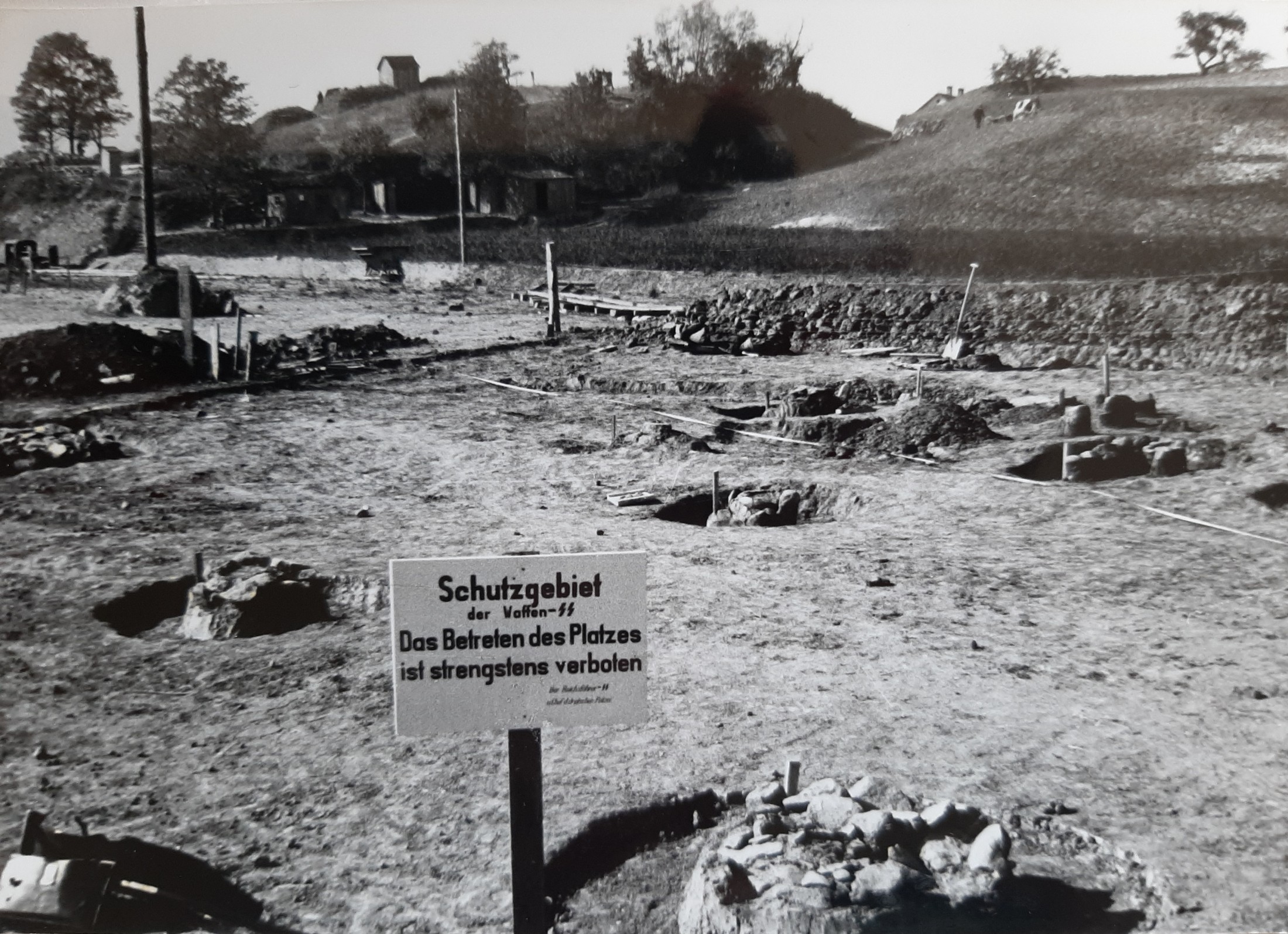
Gusen, browning area
© Bundesdenkmalamt, BDA
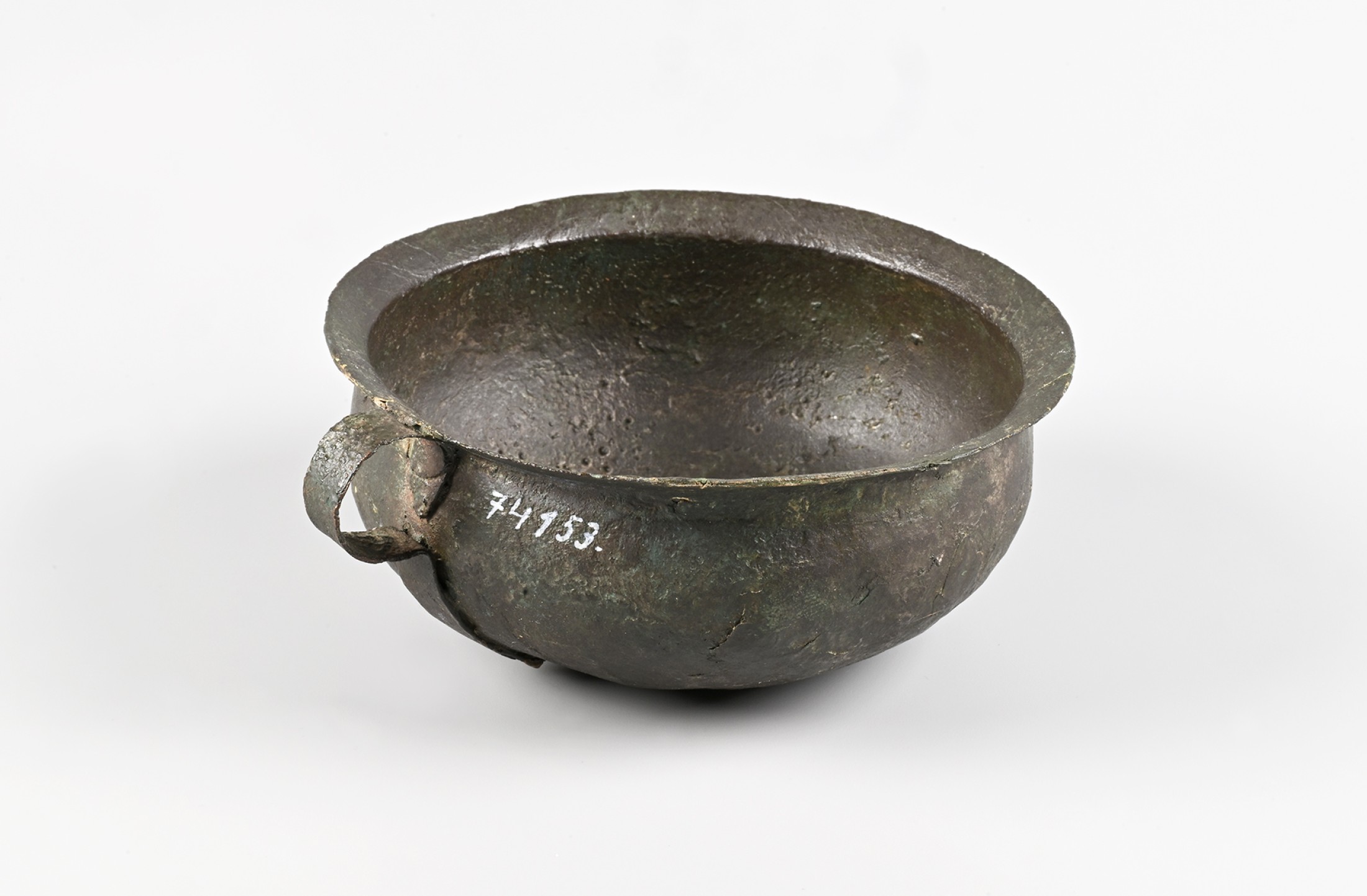
Gusen, bronze cup
© NHM Wien
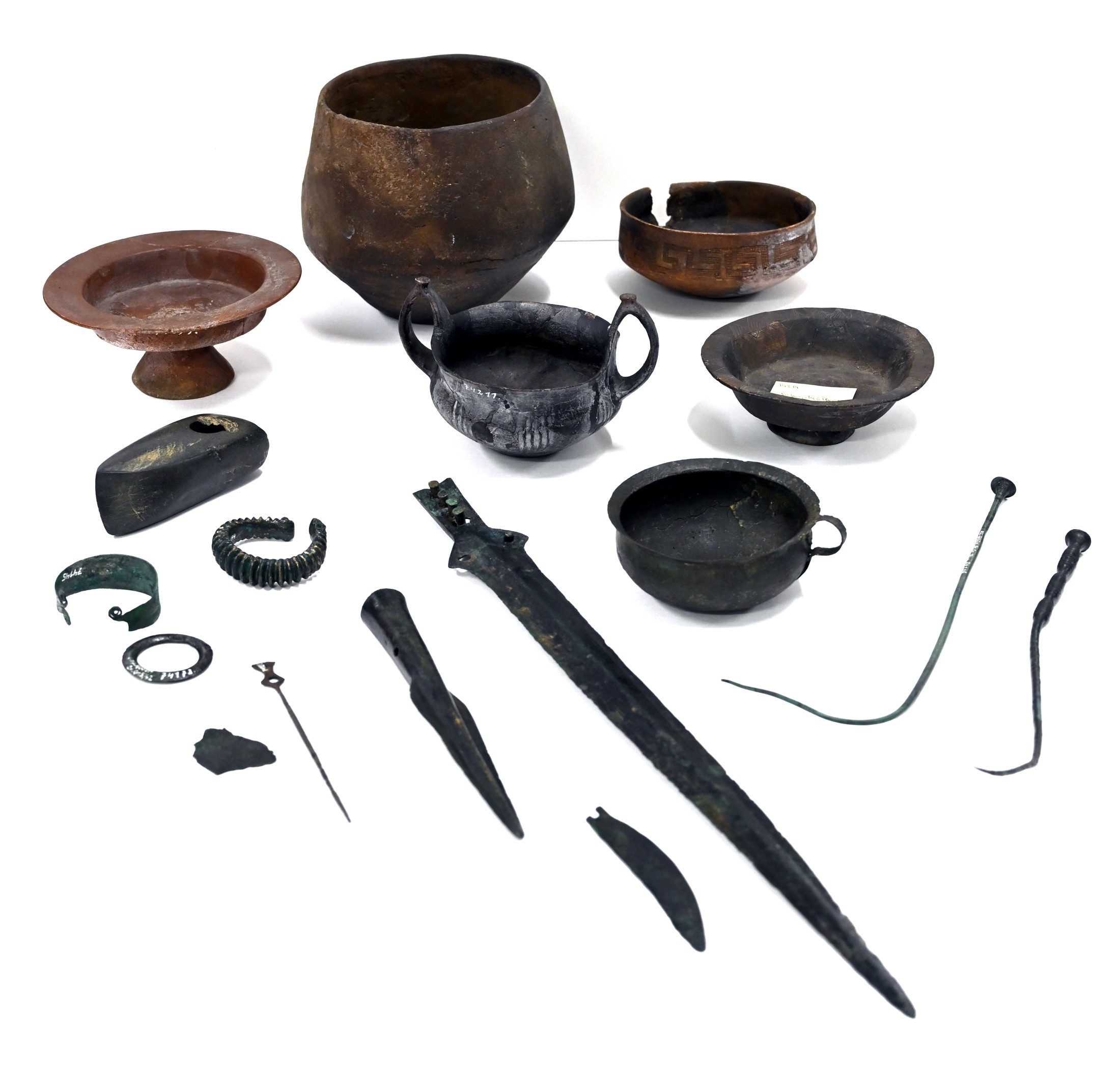
Selection of finds from the Bronze Age tombs in Gusen
© NHM Wien
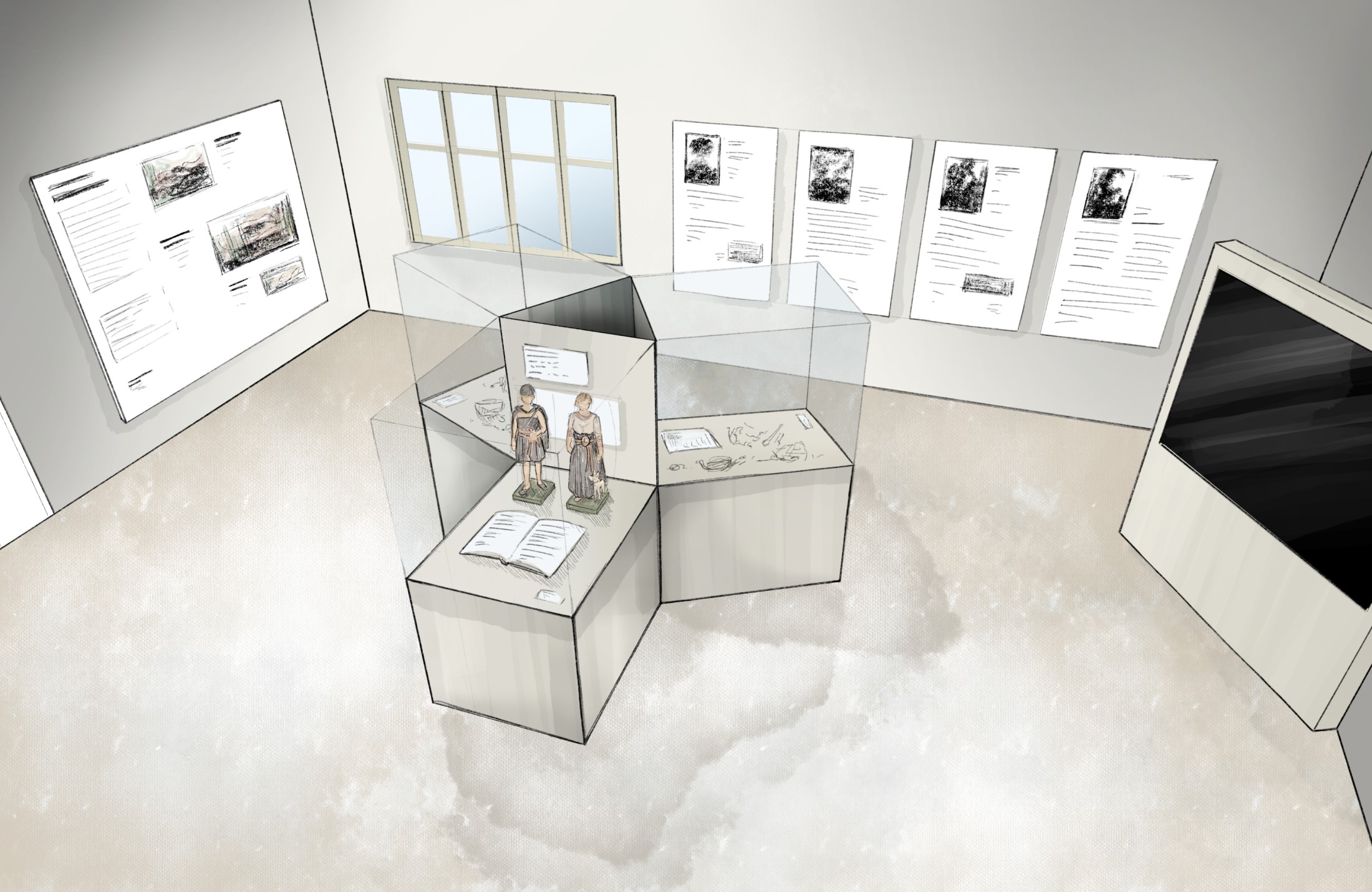
Sketch of the exhibition panels
© M. Almstätter
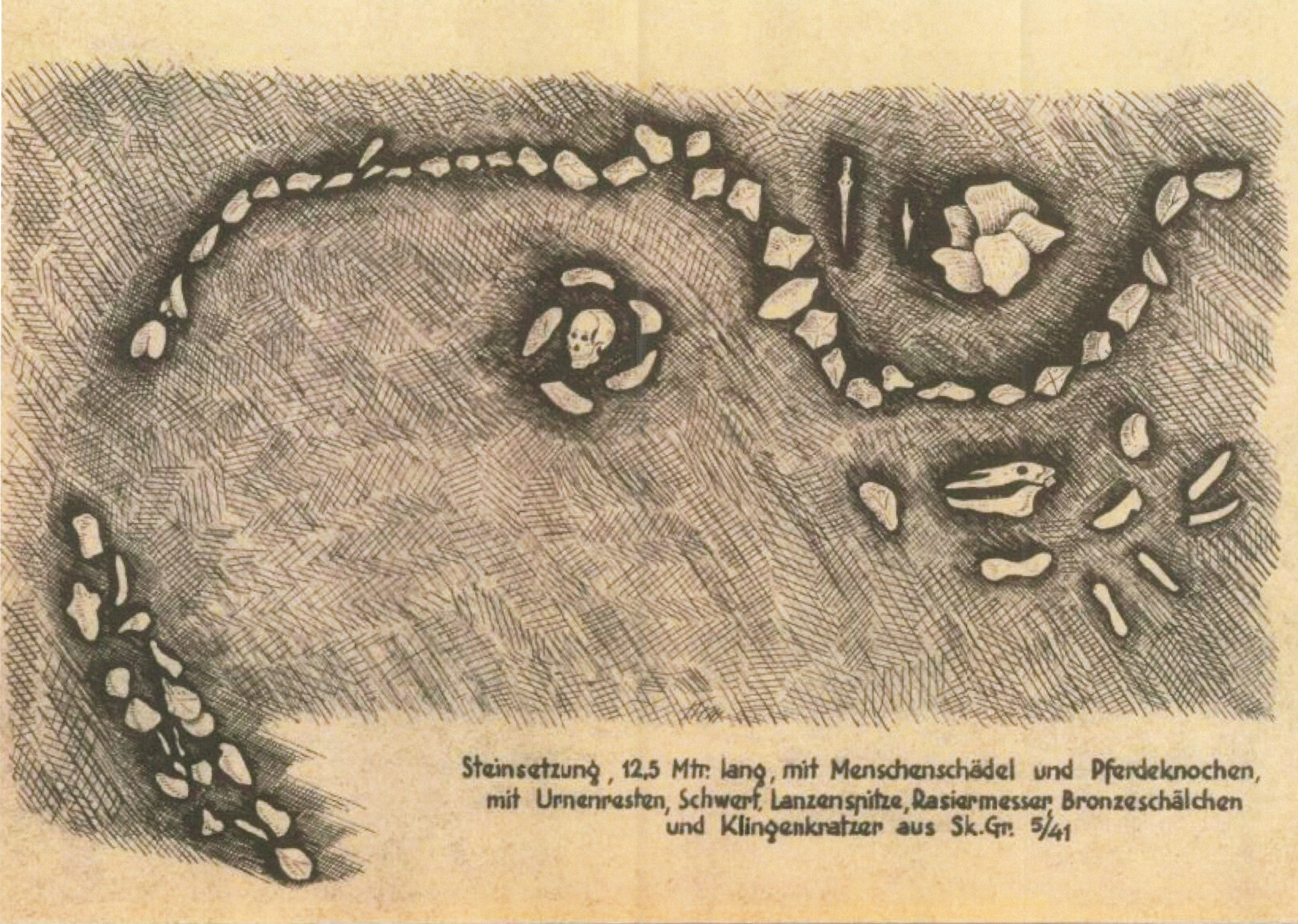
Graphic of a grave in Gusen
© Bundesdenkmalamt, BDA

