
NHM Vienna presents jewelry from early Bronze Age graves in two new showcases
16. December 2025
More than 4,000 years ago, people in Central Europe gave their deceased pieces of jewelry to the grave. These small treasures
were the focus of the international research project "Threads of the Past: Jewellery in graves of the early Bronze Age" and
are now on display in two new showcases at the NHM.
[Translated by eTranslation]
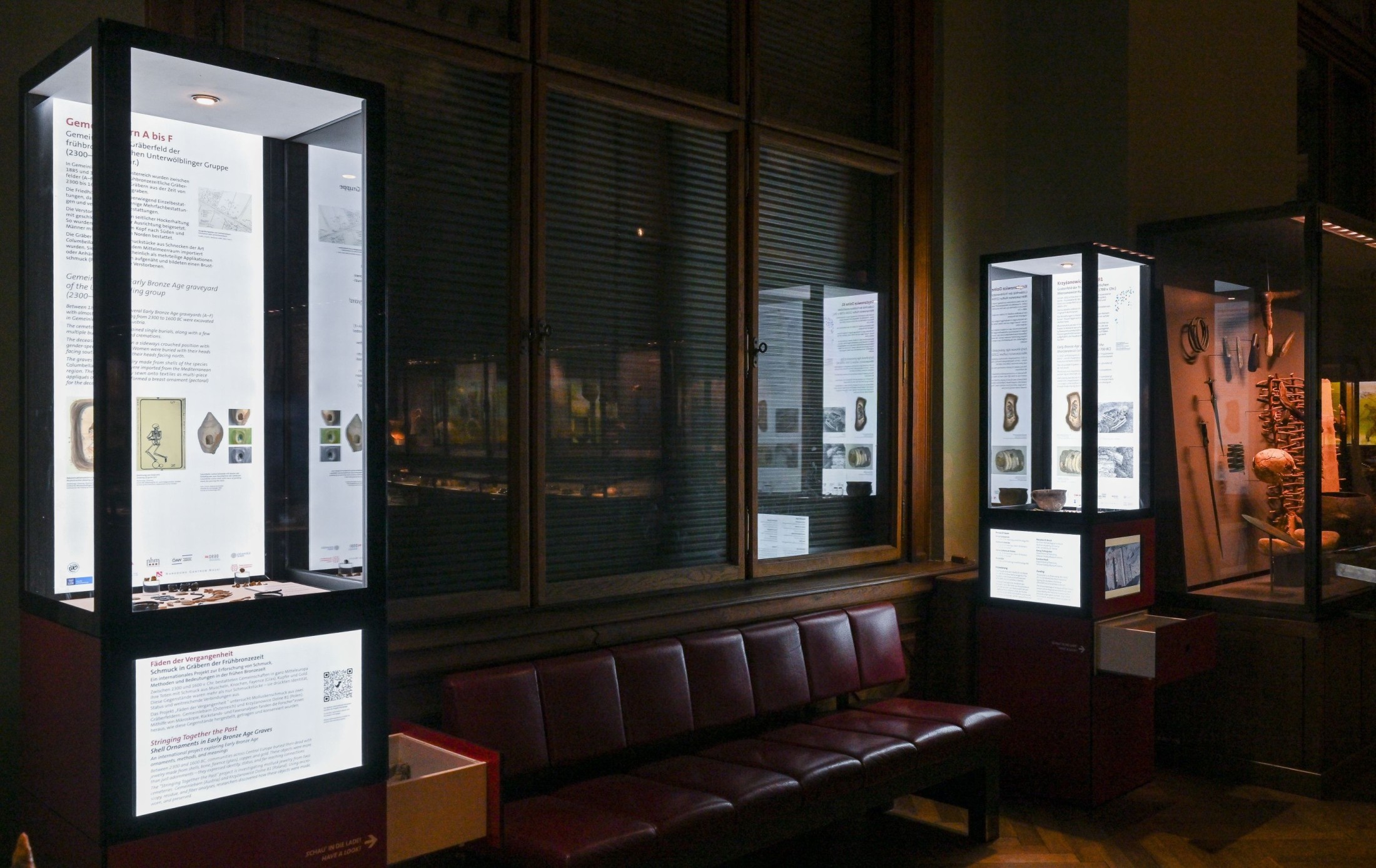
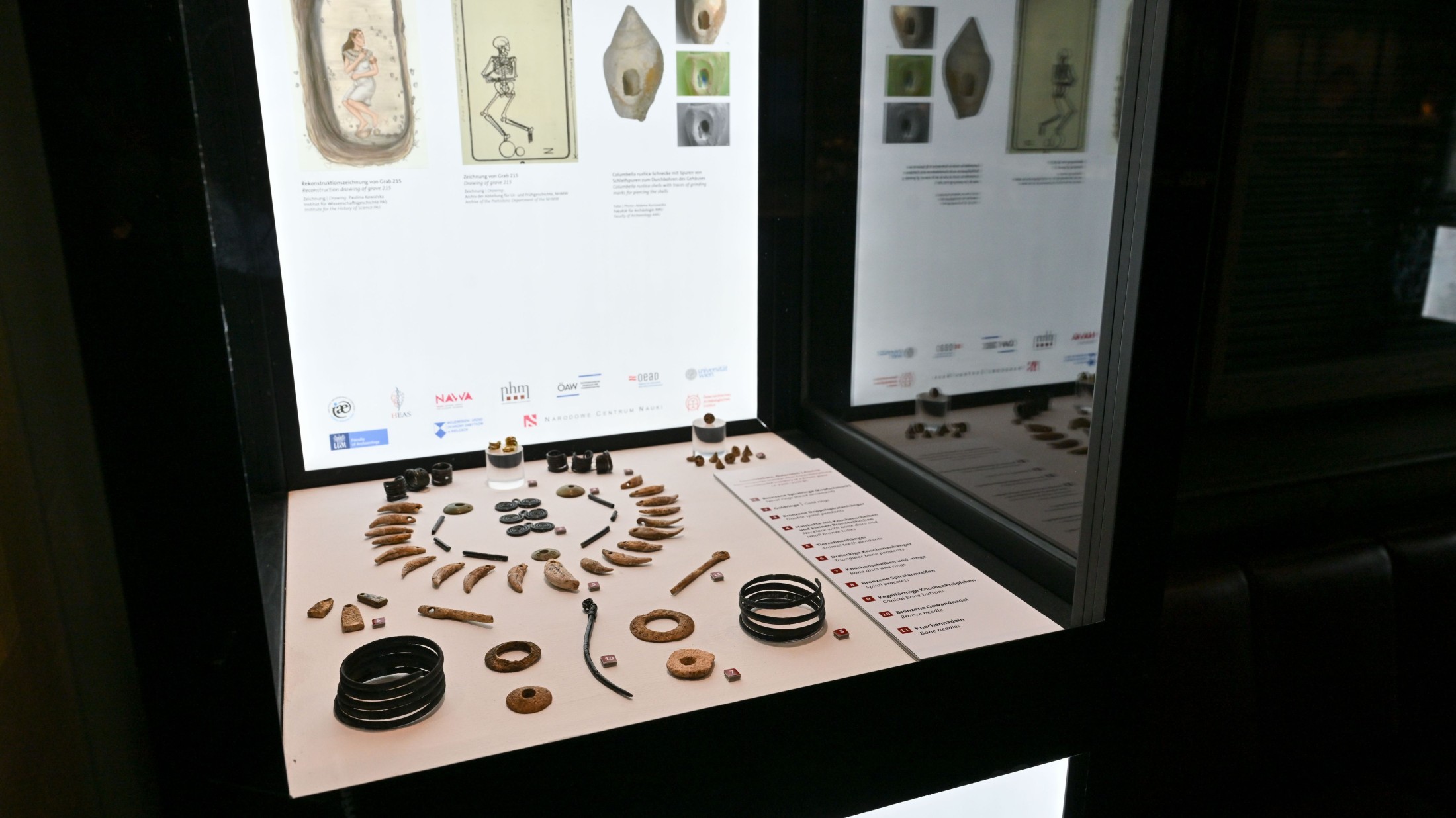
In the early Bronze Age, over 4,000 years ago, people in Central Europe gave small treasures to their deceased in their graves: filigree pearls made of shells, snail shells and glass, shiny needles and daggers made of bronze and hair rings made of gold. These objects were more than just pieces of jewellery – they expressed identity, status and far-reaching connections. The international research project "Threads of the past: Jewellery in graves of the early Bronze Age" brought these inconspicuous objects into the spotlight. From now on, this jewellery will be exhibited to the public in two new showcases in Hall 11 of the NHM Vienna.
In a two-year research project, a team of Polish and Austrian researchers from the Polish Academy of Sciences, the Adam Mickiewicz University in Poznań, the Austrian Academy of Sciences, the University of Vienna (VIAS) and the Natural History Museum in Vienna investigated the jewellery ensembles of the important early Bronze Age grave fields of Gemeinlebarn (Lower Austria) and Krzyżanowice Dolne 81 (Poland). The project was funded by the Polish National Agency for Academic Exchange and the OeAD. The aim was to understand how these ornaments had been worn, attached to clothing and arranged in the tomb – and what stories they tell about the lives of the people of that time.
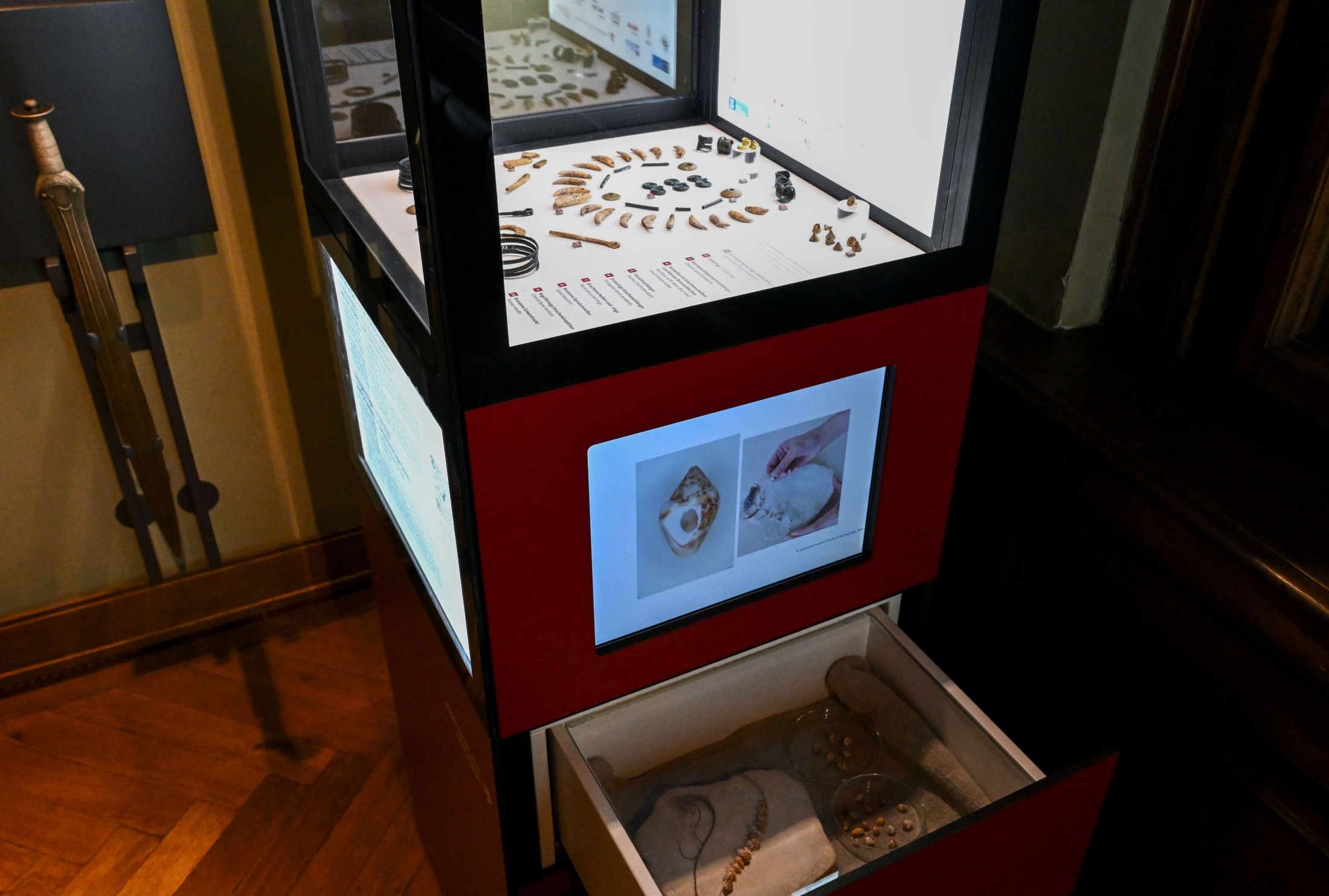
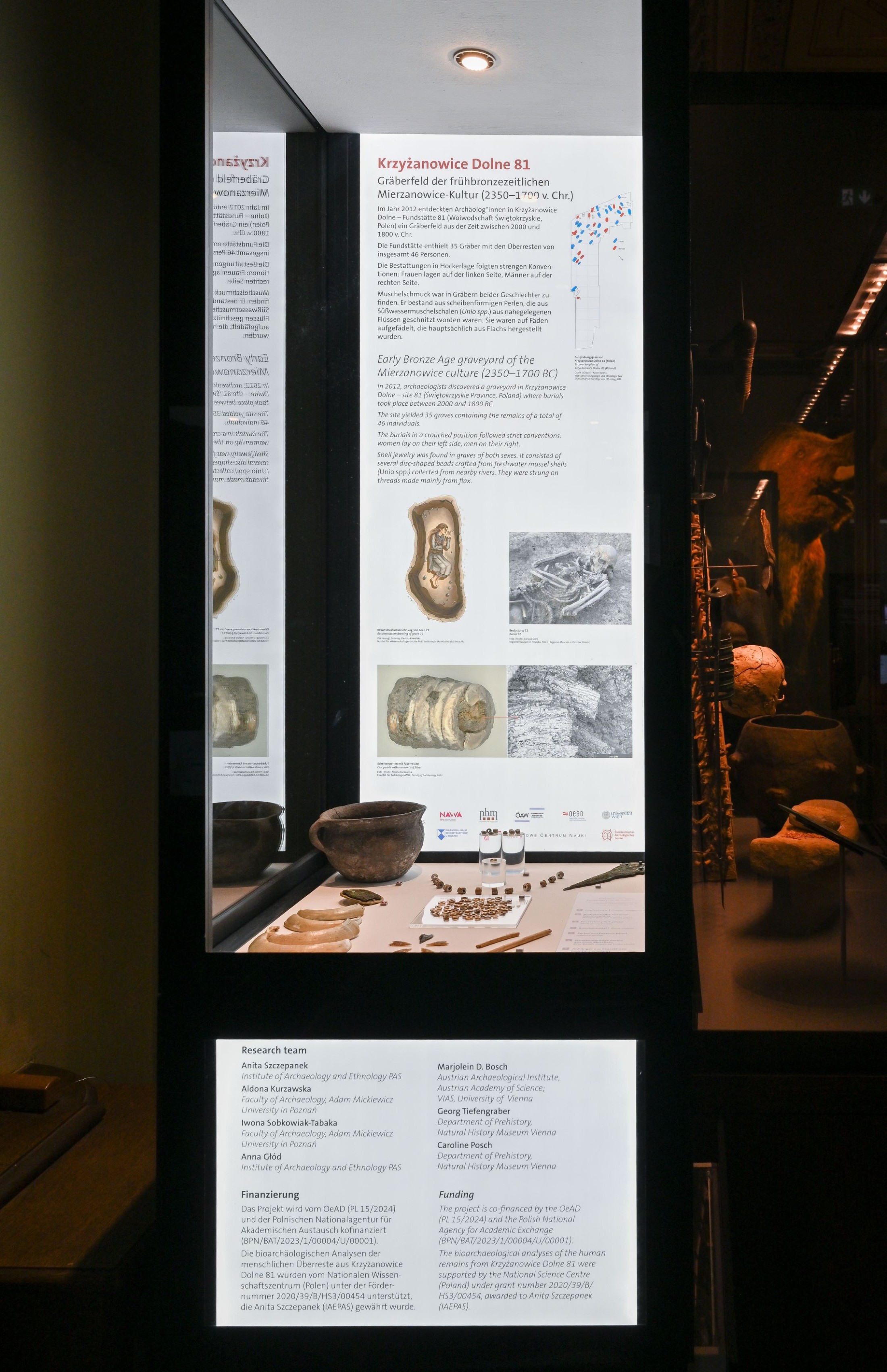
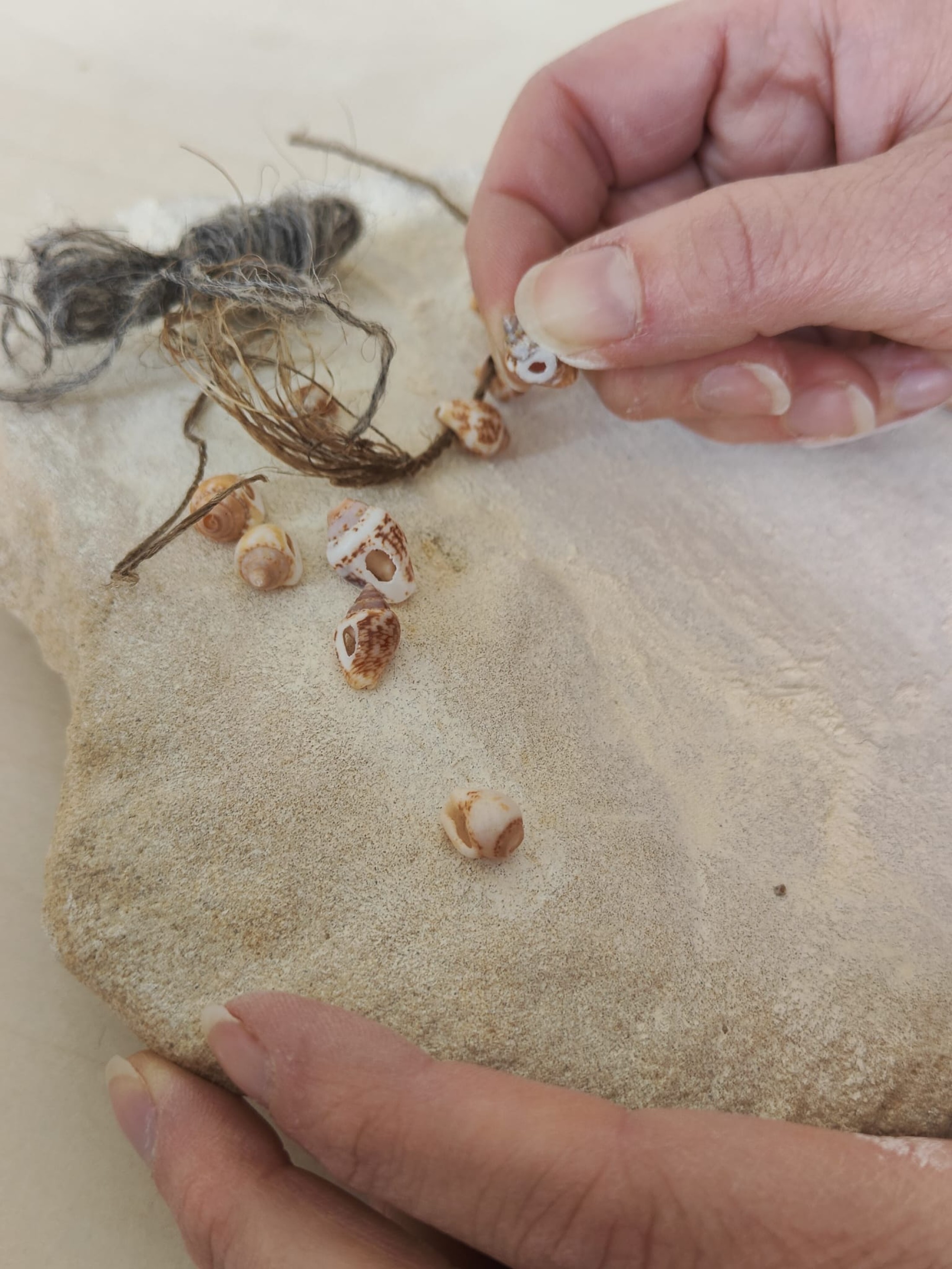
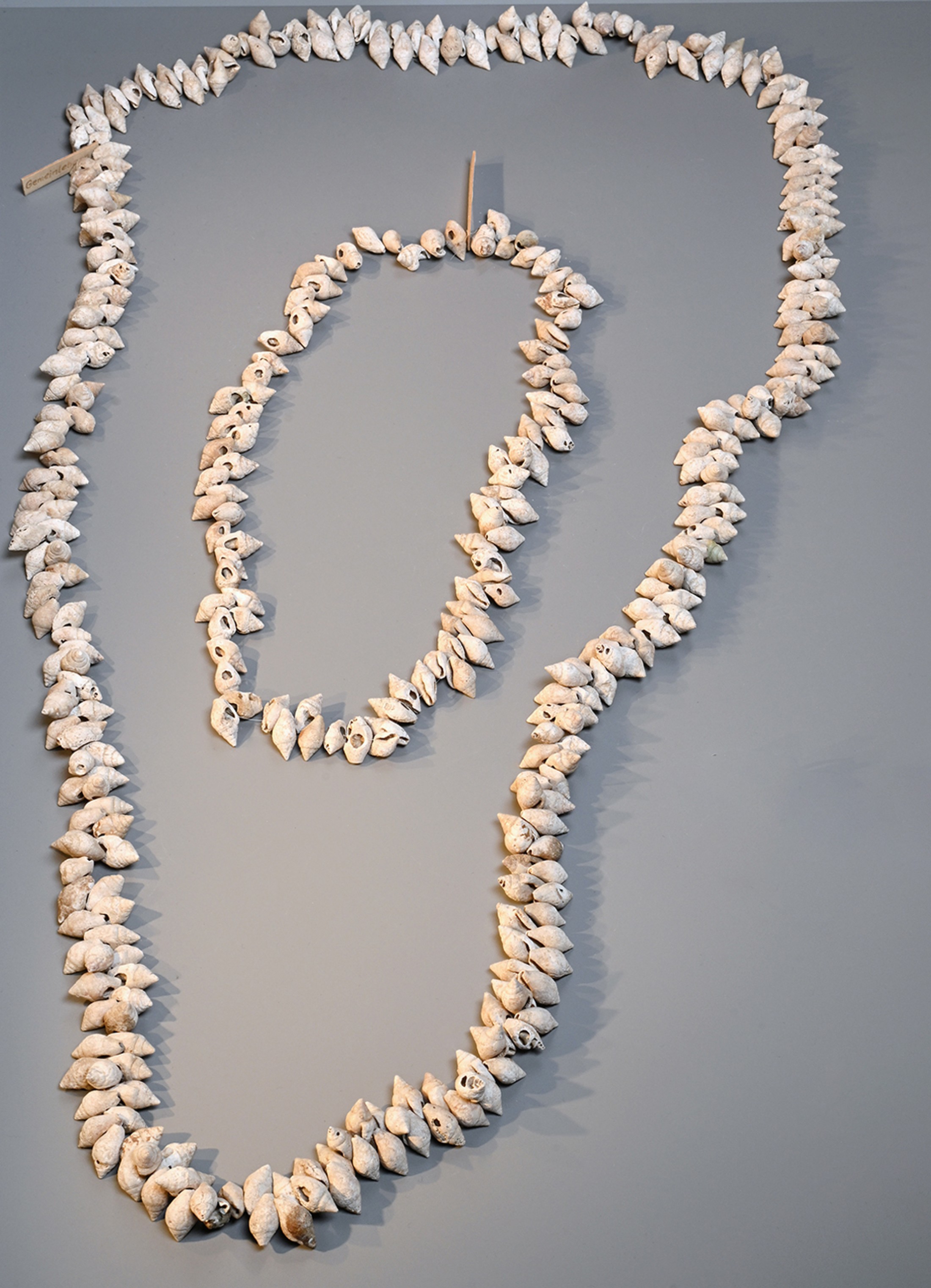
At the center were pearls and pendants made of shells and snail shells. The analysis of microscopic processing traces proves how differently the craftsmen proceeded in the production: In common barns, snail houses were only sanded on one side, so that a hole was created. Their form remained. The snails were then sewn onto textiles. In Krzyżanowice, on the other hand, large mussels were first broken into pieces, cut into small plates, pierced and finally ground into round disc beads. The position of the beads within the burials indicates that they were threaded and worn as chains. In some cases, traces of mineralized plant fibers and thread residues were also found in the pearls. For research, these remains are a stroke of luck, as they are very rarely preserved and open up new insights into the clothing and jewelry practice of the early Bronze Age.
At the same time, the jewels show a dense and wide network of local and supra-regional relations. The disc beads in the graves of Krzyżanowice were carved from freshwater mussels, which people collected in local rivers. In contrast, common barns are snails of the genus Columbella rustica, which originate from the coasts of the Mediterranean.
These discoveries show: The Bronze Age was not an isolated world, but a living web with widely connected threads of contacts, exchange of ideas and craftsmanship.
Until 14 February 2026, the results of the project "Strings of the Past" can be admired in Hall 11 of the Natural History Museum Vienna.
Scientific inquiry note:
Dr. Caroline Posch
Researcher, Prehistoric Department, NHM Vienna
https://www.nhm.at/en/caroline_posch
Tel.: + 43 (1) 521 77-288 I caroline.posch@nhm.at
General request for information:
Mag. Irina Kubadinow
Head of Press & Public Relations, press spokesperson
https://www.nhm.at/irina_kubadinow
Tel.: + 43 (1) 521 77-410 I irina.kubadinow@nhm.at
Mag. Klara Vakaj
Press officer
https://www.nhm.at/klara_vakaj
Tel.: + 43 (1) 521 77-626 I klara.vakaj@nhm.at
In the early Bronze Age, over 4,000 years ago, people in Central Europe gave small treasures to their deceased in their graves: filigree pearls made of shells, snail shells and glass, shiny needles and daggers made of bronze and hair rings made of gold. These objects were more than just pieces of jewellery – they expressed identity, status and far-reaching connections. The international research project "Threads of the past: Jewellery in graves of the early Bronze Age" brought these inconspicuous objects into the spotlight. From now on, this jewellery will be exhibited to the public in two new showcases in Hall 11 of the NHM Vienna.
In a two-year research project, a team of Polish and Austrian researchers from the Polish Academy of Sciences, the Adam Mickiewicz University in Poznań, the Austrian Academy of Sciences, the University of Vienna (VIAS) and the Natural History Museum in Vienna investigated the jewellery ensembles of the important early Bronze Age grave fields of Gemeinlebarn (Lower Austria) and Krzyżanowice Dolne 81 (Poland). The project was funded by the Polish National Agency for Academic Exchange and the OeAD. The aim was to understand how these ornaments had been worn, attached to clothing and arranged in the tomb – and what stories they tell about the lives of the people of that time.
At the center were pearls and pendants made of shells and snail shells. The analysis of microscopic processing traces proves how differently the craftsmen proceeded in the production: In common barns, snail houses were only sanded on one side, so that a hole was created. Their form remained. The snails were then sewn onto textiles. In Krzyżanowice, on the other hand, large mussels were first broken into pieces, cut into small plates, pierced and finally ground into round disc beads. The position of the beads within the burials indicates that they were threaded and worn as chains. In some cases, traces of mineralized plant fibers and thread residues were also found in the pearls. For research, these remains are a stroke of luck, as they are very rarely preserved and open up new insights into the clothing and jewelry practice of the early Bronze Age.
At the same time, the jewels show a dense and wide network of local and supra-regional relations. The disc beads in the graves of Krzyżanowice were carved from freshwater mussels, which people collected in local rivers. In contrast, common barns are snails of the genus Columbella rustica, which originate from the coasts of the Mediterranean.
These discoveries show: The Bronze Age was not an isolated world, but a living web with widely connected threads of contacts, exchange of ideas and craftsmanship.
Until 14 February 2026, the results of the project "Strings of the Past" can be admired in Hall 11 of the Natural History Museum Vienna.
Scientific inquiry note:
Dr. Caroline Posch
Researcher, Prehistoric Department, NHM Vienna
https://www.nhm.at/en/caroline_posch
Tel.: + 43 (1) 521 77-288 I caroline.posch@nhm.at
General request for information:
Mag. Irina Kubadinow
Head of Press & Public Relations, press spokesperson
https://www.nhm.at/irina_kubadinow
Tel.: + 43 (1) 521 77-410 I irina.kubadinow@nhm.at
Mag. Klara Vakaj
Press officer
https://www.nhm.at/klara_vakaj
Tel.: + 43 (1) 521 77-626 I klara.vakaj@nhm.at
© NHM Wien, Chloe Potter
© NHM Wien, Chloe Potter
© NHM Wien, Chloe Potter
© NHM Wien, Chloe Potter
Jewellery from early Bronze Age tombs
Experimental production of a chain of Columbella rustica snails
© UAM, Aldona Kurzawska
Jewellery from early Bronze Age tombs
Perforated Columbella rustica snails from the early Bronze Age graveyard of Gemeinlebarn (Lower Austria)
© NHM Wien, Chloe Potter

