
"Traces of diversity of life": Metabarcoding Symposium at the Natural History Museum Vienna
17. September 2026
A hair or dandruff can convict a perpetrator – crime stories are known for the possibilities offered by DNA analysis. But it's not just humans who deliver body cells to the environment. Organisms in water samples from rivers and lakes or in soil samples can also be detected via their DNA traces.
[Translated by eTranslation]
Metabarcoding – i.e. DNA-based identification of species communities – is increasingly used in biodiversity monitoring. For this reason, ABOL, the Austrian Barcode of Life Initiative, together with the University of Graz and the WasserCluster Lunz, organizes a symposium that provides insights into the international and national state of research in order to promote the standardized application of these methods together with partners from business, science and politics.
The ABOL initiative, coordinated by the Natural History Museum Vienna, has been working for years to create the conditions for DNA-based biodiversity monitoring in Austria. One of the central questions at the symposium is how standardization can lead to increased comparability of results. In basic research, the use of metabarcoding to determine local biodiversity by means of environmental samples is already fully established. As part of the symposium, Austrian researchers will present metabarcoding-based results for indigenous rivers, lakes and soils, as well as research at international level, e.g. on water points in the African savannah.
On the second day, the exchange of competences is in the foreground. Together with 50 participants, Dr. Bettina Thalinger (WasserCluster Lunz) and Dr. Christoph Hahn (University of Graz) work out the steps that must be considered for the correct interpretation of metabarcoding results in workshops. In addition, the participants can carry out a bioinformatic analysis of metabarcoding data themselves and gain practical experience.
Details about the event can be found here.
Press photos
Scientific inquiry notice
Dr. Michaela Sonnleitner
ABOL Coordination Team
Tel.: +43 1 521 77-435
michaela.sonnleitner@nhm.at
General request for information
Mag. Irina Kubadinow
Head of Press & Public Relations, Press Spokesperson
Tel.: + 43 1 521 77-410
irina.kubadinow@nhm.at
Mag. Klara Vakaj
Press officer
Tel.: +43 1 521 77-626
klara.vakaj@nhm.at
Metabarcoding – i.e. DNA-based identification of species communities – is increasingly used in biodiversity monitoring. For this reason, ABOL, the Austrian Barcode of Life Initiative, together with the University of Graz and the WasserCluster Lunz, organizes a symposium that provides insights into the international and national state of research in order to promote the standardized application of these methods together with partners from business, science and politics.
Insight into international metabarcoding research and application
Metabarcoding is very popular worldwide as a new methodological approach for the recording of biodiversity. At European level, there are ongoing efforts to integrate DNA-based biodiversity monitoring into routine surveys in terrestrial and aquatic ecosystems. At the same time, an ongoing optimization of laboratory steps and sequencing technology, driven by business partners and research projects, takes place. With Prof. Bernd Hänfling (University of the Highlands and Islands, Inverness, Great Britain) and Prof. Henrik Krehenwinkel (University of Trier, Germany), two of Europe's leading researchers are visiting Vienna. Her research is concerned with the application of molecular methods, in particular with metabarcoding approaches, in water (Bernd Hänfling) and on land (Henrik Krehenwinkel).The ABOL initiative, coordinated by the Natural History Museum Vienna, has been working for years to create the conditions for DNA-based biodiversity monitoring in Austria. One of the central questions at the symposium is how standardization can lead to increased comparability of results. In basic research, the use of metabarcoding to determine local biodiversity by means of environmental samples is already fully established. As part of the symposium, Austrian researchers will present metabarcoding-based results for indigenous rivers, lakes and soils, as well as research at international level, e.g. on water points in the African savannah.
Commercial providers, discussion panel and practical exercises
An essential aspect of the event is the direct exchange between science, industry and politics. Several companies specialized in biodiversity analysis using metabarcoding are actively involved in the event. Within the framework of a panel discussion, both the methodology itself and its use within Austria will be discussed together with the more than 90 participants.On the second day, the exchange of competences is in the foreground. Together with 50 participants, Dr. Bettina Thalinger (WasserCluster Lunz) and Dr. Christoph Hahn (University of Graz) work out the steps that must be considered for the correct interpretation of metabarcoding results in workshops. In addition, the participants can carry out a bioinformatic analysis of metabarcoding data themselves and gain practical experience.
Well networked into the future
Within Austria, the number of research projects dealing with biodiversity detection using DNA traces is constantly increasing. At the same time, more and more people in government organizations and business are dealing with this topic. In order to enable a direct and low-threshold exchange of information and competences between science, application and politics and to promote cooperation in the future, the creation of a community of interests on the subject of metabarcoding or environmental DNA (eDNA) is an important next process to be launched within the framework of the symposium.Details about the event can be found here.
Press photos
Scientific inquiry notice
Dr. Michaela Sonnleitner
ABOL Coordination Team
Tel.: +43 1 521 77-435
michaela.sonnleitner@nhm.at
General request for information
Mag. Irina Kubadinow
Head of Press & Public Relations, Press Spokesperson
Tel.: + 43 1 521 77-410
irina.kubadinow@nhm.at
Mag. Klara Vakaj
Press officer
Tel.: +43 1 521 77-626
klara.vakaj@nhm.at
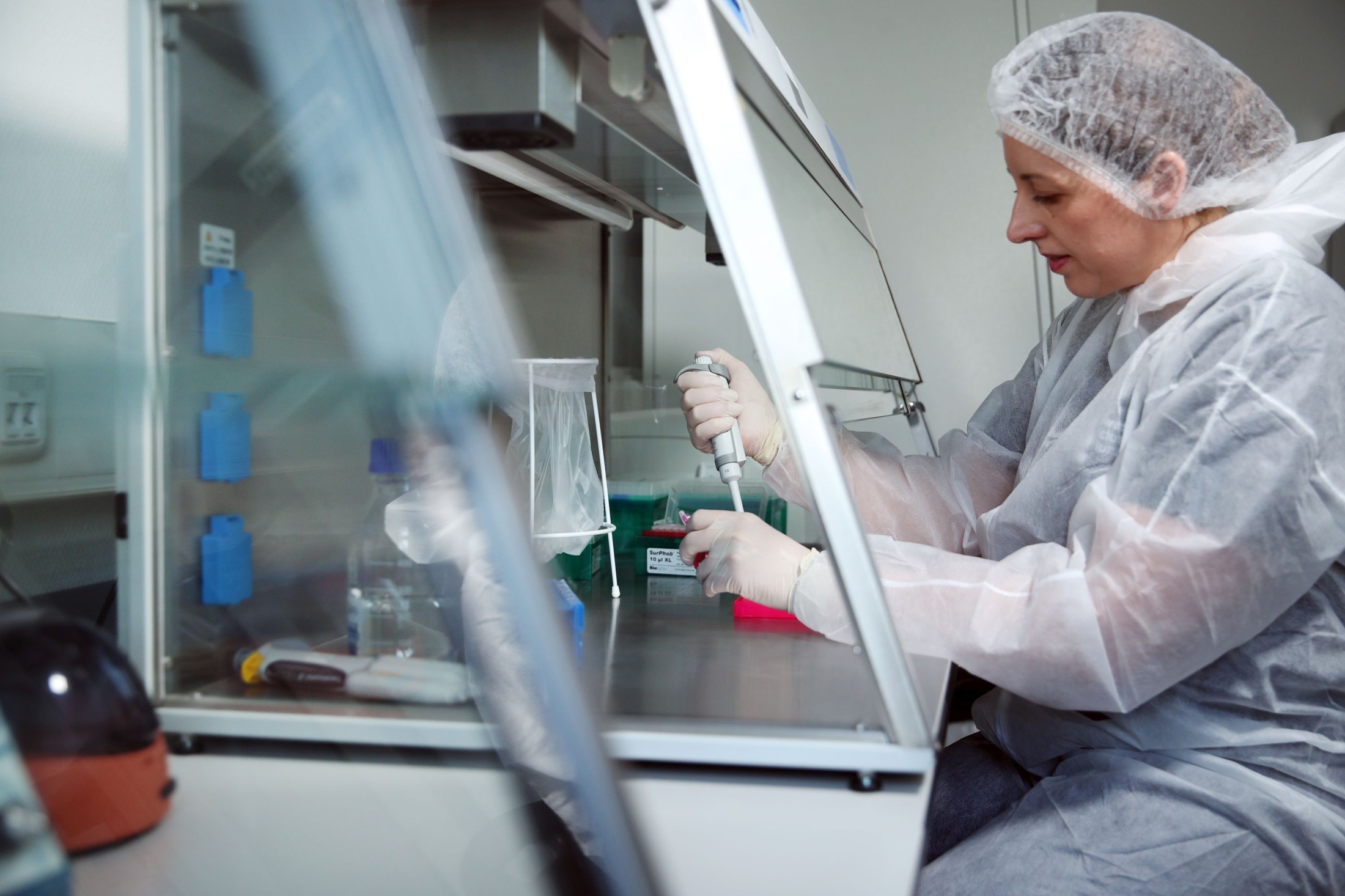
Metabarcoding erfordert die Vervielfältigung kurzer DNA-Stränge. Für Umwelt-DNA-Proben muss die Vorbereitung dieses Prozesses, der PCR, in einer extrem sauberen Laborumgebung erfolgen, um Kontaminationen zu vermeiden. © Weinfranz
Weitere Pressebilder zum Download finden Sie hier.
Weitere Pressebilder zum Download finden Sie hier.

