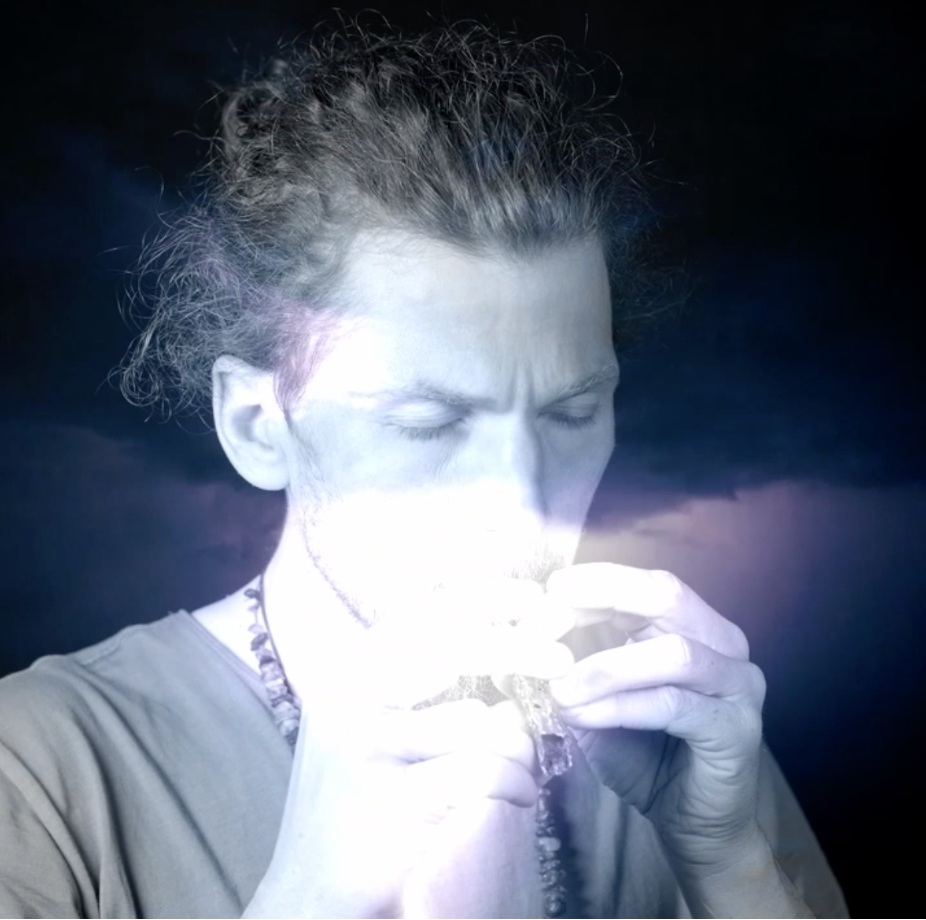
Fulgurite Flute
Talk & Performance, 22nd VIENNA ART WEEK, 6–13 November
Lightning is a high-energy electrical discharge, a process of equalization between clouds and Earth. In a single instant, the surrounding air reaches temperatures of up to 30,000 Kelvin, about five times the temperature of the Sun's surface. In sand, the energy of the discharge transforms quartz into glass.
What remains is a fulgurite: a hollow, branching structure in which the path of lightning materializes, holding an extreme event in mineral form. In the Fulgurite Flute, this geological trace becomes a resonant body. Through the flow of breath, the mineral trace of a lightning strike reawakens as sound. The individual form of each fulgurite shapes how the air vibrates within it and the sound that emerges. The fulgurite is both geological record and instrument.
Barbara Husar developed the Fulgurite Flute in dialogue with astrophysicist Michel Breitfellner, tracing the passage from geophysical event to sound. Together with flute maker and musician Stefan Kronsteiner and producer André Lehner, the project continues in the album FLUX FULGUR: a series of fulgurite flutes in interplay with the elements that brought them into being.
The project is supported by illwerke vkw.
Concept and artistic direction: Barbara Husar
Astrophysics: Michel Breitfellner
Flute making & music: Stefan Kronsteiner
Production: André Lehner
Fulgurites (from the Latin word “fulgur”, meaning lightening) form when lightning strikes the ground and melts the soil. Often, the material in the center is blown away or vaporized, creating a hole—hence the German name “Blitzröhre” (lightning tube). There are also fulgurites that are not generated by natural lightning but by high-voltage power lines that have fallen to the ground. A famous example was excavated and scientifically examined by the NHM in Kaltenbach, Vitis, Lower Austria, in 2007. The oldest fulgurite in the collection is likely a prepared specimen from Germany dating to 1823. A fulgurite from an unknown location is on display in Hall IV, showcase 188, among the special rocks formed under extreme conditions (temperature, pressure, and/or deformation velocity).
Limited number of 20 free tickets available.
Register here.
Once sold out: admission to the event possible with a valid museum ticket.