
Alpine Glaciers in Transition: Historical Comparison Photographs by Jürgen Merz
10. November 2025
The Natural History Museum Vienna is dedicating a special exhibition to glacier photography by Jürgen Merz. From 20 November 2025 to 10 January 2027, the exhibition "Alpine Glaciers in Transition: Historical Comparison Photographs" will be on display.
[Translated by eTranslation]
"With the comparison images, we want to show the speed at which ecosystems are changing," explains Director General Dr. Katrin Vohland, explaining the intention of the exhibition, "and we can talk to our guests about the far-reaching consequences this has for vegetation, animals and ultimately also humans, not only in the Alps."
Glaciers are sensitive climate indicators. More than 99% of the world's glaciers are melting. Their retreat shows how rapidly our climate is warming. According to the measurements and forecasts of the Austrian Alpine Club, Austria could already be largely ice-free in 40 to 45 years. The comparison of current images with historical photographs illustrates the extent of the glacier decline in the entire Alpine region.
"With my photos, I don't want to raise my index finger; Rather, I want to touch people emotionally and show that our glaciers are an essential part of the landscape of our Alps. Approaching them from different angles reveals an incredible beauty – down to the details," explains photographer Jürgen Merz.
In the new photo exhibition of the NHM Vienna, it becomes clear that climate change has long since arrived – including with us – and is highly concrete. In unique pairs of pictures, Jürgen Merz shows glaciers "before and after". He meticulously traces the locations of photographers of the 19th and early 20th centuries, where they found magnificent glacier landscapes at that time. Decades later, Merz encounters completely changed landscapes in the same places from which the "eternal ice" has long since disappeared. Never before has the extent of the glacier decline in the entire Alpine region been shown in such a staggering and haunting way as compared to the current pictures with their historical counterparts.
Jürgen Merz is a glacier photographer and approaches the white giants from different perspectives. He creates classic landscape images, but also searches for historical places where photographers captured the panorama more than a hundred years ago.
Another focus of his work is the documentation of glacier caves. The search for abstract structures and patterns in the ice at close range, but also by means of drones from a bird's eye view, rounds off his portfolio as a photographer.
Glaciers are much more than just spectacular natural beauties. They are important water reservoirs, climate witnesses and sensitive early warning systems for global warming. Glaciers store precipitation in the form of snow and ice in winter and release it slowly as meltwater in summer. As a result, they contribute significantly to the continuous water supply of rivers and valleys and are an important factor for drinking water supply, agriculture and energy production through hydropower," says Univ. Prof. Dr. Mathias Harzhauser, Director of the Geological-Paläontological Department of the NHM Vienna and source of ideas for the exhibition.
And further: The glaciers in the Alps date back to the last ice age. After growing during the ‘small ice age’, they peaked around 1850. Today, their ice is dwindling rapidly. In warm periods, a certain glacial decline is natural, but this process has accelerated dramatically in recent decades. The withdrawal rate is a clearly measurable indicator of climate change. Since the beginning of the 21st century alone, many glaciers in the Alps have lost more than half of their volume. Even at high altitudes, there is hardly any snow left over the summer, so no new ice can form. The melting of the glaciers has not only ecological and economic consequences, but also safety-related consequences. Unstable slopes and rock falls endanger the population as well as tourists. Glaciers are more than melting ice. The protection of glaciers is therefore not only a concern for environmental protection, but also a necessity for the long-term protection of our livelihoods in the Alps. Although climate change has long been anchored in the general consciousness, the effects often have an abstract effect – for example as seemingly low temperature deviations from long-term measurements," says the geologist of the NHM Vienna.
Further insights into the work of Jürgen Merz: www.abstract-landscape.com
General request for information:
Mag. Irina Kubadinow
Head of Press & Public Relations, Press Spokesperson
https://www.nhm.at/irina_kubadinow
Tel.: + 43 (1) 521 77-410 I irina.kubadinow@nhm.at
Mag. Klara Vakaj
Press officer
https://www.nhm.at/klara_vakaj
Tel.: + 43 (1) 521 77-626 I klara.vakaj@nhm.at
"With the comparison images, we want to show the speed at which ecosystems are changing," explains Director General Dr. Katrin Vohland, explaining the intention of the exhibition, "and we can talk to our guests about the far-reaching consequences this has for vegetation, animals and ultimately also humans, not only in the Alps."
Glaciers are sensitive climate indicators. More than 99% of the world's glaciers are melting. Their retreat shows how rapidly our climate is warming. According to the measurements and forecasts of the Austrian Alpine Club, Austria could already be largely ice-free in 40 to 45 years. The comparison of current images with historical photographs illustrates the extent of the glacier decline in the entire Alpine region.
"With my photos, I don't want to raise my index finger; Rather, I want to touch people emotionally and show that our glaciers are an essential part of the landscape of our Alps. Approaching them from different angles reveals an incredible beauty – down to the details," explains photographer Jürgen Merz.
In the new photo exhibition of the NHM Vienna, it becomes clear that climate change has long since arrived – including with us – and is highly concrete. In unique pairs of pictures, Jürgen Merz shows glaciers "before and after". He meticulously traces the locations of photographers of the 19th and early 20th centuries, where they found magnificent glacier landscapes at that time. Decades later, Merz encounters completely changed landscapes in the same places from which the "eternal ice" has long since disappeared. Never before has the extent of the glacier decline in the entire Alpine region been shown in such a staggering and haunting way as compared to the current pictures with their historical counterparts.
Jürgen Merz is a glacier photographer and approaches the white giants from different perspectives. He creates classic landscape images, but also searches for historical places where photographers captured the panorama more than a hundred years ago.
Another focus of his work is the documentation of glacier caves. The search for abstract structures and patterns in the ice at close range, but also by means of drones from a bird's eye view, rounds off his portfolio as a photographer.
Glaciers are much more than just spectacular natural beauties. They are important water reservoirs, climate witnesses and sensitive early warning systems for global warming. Glaciers store precipitation in the form of snow and ice in winter and release it slowly as meltwater in summer. As a result, they contribute significantly to the continuous water supply of rivers and valleys and are an important factor for drinking water supply, agriculture and energy production through hydropower," says Univ. Prof. Dr. Mathias Harzhauser, Director of the Geological-Paläontological Department of the NHM Vienna and source of ideas for the exhibition.
And further: The glaciers in the Alps date back to the last ice age. After growing during the ‘small ice age’, they peaked around 1850. Today, their ice is dwindling rapidly. In warm periods, a certain glacial decline is natural, but this process has accelerated dramatically in recent decades. The withdrawal rate is a clearly measurable indicator of climate change. Since the beginning of the 21st century alone, many glaciers in the Alps have lost more than half of their volume. Even at high altitudes, there is hardly any snow left over the summer, so no new ice can form. The melting of the glaciers has not only ecological and economic consequences, but also safety-related consequences. Unstable slopes and rock falls endanger the population as well as tourists. Glaciers are more than melting ice. The protection of glaciers is therefore not only a concern for environmental protection, but also a necessity for the long-term protection of our livelihoods in the Alps. Although climate change has long been anchored in the general consciousness, the effects often have an abstract effect – for example as seemingly low temperature deviations from long-term measurements," says the geologist of the NHM Vienna.
Further insights into the work of Jürgen Merz: www.abstract-landscape.com
General request for information:
Mag. Irina Kubadinow
Head of Press & Public Relations, Press Spokesperson
https://www.nhm.at/irina_kubadinow
Tel.: + 43 (1) 521 77-410 I irina.kubadinow@nhm.at
Mag. Klara Vakaj
Press officer
https://www.nhm.at/klara_vakaj
Tel.: + 43 (1) 521 77-626 I klara.vakaj@nhm.at

Rhonegletscher, Switzerland
While the Postbus in Switzerland used to pass directly by the mighty ice break of the glacier, today the passengers only look at an empty valley.
© Schweizerische Nationalbibliothek, Eidgenössisches Archiv für Denkmalpflege: Archiv Wehrli; Jürgen Merz
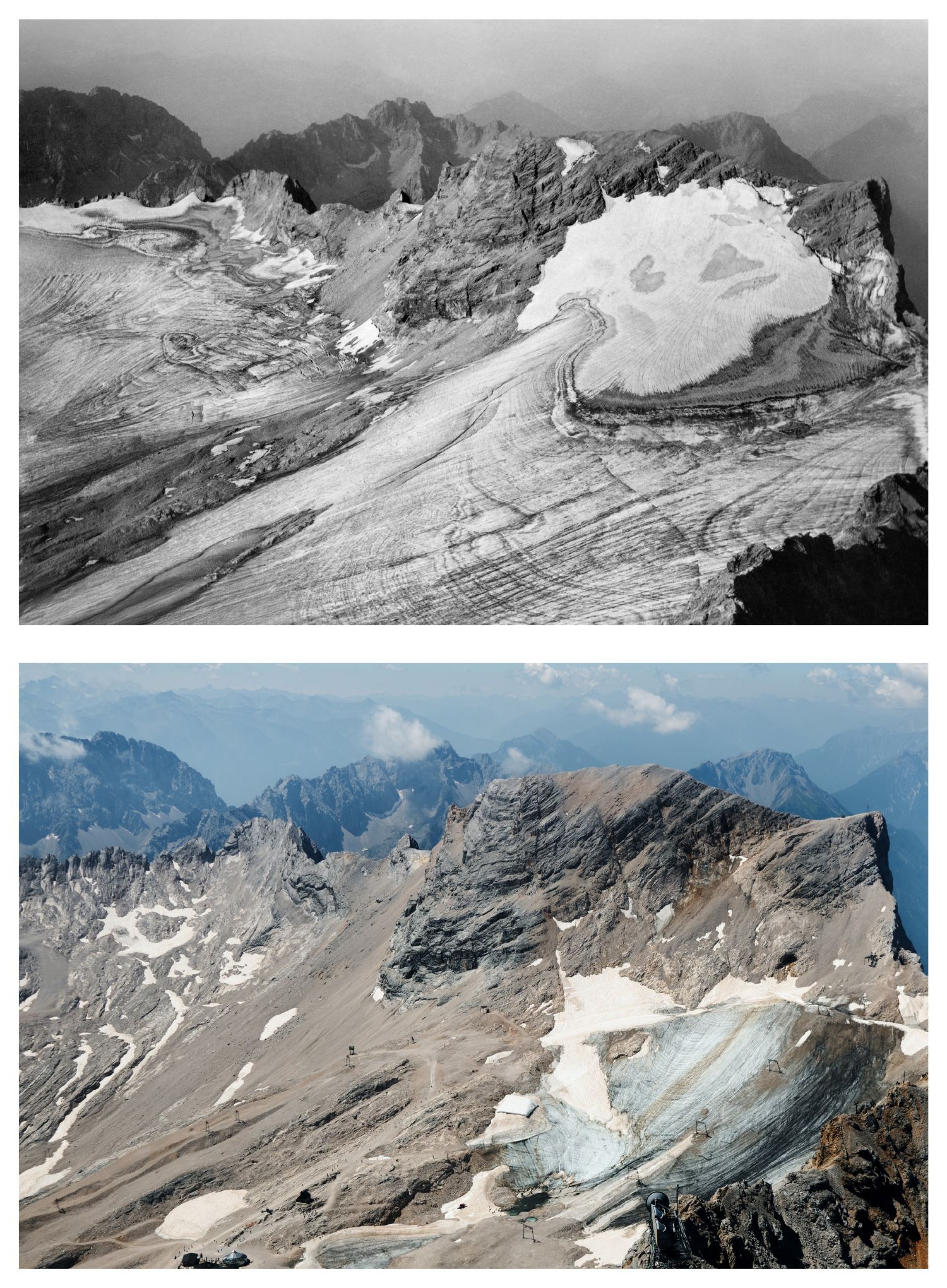
Schneeferner Zugspitze, Germany
The glacier on the Zugspitze is one of the last four glaciers in Germany. It will probably disappear completely in the next 10 to 20 years.
© Aufnahme und Verlag A. Somweber, Ehrwald, Tirol; Jürgen Merz
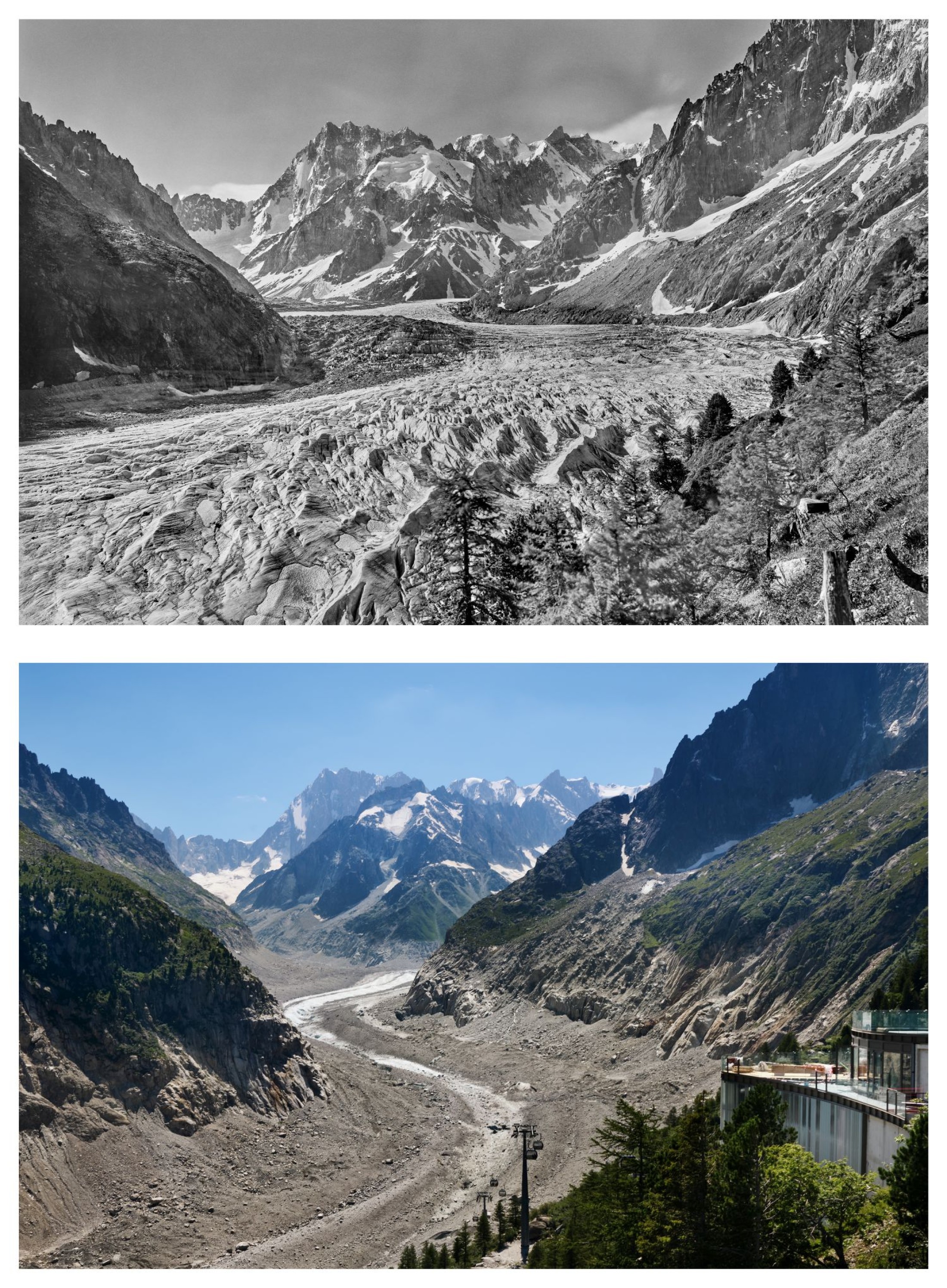
Mer de Glace, France
In the past, you could climb directly from the Montenvers mountain station onto the ice of the glacier. Today it takes a gondola lift to descend to the last remnants of the glacier.
© Schweizerische Nationalbibliothek, Eidgenössisches Archiv für Denkmalpflege: Archiv Wehrli; Jürgen Merz
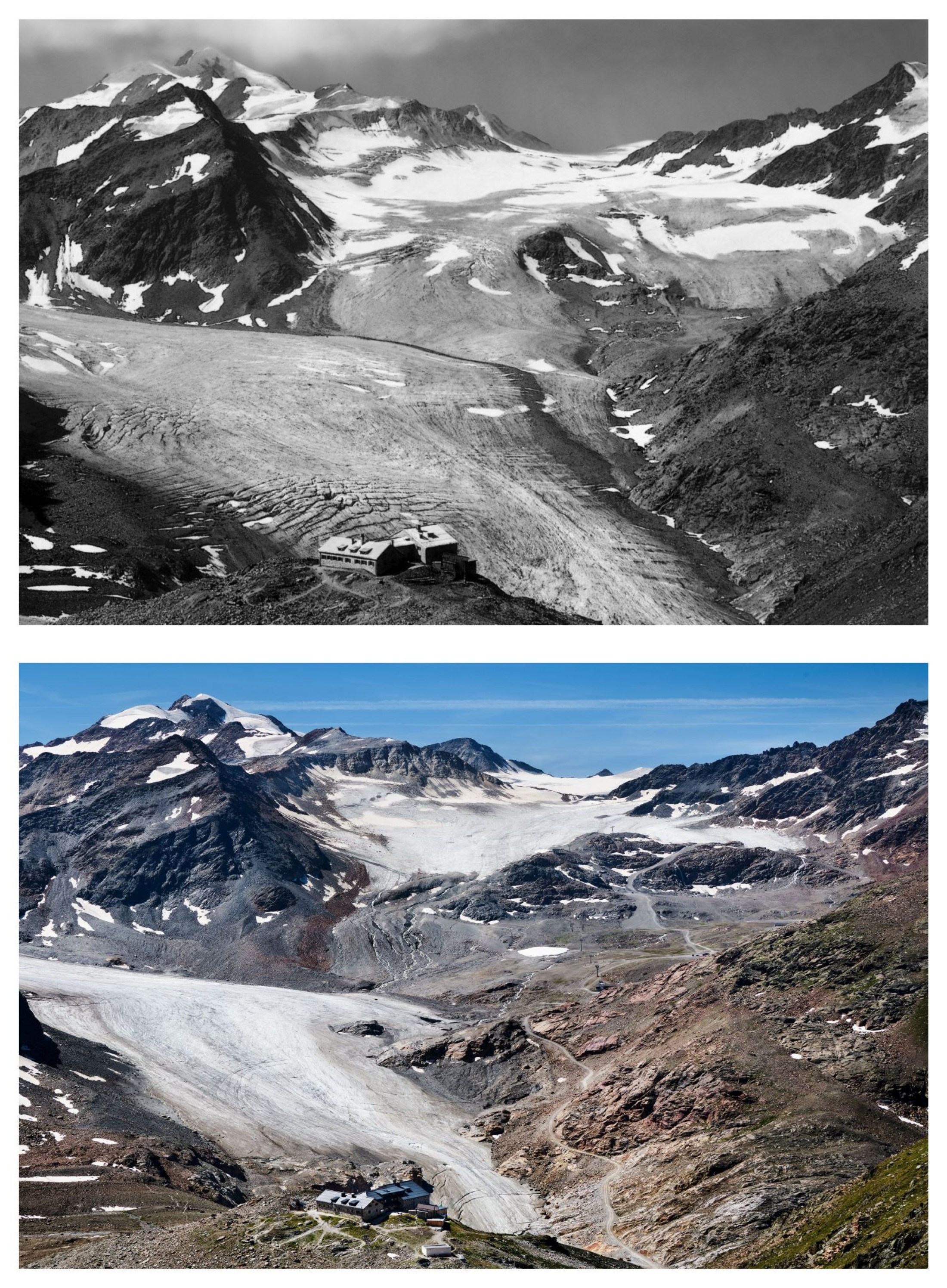
Mittelbergferner, Austria
The comparison impressively shows how high the pasterzen soil was covered by glacial ice just over 60 years ago.
© Ötztaler Museen, Sammlung Lohmann; Jürgen Merz
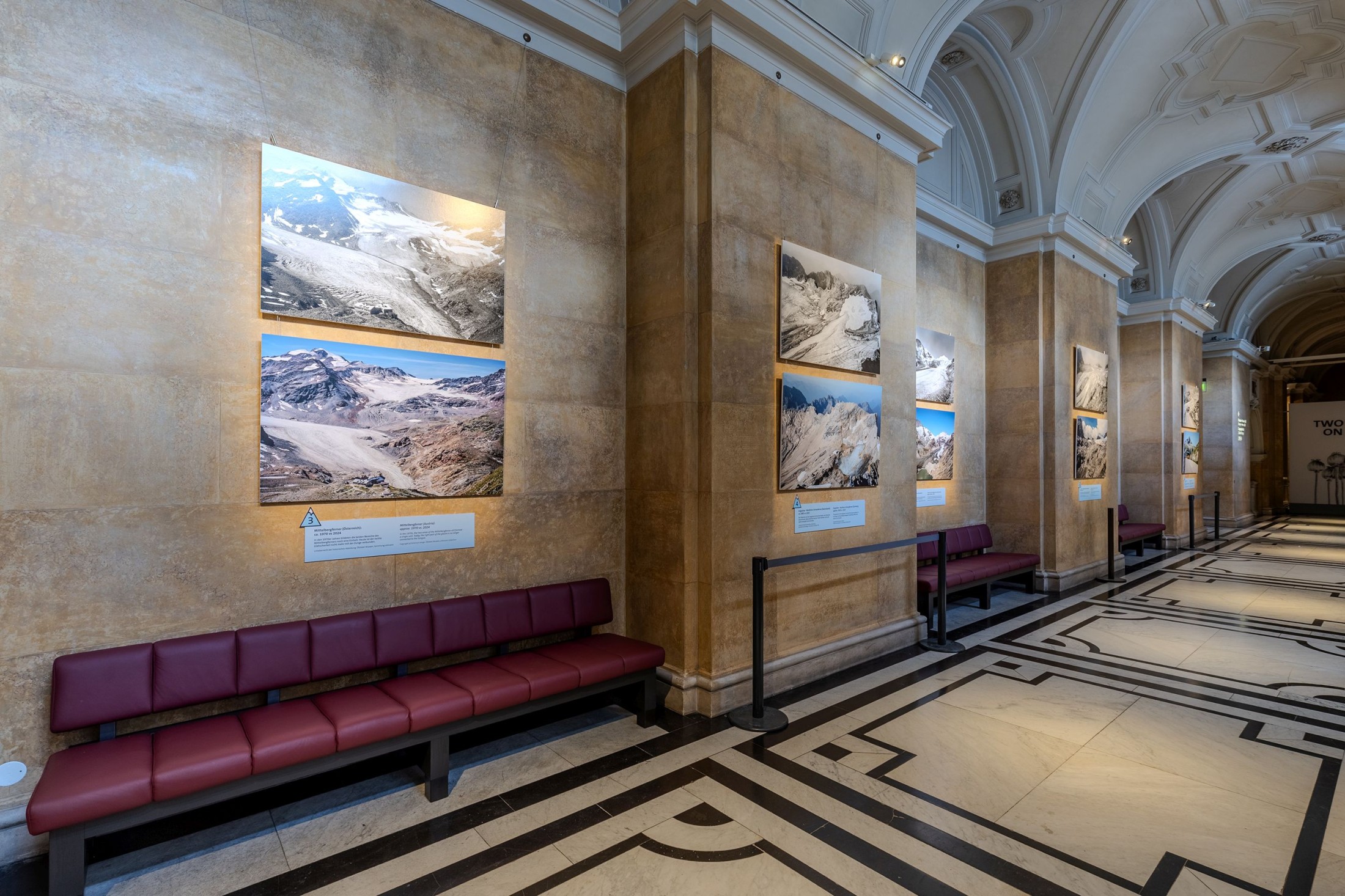
Exhibition "Alpine Glaciers in Transition: Historical Comparison Photographs"
© NHM Wien, W. Bauer-Thell
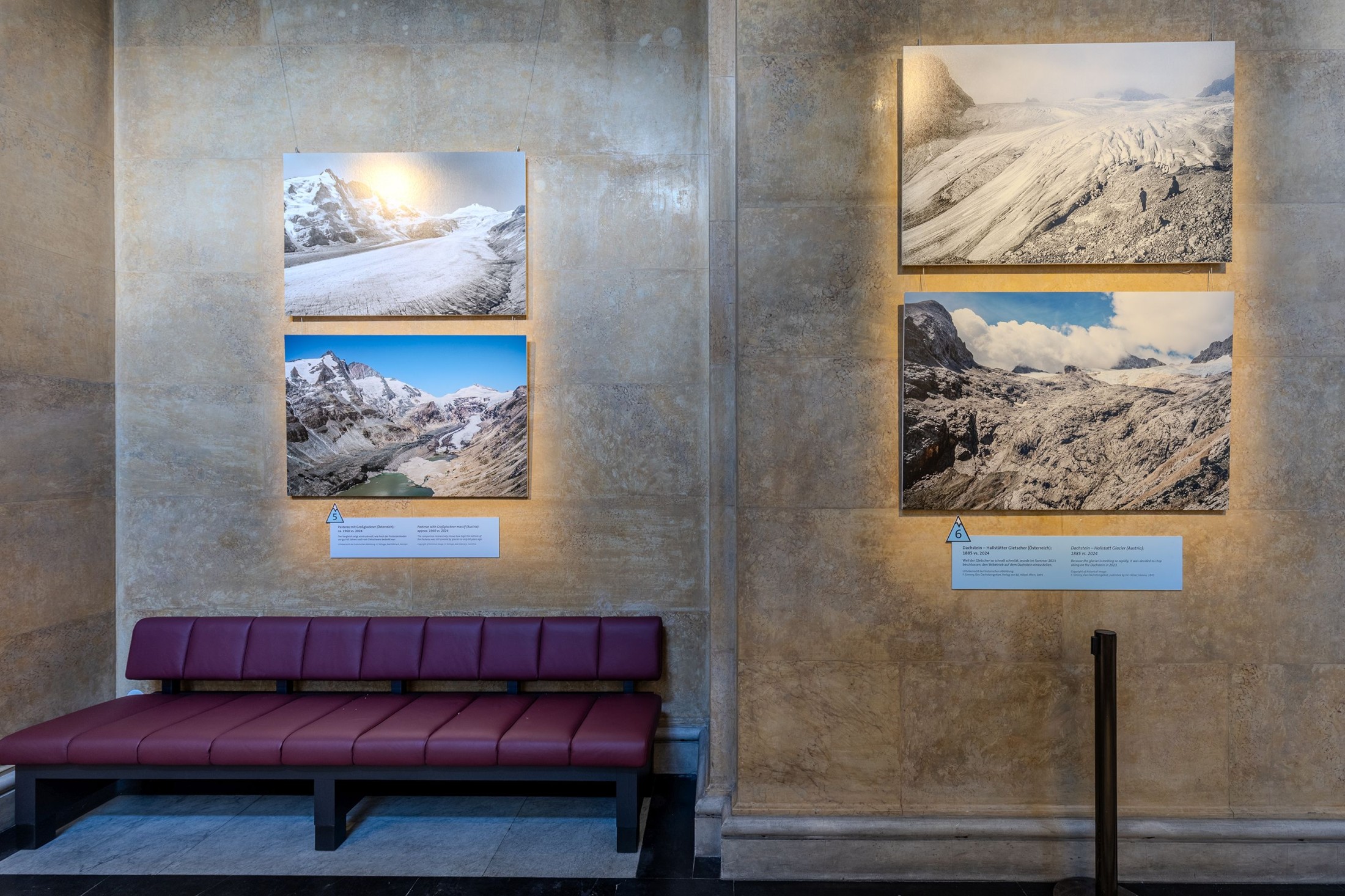
Exhibition "Alpine Glaciers in Transition: Historical Comparison Photographs"
© NHM Wien, W. Bauer-Thell
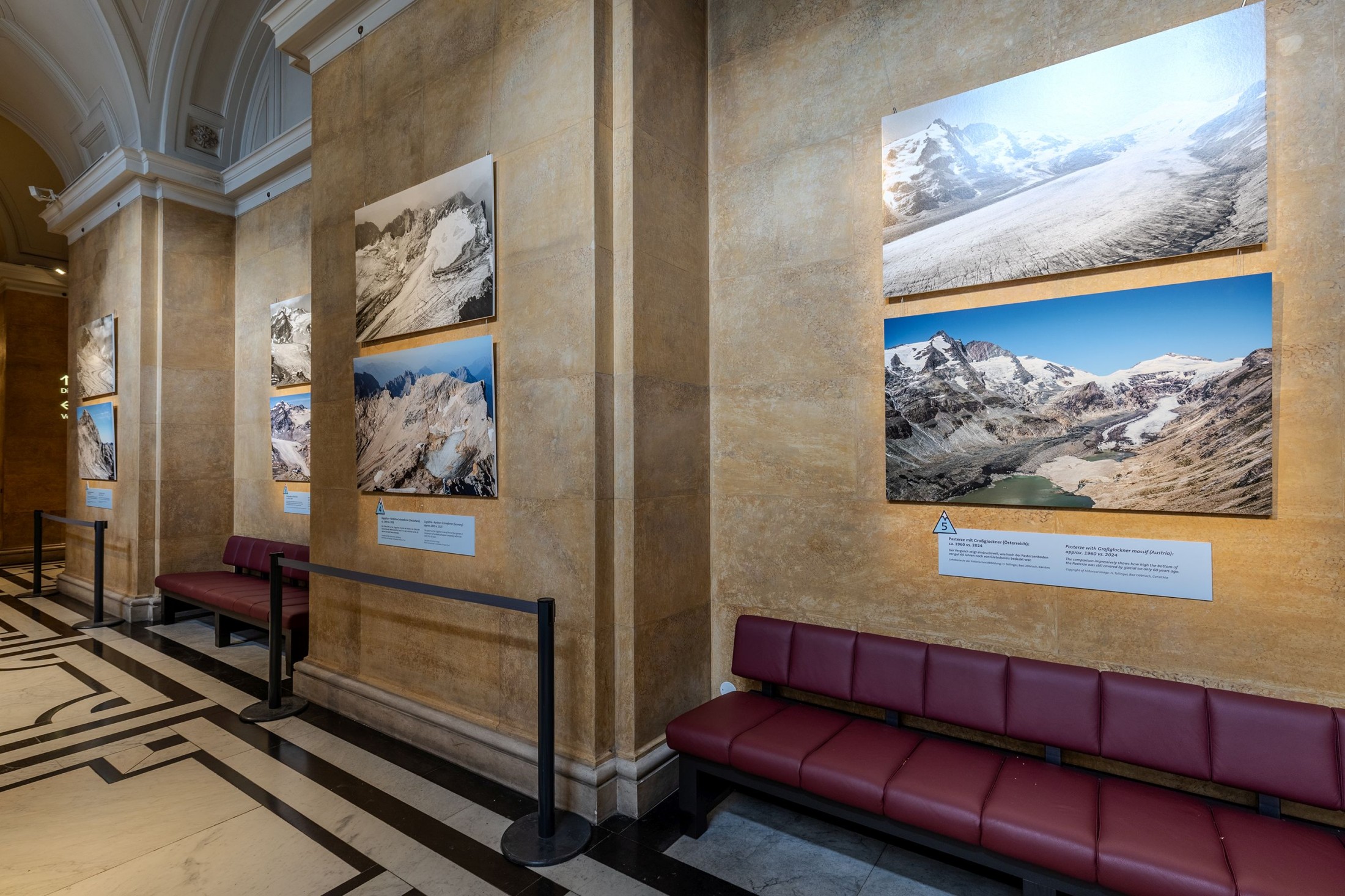
Exhibition "Alpine Glaciers in Transition: Historical Comparison Photographs"
© NHM Wien, W. Bauer-Thell

