
Caution, high voltage!
Electrical accidents – a class of their own
from 24. June 2026
Special exhibition from 23 June 2026 to 24 April 2027, at the Narrenturm
Despite
modern safety measures, electricity still entails risks. The first fatal electrical accident on Austrian territory that is
known occurred in 1882. It involved an engineer who died, since no one at the time believed that reanimation was possible.
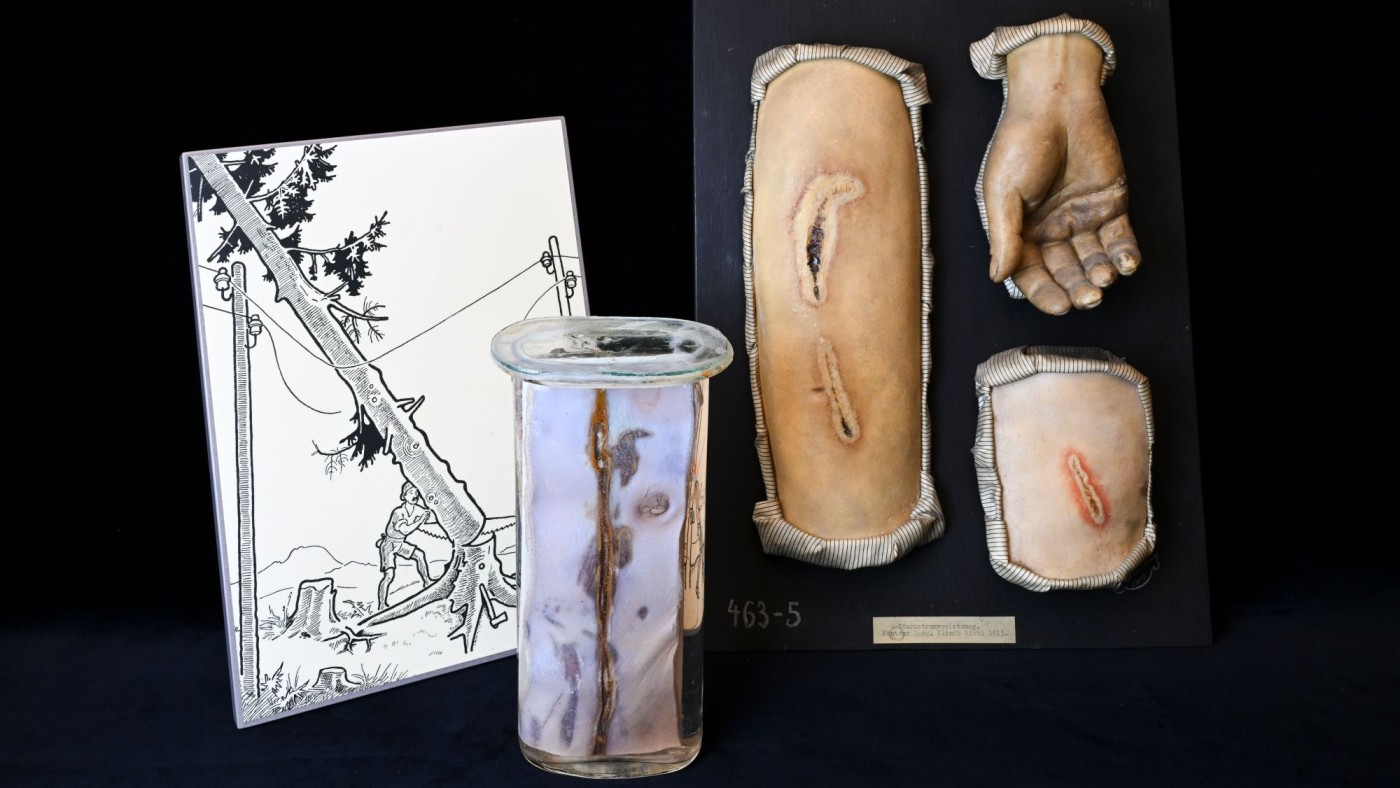
In 1906, the young internist Stefan Jellinek (1871–1969) presented a small selection of preserved specimens
and devices showing the effects of lightning strikes and electric current on humans and animals for the first time at the
Hygiene Exhibition in Vienna's Prater. This collection later became the basis of the Museum of Electropathology, which was
opened at the General Hospital on 29 October 1936.
The implementation of electricity to cities is considered
a turning point in history. Today, however, we know that every technical achievement and every advance also bring along undesirable
effects. Electricity remains a source of danger that should not be underestimated. The number of electrical devices for private
use is increasing. This is often accompanied by declining quality and a lack of knowledge about the dangers. Burning lithium
ion accumulators and accidents involving people on train carriages repeatedly make headlines. At the same time, there are
still regions in the world where people have no or only limited access to electricity.
Since the first
accidents involving electricity and lightning, doctors and technicians have been working together on safety equipment and
education of the general public. Two famous Viennese researchers in this field are renowned worldwide. Besides Stefan Jellinek,
also Gottfried Biegelmeier (1924–2007) played a key role in the development of the residual current device (RCD) through his
basic research.
The purpose of the electropathological collection is to educate people about the dangers
of electricity and to present suitable protective devices. In the case of both occupational and leisure accidents, the danger
posed by electrical current cannot be neglected. The different groups of people at risk make it difficult to reach them for
prevention work.
Whether in 1906 or 2026, dealing with electricity still involves dangers that
are often underestimated.
© NHM Wien, Chloe Potter
