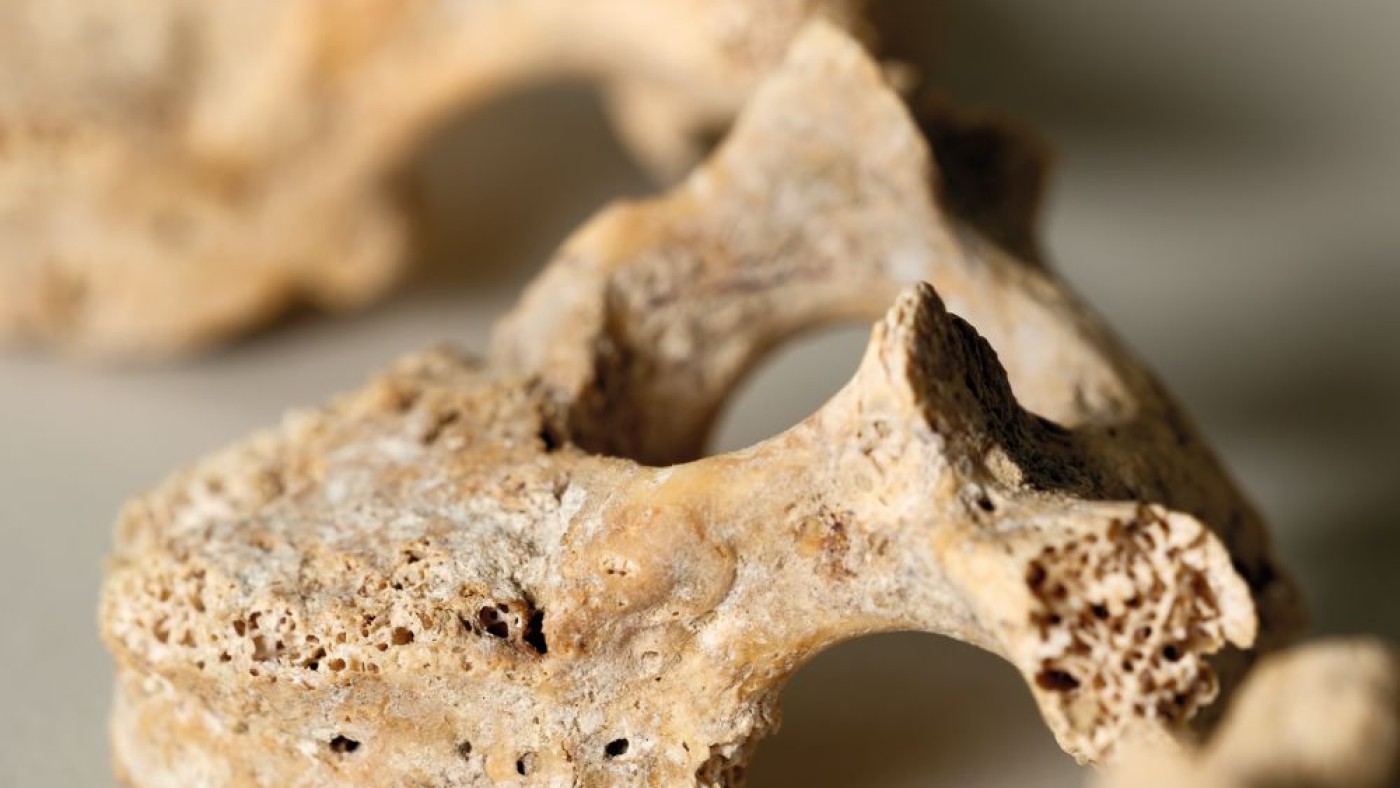
GENEchangers.
Decoding secrets of early medieval burial sites
from 14. October 2026
Special exhibition from 13 October 2026 to 26 July 2027, in Hall 21 on the 2nd floor
Generations: grandparents, parents, children. We are familiar with this concept. But what if we learn about the family relationships of people who lived over 1,200 years ago? Then we see interpersonal connections that provided stability in a time of great upheaval and change. This allows us to tell a new story of the so-called Migration Period. What was previously impossible is now possible thanks to the inclusion of genetics in the diverse research on the early Middle Ages, and what was previously invisible is now visible: the lives of ordinary people.
Based on two early medieval burial grounds in the villages of Leobersdorf and Mödling near Vienna, the special exhibition provides an insight into the lives of ordinary people: how they settled and lived, details about their communities and culture. Who was related to whom, who had children together, who was buried next to each other. At the same time, we learn more about their diet, childhood, health, and mobility. From here, our view broadens to include connections and differences to other communities in Central Europe, not necessarily migrating ones but also people who were sedentary for long periods of time.
The findings presented in this exhibition originate from HistoGenes, the largest archaeogenetic research project worldwide so far, which will be completed in 2026. Coordinated in Austria and based at twelve renowned European and US research institutions, the project brings together over 40 researchers from the fields of anthropology, archaeology, history, and genetics to develop common methods and find new answers. Visitors can follow their detailed search for clues in bones, genes, artifacts, and documents in hands-on areas as well as through many examples.
The special exhibition at the NHM Vienna deals with the emergence of communities and the changing generations in Central Europe, the results of genetic research, and the new working methods of archaeology, anthropology, and history – the gene and game changers that are unlocking the secrets of the early Middle Ages.
The HistoGenes research project, whose results are incorporated into this exhibition, was funded by the European Research Council (ERC) under the European Union's Horizon 2020 research and innovation program under grant agreement No. 856453.