
Since 1. July 2021, this 4-year project, funded by the Austria Academy of Sciences, is based at the NHM. The project is part of the call „Heritage Science“.
Pests, such as the webbing clothes moth (Tineola bisselliella), the biscuit beetle (Stegobium paniceum) or carpet beetles (Attagenus unicolor), can not only infest materials at home, but also damage museum objects. Furthermore, fungi and other microorganisms can damage entire collections and must be regularly monitored, same as the insects.
Since the summer of 2021, a research project at the Natural History Museum Vienna aims at gaining a better understanding of how climate change will influence insect pests and fungi in historic buildings, libraries and museum collections in Austria. Already, the warm summers of recent years are showing to cause a change in the indoor climate of many buildings, having effects on the insects and microorganisms that inhabit them. As a warmer climate is likely to promote the development of various insects and fungi in buildings, collections are at risk of more frequent infestations and damage. Newly introduced, neobiotic pests, such as the grey silverfish Ctenolepisma longicaudatum, are also likely to benefit from higher temperatures or increased humidity following extreme weather events.
Since the summer of 2021, a research project at the Natural History Museum Vienna aims at gaining a better understanding of how climate change will influence insect pests and fungi in historic buildings, libraries and museum collections in Austria. Already, the warm summers of recent years are showing to cause a change in the indoor climate of many buildings, having effects on the insects and microorganisms that inhabit them. As a warmer climate is likely to promote the development of various insects and fungi in buildings, collections are at risk of more frequent infestations and damage. Newly introduced, neobiotic pests, such as the grey silverfish Ctenolepisma longicaudatum, are also likely to benefit from higher temperatures or increased humidity following extreme weather events.
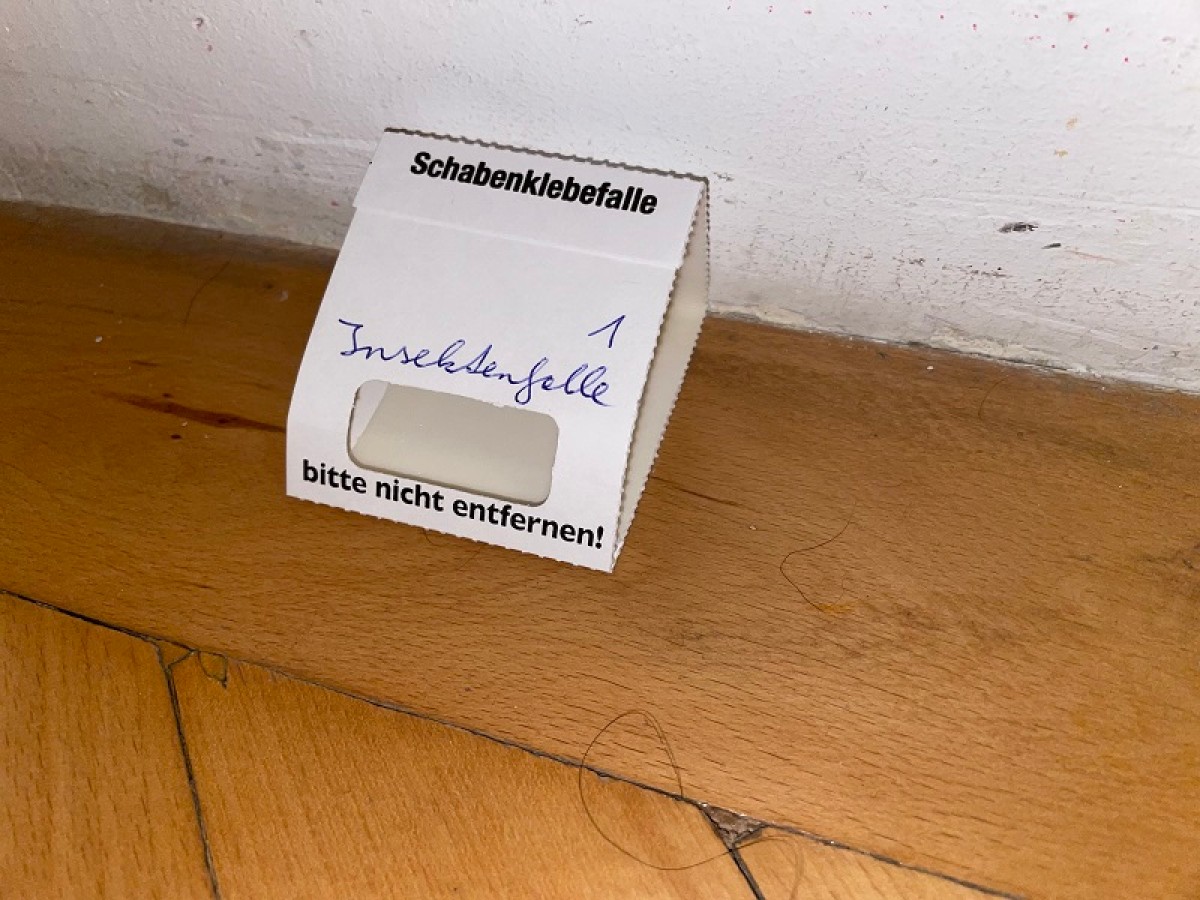
Sticky traps used for insects on the ground
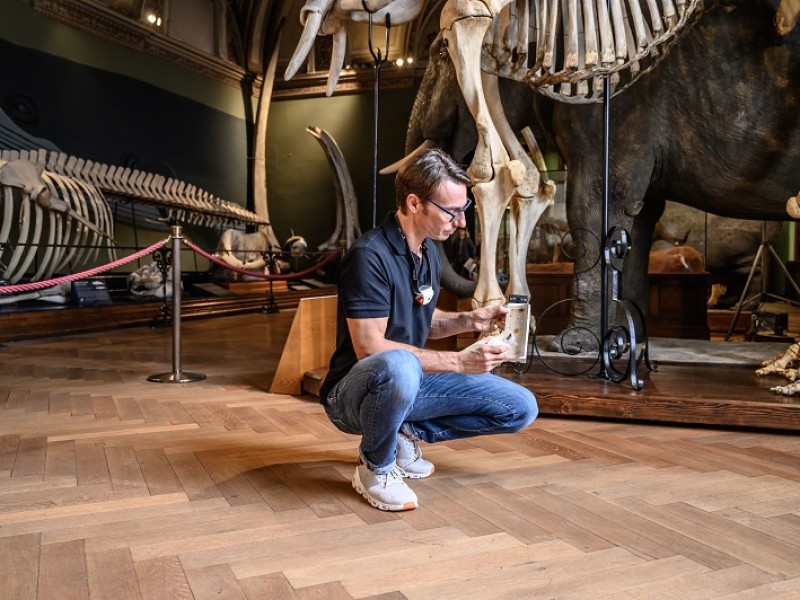
Pascal Querner examining the rocket traps
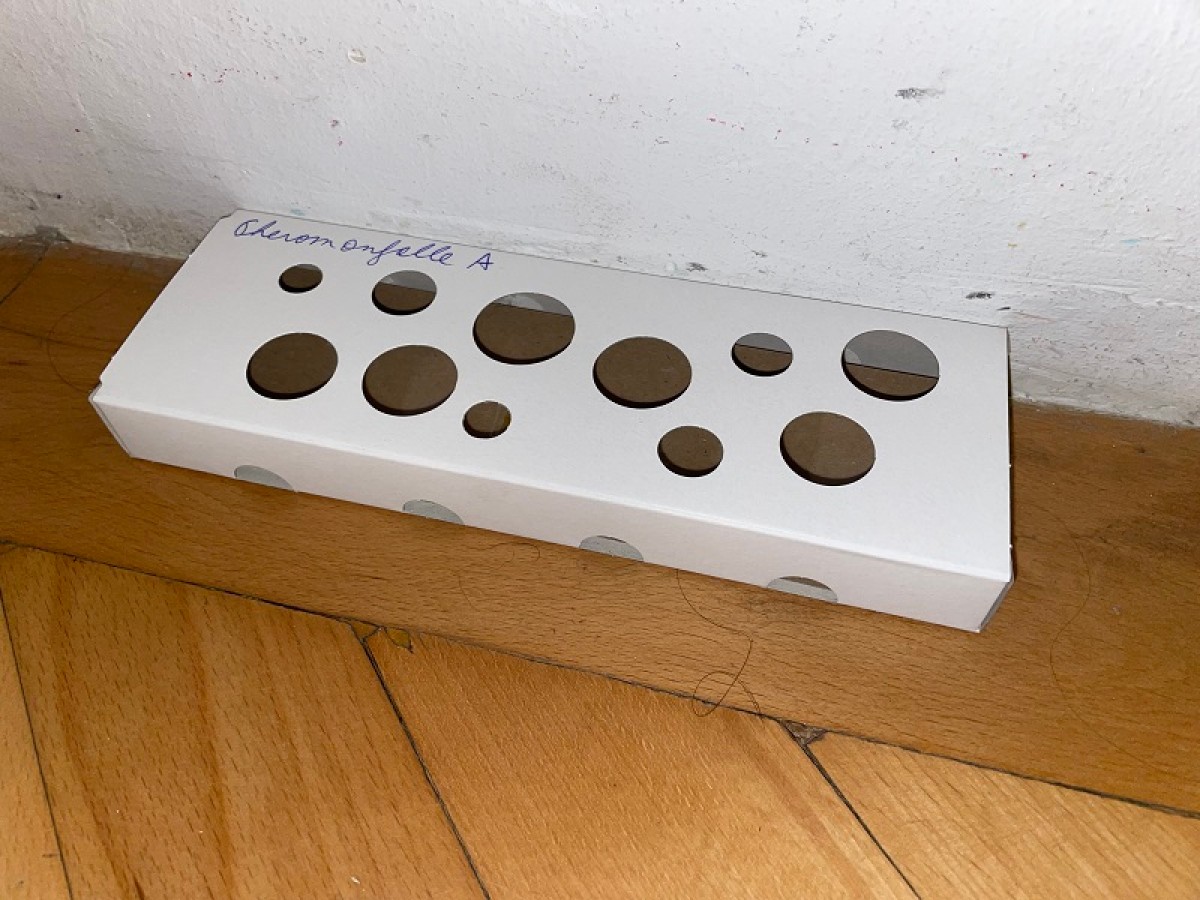
Traps used for webbing clothes moths
In this interdisciplinary project, an international team of experts in the fields of integrated pest management (IPM) in museums, entomology, microbiology, conservation, climate modelling and building simulations work together to develop statistical models and future strategies. We selected 20 Austrian heritage institutions (museums, museum depots, historic buildings and libraries) and are collecting data for 2 years, also at the NHM. The main aim is in to determine the statistical relationship between outdoor climate, indoor climate and pest abundance, -activity and -diversity. The investigated buildings differ in their indoor climate – some museums and depositories have got full climate control, others are only heated in winter time and many of the historic libraries have got neither heating in winter, nor cooling in summer or dehumidification. This in-situ data collection will be complemented by laboratory experiments, where a selection of model organisms will be bred/ cultivated at different temperatures.
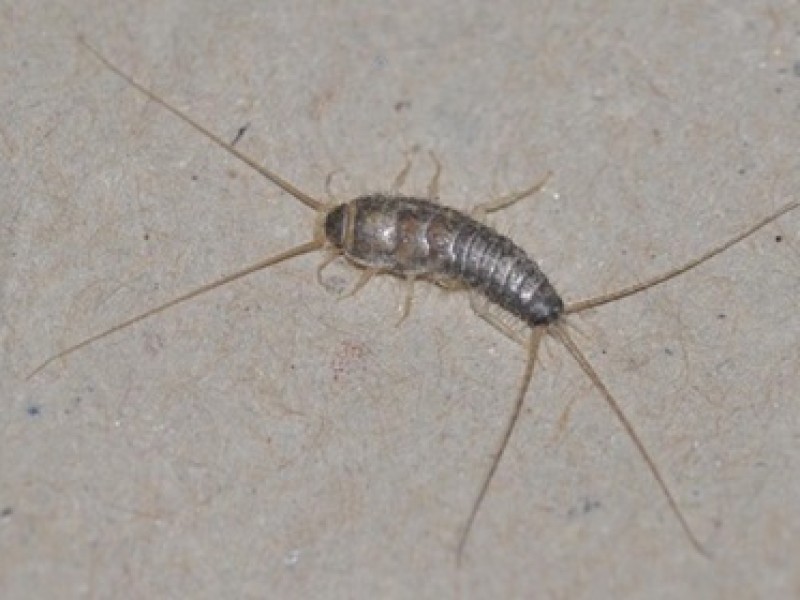
Grey silverfish
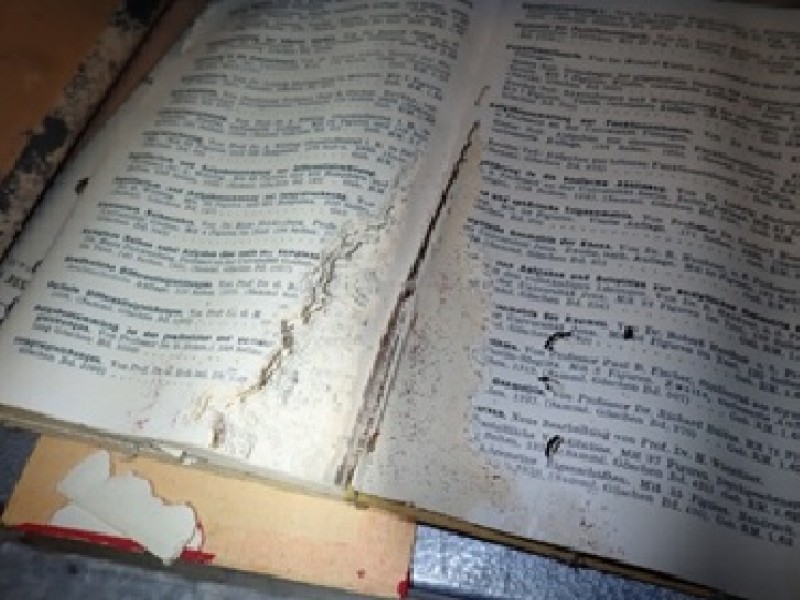
Damage from grey silverfish
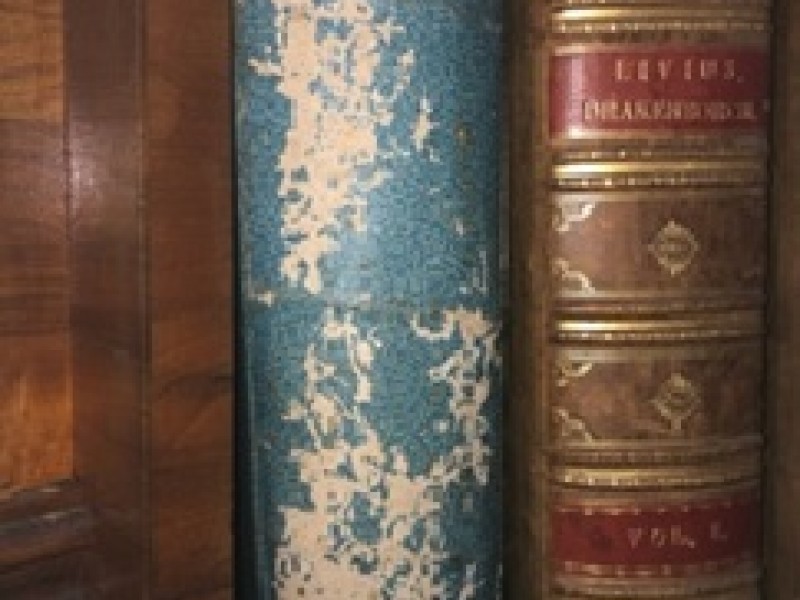
Damage from silverfish
The NHM is one of three selected model buildings (historic building, heated, but without cooling or humidity control). More than 250 climate data loggers and hundreds of traps were placed throughout the building from the basement to the attic, in all exhibition rooms, storage rooms and libraries. Especially the entomology collections, the herbaria of the botany department and the furs and feathers of the vertebra collection are, of course, at great risk of being infested.
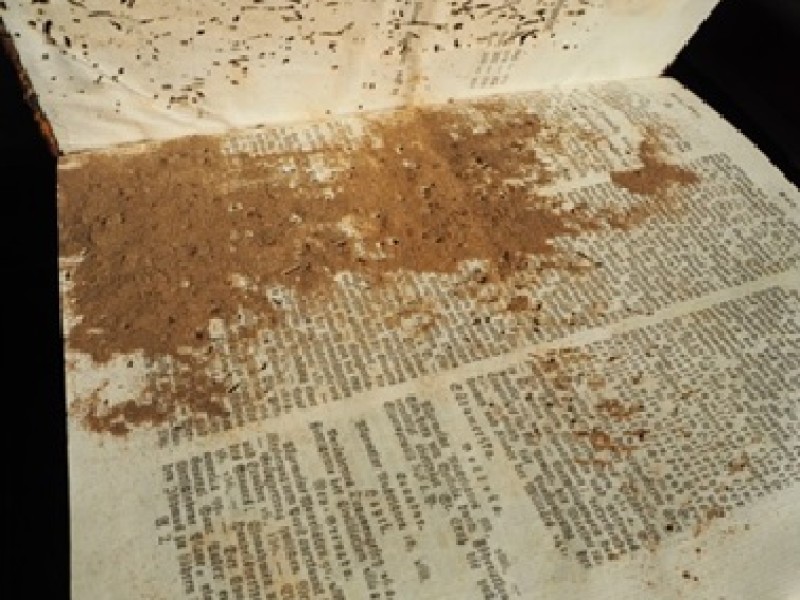
Damage from biscuit beetles on a historic book
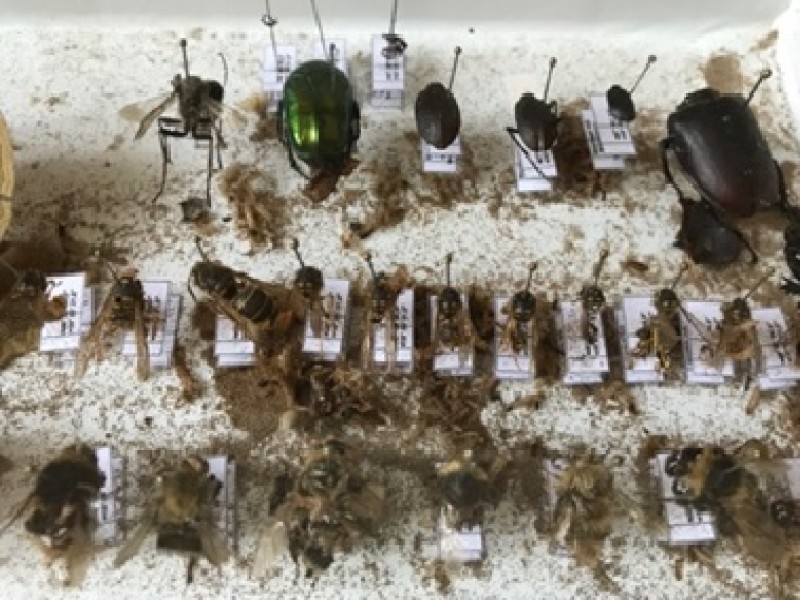
Infested insect collection
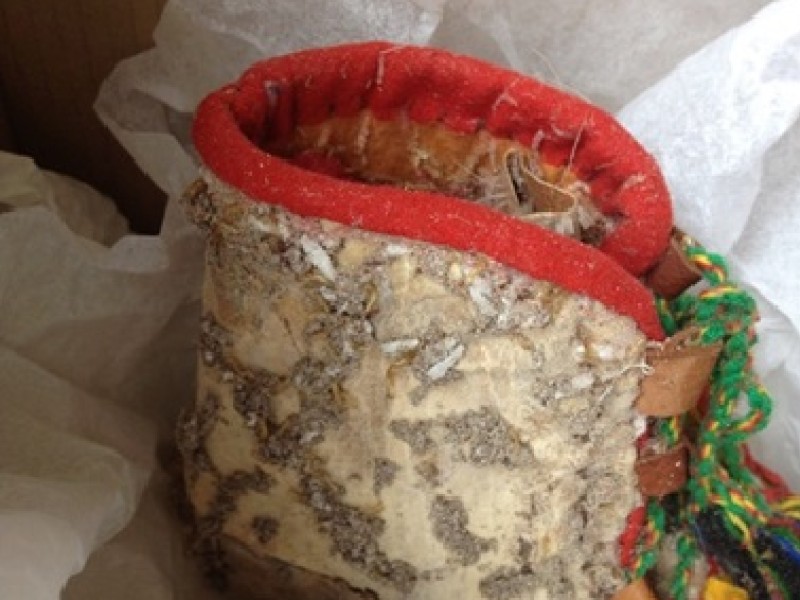
Damage from webbing clothes moths on a historical fur boot
Sites of investigation:
Historic museum buildings: Naturhistorisches Museum; Kunsthistorisches Museum; Schloss Schönbrunn; Weltmuseum Wien; Belvedere; Albertina
Historic libraries: Stiftsbibliotheken Klosterneuburg; Stiftsbibliotheken Melk; Stiftsbibliotheken Altenburg, Stiftsbibliotheken Kapuzinerkloster
Modern art depositories: Himberg KHM; Himberg Wien Museum; Kulturdepot Niederösterreich; former Essl Museum; Depot Albertina; Neues Kunsttransdepot
Model organisms (insects)
Webbing clothes moth Tineola bisselliella
Carpet beetle Anthrenus verbasci
Biscuit beetle Stegobium paniceum
Brown carpet beetle Attagenus smirnovi
Dark carpet beetle Attagenus unicolor
Skin beetle Reesa vespulae
Grey silverfish Ctenolepisma longicaudatum
Project coordination: Dr. Pascal Querner, NHM
Project partners:
Prof. Dr. Katja Sterflinger / Mag. Katharina Derksen (PhD-Student): Academy of Fine Arts Vienna
https://www.akbild.ac.at/de/institute/naturwissenschaften-und-technologie-in-der-kunst/fachbereiche/mikrobiologie-in-der-kunst
Dr. Stefan Bichlmair / Dr. Johanna Leissner: Fraunhofer-Institut für Bauphysik IBP
https://www.researchgate.net/profile/Stefan-Bichlmair
Dipl. Biol. Bill Landsberger: Rathgen-Forschungslabor, Staatliche Museen zu Berlin
Prof. Dr. Peter Brimblecombe: National Sun Yat-Sen University, Kaohsiung, Taiwan und City University of Hong Kong
Project Advisory Board:
Prof. Dr. Hans Zaller (Boku Wien)
Dr. Rüdiger Plarre (BAM Berlin)
Historic museum buildings: Naturhistorisches Museum; Kunsthistorisches Museum; Schloss Schönbrunn; Weltmuseum Wien; Belvedere; Albertina
Historic libraries: Stiftsbibliotheken Klosterneuburg; Stiftsbibliotheken Melk; Stiftsbibliotheken Altenburg, Stiftsbibliotheken Kapuzinerkloster
Modern art depositories: Himberg KHM; Himberg Wien Museum; Kulturdepot Niederösterreich; former Essl Museum; Depot Albertina; Neues Kunsttransdepot
Model organisms (insects)
Webbing clothes moth Tineola bisselliella
Carpet beetle Anthrenus verbasci
Biscuit beetle Stegobium paniceum
Brown carpet beetle Attagenus smirnovi
Dark carpet beetle Attagenus unicolor
Skin beetle Reesa vespulae
Grey silverfish Ctenolepisma longicaudatum
Project coordination: Dr. Pascal Querner, NHM
Project partners:
Prof. Dr. Katja Sterflinger / Mag. Katharina Derksen (PhD-Student): Academy of Fine Arts Vienna
https://www.akbild.ac.at/de/institute/naturwissenschaften-und-technologie-in-der-kunst/fachbereiche/mikrobiologie-in-der-kunst
Dr. Stefan Bichlmair / Dr. Johanna Leissner: Fraunhofer-Institut für Bauphysik IBP
https://www.researchgate.net/profile/Stefan-Bichlmair
Dipl. Biol. Bill Landsberger: Rathgen-Forschungslabor, Staatliche Museen zu Berlin
Prof. Dr. Peter Brimblecombe: National Sun Yat-Sen University, Kaohsiung, Taiwan und City University of Hong Kong
Project Advisory Board:
Prof. Dr. Hans Zaller (Boku Wien)
Dr. Rüdiger Plarre (BAM Berlin)
Further Information:
Project duration: 01.07.2021 until 31.06.2025
Funding by the Austrian Academy of Sciences: Heritage Science Call
Climate for future: Climate for future
ORF: Wie Museen gegen Schädlinge vorgehen
NANO: Der Lockdown und das große Krabbeln
