
Special exhibition: TWO VIEWS ON PLANTS - 3D photography by Sebastian Cramer
01. February 2026
"TWO VIEWS ON PLANTS" is the title of the exhibition, which presents 3D photographic works by the internationally renowned
filmmaker, cameraman and photographer Sebastian Cramer. The exhibition uses an innovative form of historical stereophotography.
The focus of the project is on plants, which form the central foundation of our physical and physical health.
The idea for the project was born in autumn 2016: The fruit stands of a forest vine blowing in the wind animated Sebastian
Cramer to take a closer look at plants. This observation resulted in the book "TWO VIEWS ON PLANTS" and this presentation
compiled exclusively for the NHM Vienna. Both projects are Sebastian Cramer's contemporary approaches to historical stereophotography,
which was very popular in the 19th century. With his impressive 3D images, the photographer portrays plant diversity and encourages
a view of the world of plants from new angles. Some of the 3D photographs also show a special storage method in scientific
collections: the alcohol preparations.
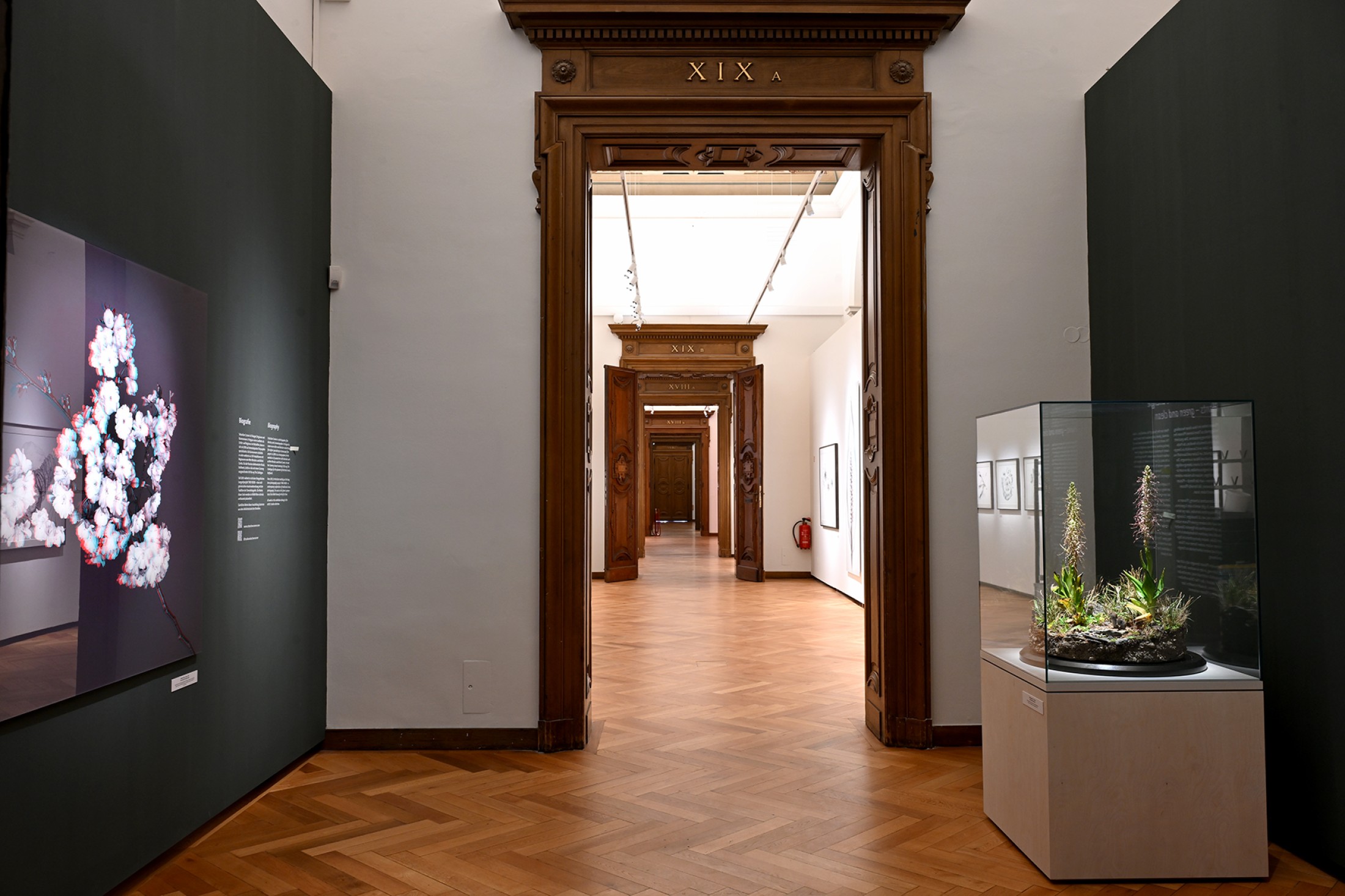
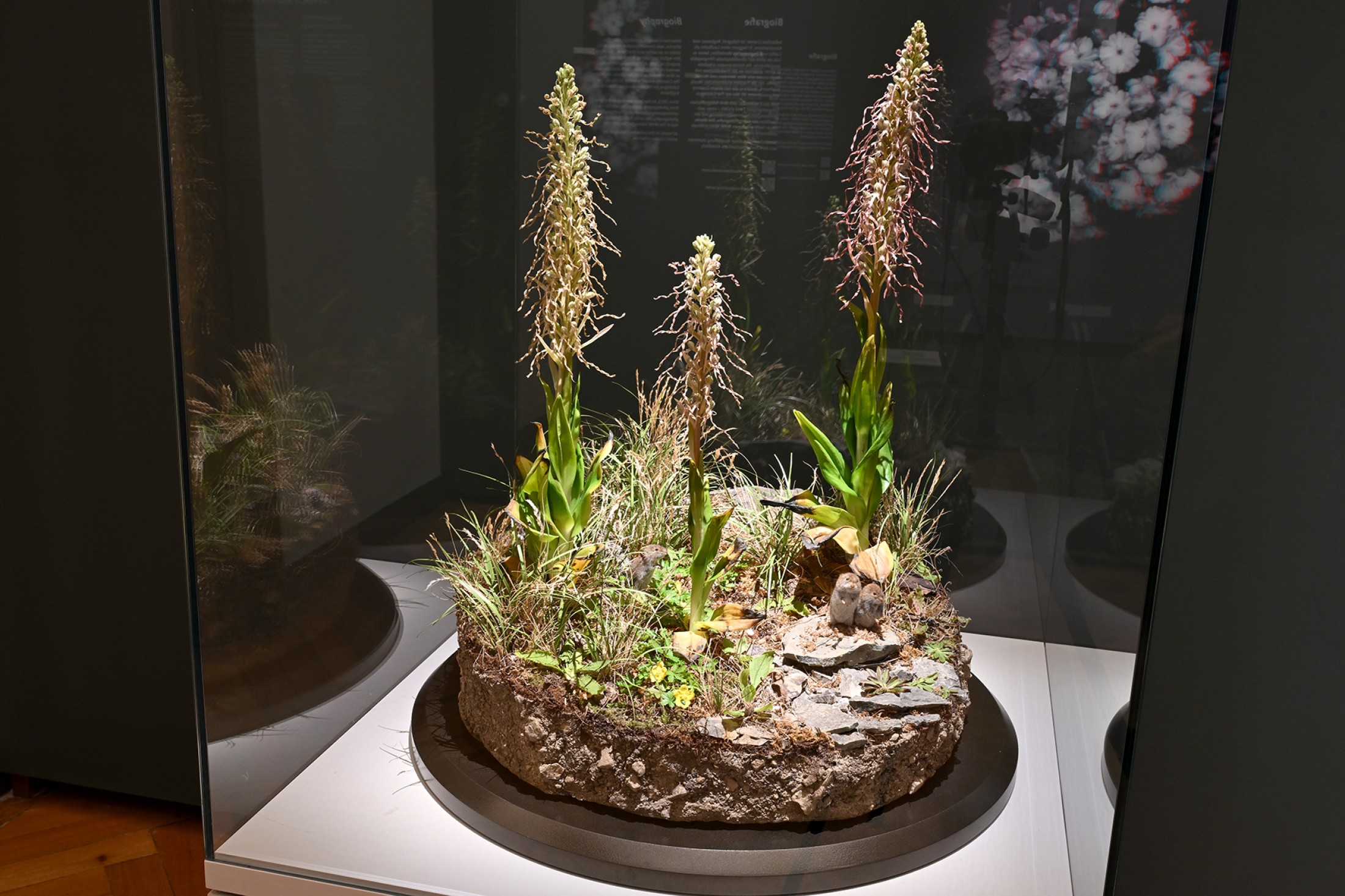
In his work, Sebastian Cramer focuses on the beauty of plants and also shows how they are preserved in herbaria. Herbariums are scientific collections that document plants. The exhibition in the special exhibition rooms on level 1 therefore also gives an insight into the diversity of the botanical collection of the NHM Vienna, which is one of the ten largest in the world with an estimated 5.5 million documents.
The special exhibition will be on view until 1 March 2026.
We would like to thank the Vienna Chamber of Labour for promoting the exhibition.
Press information
"This is a rare opportunity,
to understand that seeing has not yet been learned to the end,
even if – or even if – one believes,
that this process has long since been completed
and 'everything has already been seen'
...
Never give up the willingness,
Seeing beauty and wonder for the first time."
Wim Wenders, from the preface to the book TWO VIEWS on Plants
Plants in focus – on the importance of plants
The exhibition TWO VIEWS ON PLANTS focuses on plants. Plants are the basis of life for many other living beings and influence the physical and mental well-being of people to a large extent. Plants and other organisms that also do photosynthesis can produce their own food: They produce sugar in a chemical reaction using sunlight as an energy source and the green dye chlorophyll.
Living beings who cannot produce their own food draw the energy to survive from the plants they feed on. Even pure carnivores depend on plants because their prey consumes plants. Another product of photosynthesis is the oxygen we breathe. The positive influence on the human psyche has also been proven: It has been shown, for example, that we recover faster from stressful situations when we look at plants. In the case of humans, plants significantly influence our physical and mental well-being.
In addition to well-being, oxygen and food, we rely on plants for fuels, elastomers, building materials, textiles, dyes, medical agents and other chemical compounds. As an example of the opium poppy (the poster motif of the exhibition): Its name suggests that it contains special active ingredients; The milky juice of the plant contains alkaloids, which are the source of opiates. These are used in medicine as painkillers and narcotics, but are also the basis for the production of illegal drugs such as heroin. Opioids are associated with severe drug addiction, and trafficking in them finances terrorism and wars. On the other hand, surgery and dental treatments without pharmaceutical opium derivatives would be much more traumatic. Every plant portrait in the exhibition contains such contexts and stories.
The Botanical Collection (Herbarium) of the NHM Vienna
Because this knowledge is essential for our survival, the Botanical Department of the NHM Vienna is involved in documenting plants in the herbarium and making them available for research.
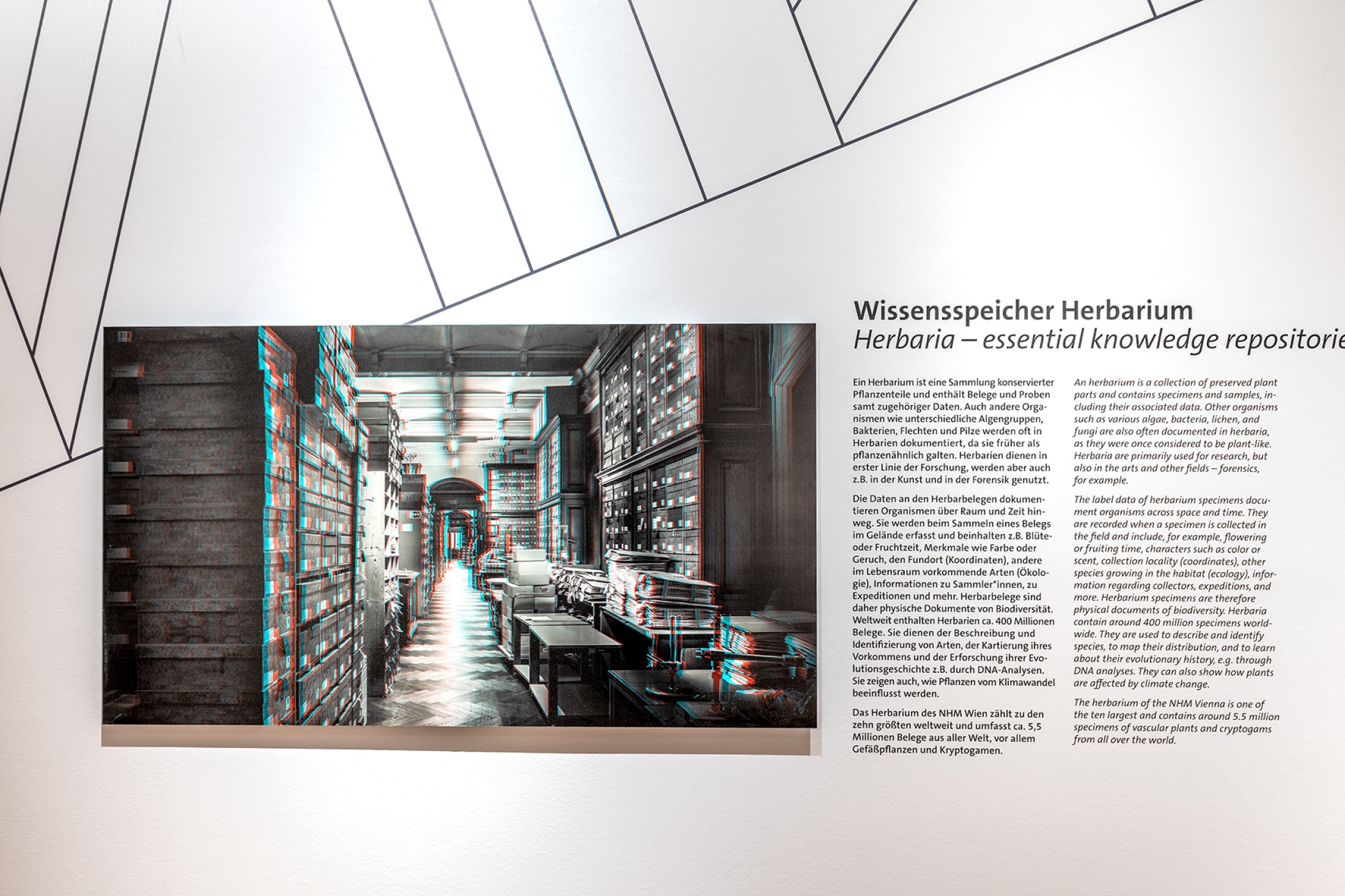
With around 5.5 million specimens, it is one of the largest botanical collections in the world. In addition to flowering plants, it contains many specimens of spore plants such as ferns, foliage, liver and horn mosses, but also other organisms such as algae, lichens and fungi (called Kryptogamen in the collective). The herbarium is rich in historical collections from the 19th and 20th centuries and contains many type documents, which are a kind of "birth certificate" for a scientific plant name. The collection includes plants from all over the world, with a focus on Austrian, Mediterranean and neotropical species. In addition, there are important collections from Asia Minor, Australasia and South Africa.
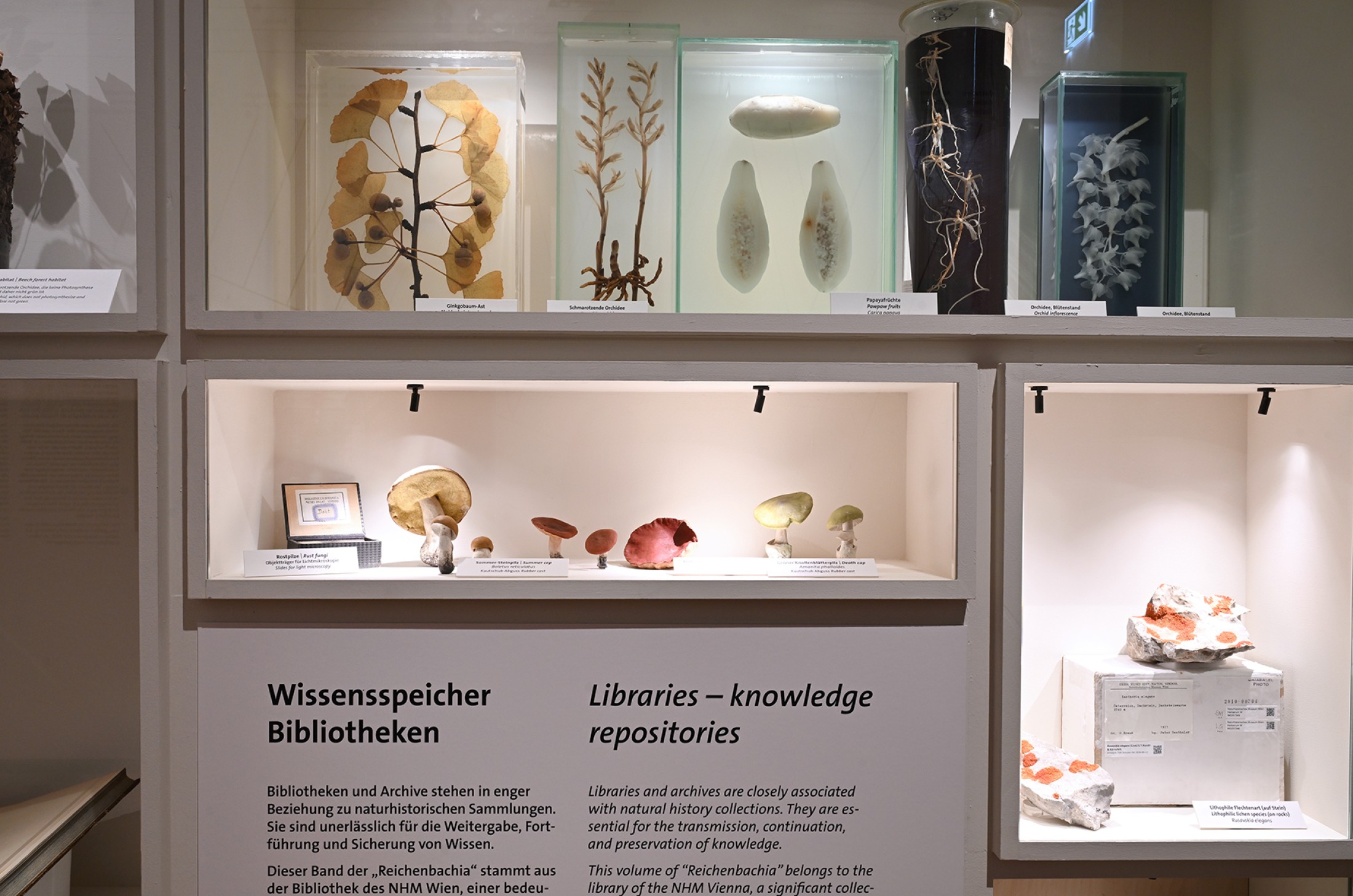
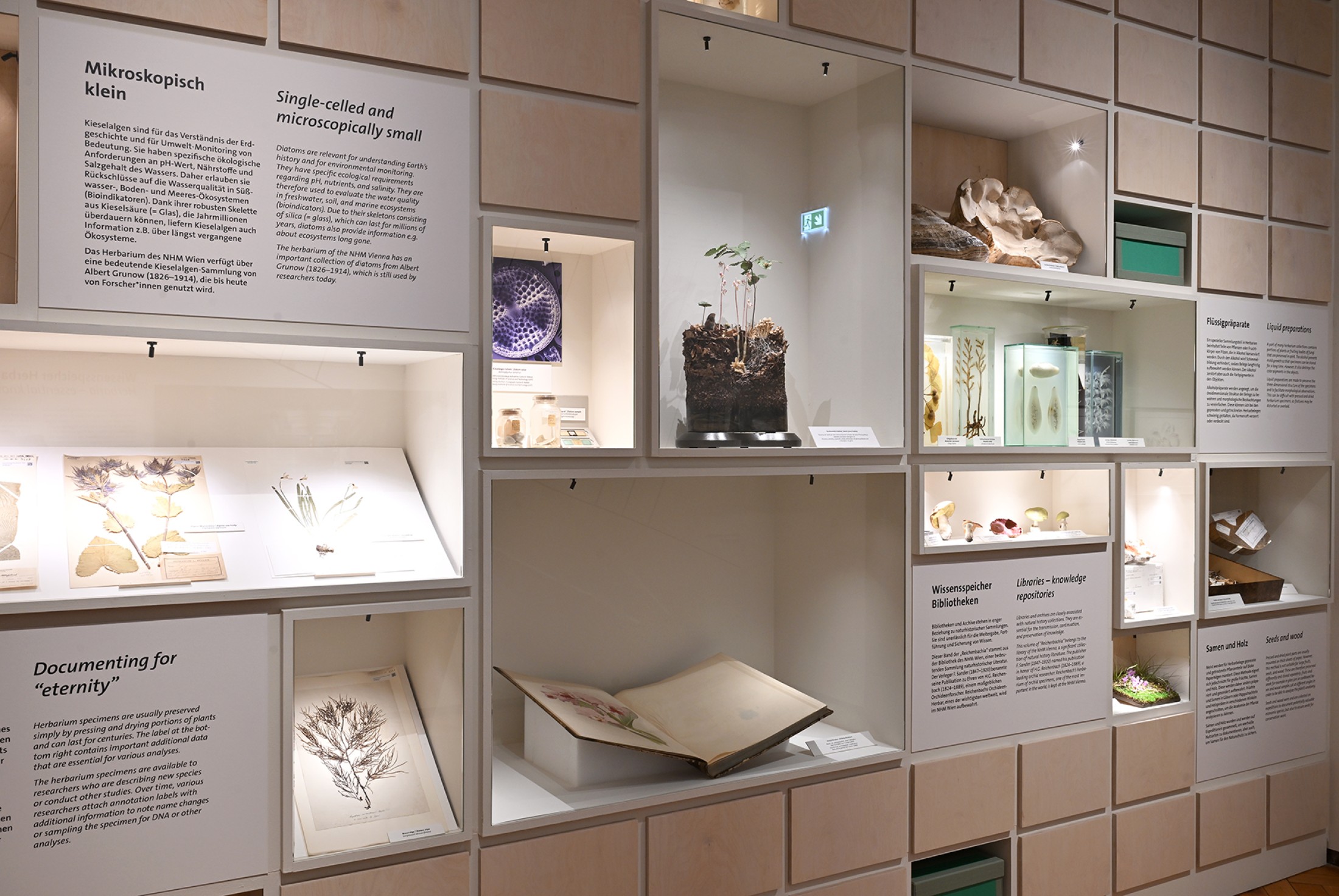
The evidence, mostly pressed and dried parts of plants mounted on strong sheets of paper, sheds light on the shape and distinctive features of different species. The data associated with the herbarium documents on the label of the document document document organisms across space and time. They are recorded when collecting a document in the terrain and include, for example, flowering or fruiting season, features such as color or smell, the location, other plant species occurring in the habitat, information about collectors, expeditions and more. Herbarium documents are therefore physical documents of biodiversity. Worldwide, herbaria contain more than 400 million specimens. They are used to describe and identify species, map their occurrence and study their evolutionary history, e.g. through DNA analyses, and show how plants are affected by climate change by the information contained about the shift in flowering times in correlation with climate data. Selected herbarium specimens can be seen in the exhibition and also tell stories of adventurous collective journeys, the economic and artistic interest in them and how they advance research.
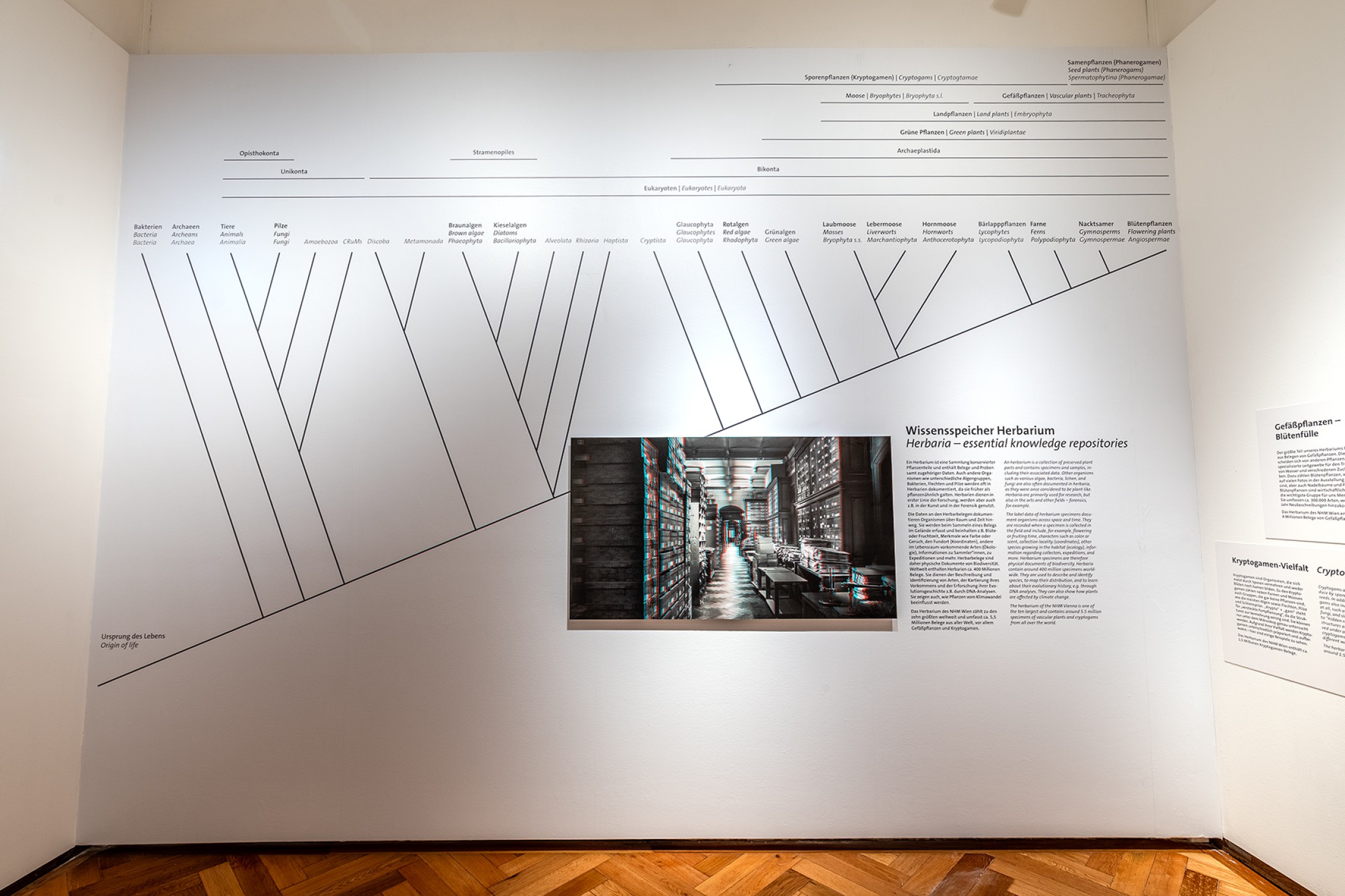
For example, herbarium evidence is now often a source of material for DNA analysis. Here, a small part of a leaf is removed and the DNA is isolated and sequenced in the laboratory. Phylogenetic analyses of the DNA sequences yield a phylogeny, a pedigree that graphically illustrates the evolutionary relationships with respect to common ancestors of the analyzed groups. It is about understanding which groups are more closely related to each other compared to others, as this information is useful, for example, to find out which groups contain similar chemical compounds, and subsequently, medical agents (e.g. for bioprospecting). Such analyses show, for example, that fungi are more closely related to animals than to plants. In TWO VIEWS ON PLANTS we show the first phylogenetic pedigree in an exhibition of the NMH Vienna, whereby in the course of the redesign of the permanent showrooms further of these representations are to be shown to illustrate the evolutionary relationships of organisms.
About the exhibition
"I was fascinated by the fact that generally valid design principles had to be questioned when adding a new aspect to the image design: The third dimension. What does a picture have to look like in order to be equally interesting in 2D and 3D?"
Sebastian Cramer
Cooperation Tanja Schuster with Sebastian Cramer
Sebastian Cramer and Tanja Schuster met at the Botanical Institute in Munich, where the photographer gained access to the collection of liquid preparations from the Herbarium of the Botanical State Collection of Munich. For Cramer, plants are symbols of transience and he touches their fragility, while Schuster finds their resilience and longevity interesting in terms of evolutionary periods. Both, however, cast a spell over their beauty. Cramer and Schuster have subsequently collaborated on the book TWO VIEWS ON PLANTS and continue the cooperation in this exhibition designed exclusively for the NHM Vienna in order to interest even more people in the topics of botany and stereophotography.
Sebastian Cramer is a photographer, director and cameraman. He began his career as a editor and director in commercial film before specializing in stereoscopic film projects from 2009. As a cameraman, he worked on 3D productions with directors such as Wim Wenders and Michel Comte. For the pioneers of electronic music, Kraftwerk, he shot the Grammy-winning 3D Blu-ray The Catalogue.
Since 2013 he has been dedicating himself to the long-term photographic project TWO VIEWS. The works of this series will be presented comprehensively for the first time at the NHM Vienna. My photographs consciously move on the threshold between documentation and imagination. The clarity of the presentation is reminiscent of botanical studies, of the scientific precision of historical Herbar documents. But due to the spatial effect, what initially appears to be a scientific object becomes a scene, a composition, an event," explains the artist.
The exhibition is dedicated to an almost forgotten form of photography, stereoscopy: Two slightly offset images convey a spatial visual experience that goes far beyond the flat surface of traditional photography. The combination of stereoscopic technology and botany creates an artistic space that reinterprets questions about nature, perception, memory and the present.
Stereoscopy became popular around 1850 with the invention of the stereoscope by David Brewster and the development of stereoscopic cameras. In the Victorian era, it became a mass medium, but in the 20th century it increasingly fell into the shadows of new media such as cinema, television and digital imagery.
In the digital age, the illusion of depth is omnipresent – in 3D films, virtual reality worlds and computer simulations. But classical stereoscopy requires a different look, a calm, concentrated act of contemplation. It demands time, attention, an engagement with the seemingly incidental, the growing, the silent.
The exhibition includes Sebastian Cramer's series of photographs Alcoplants (2019-2020), Mandalas (2017-2023), Zwischen Maschine und Poesie (2024-2025) and the video installation Time Passages (2024-2025).
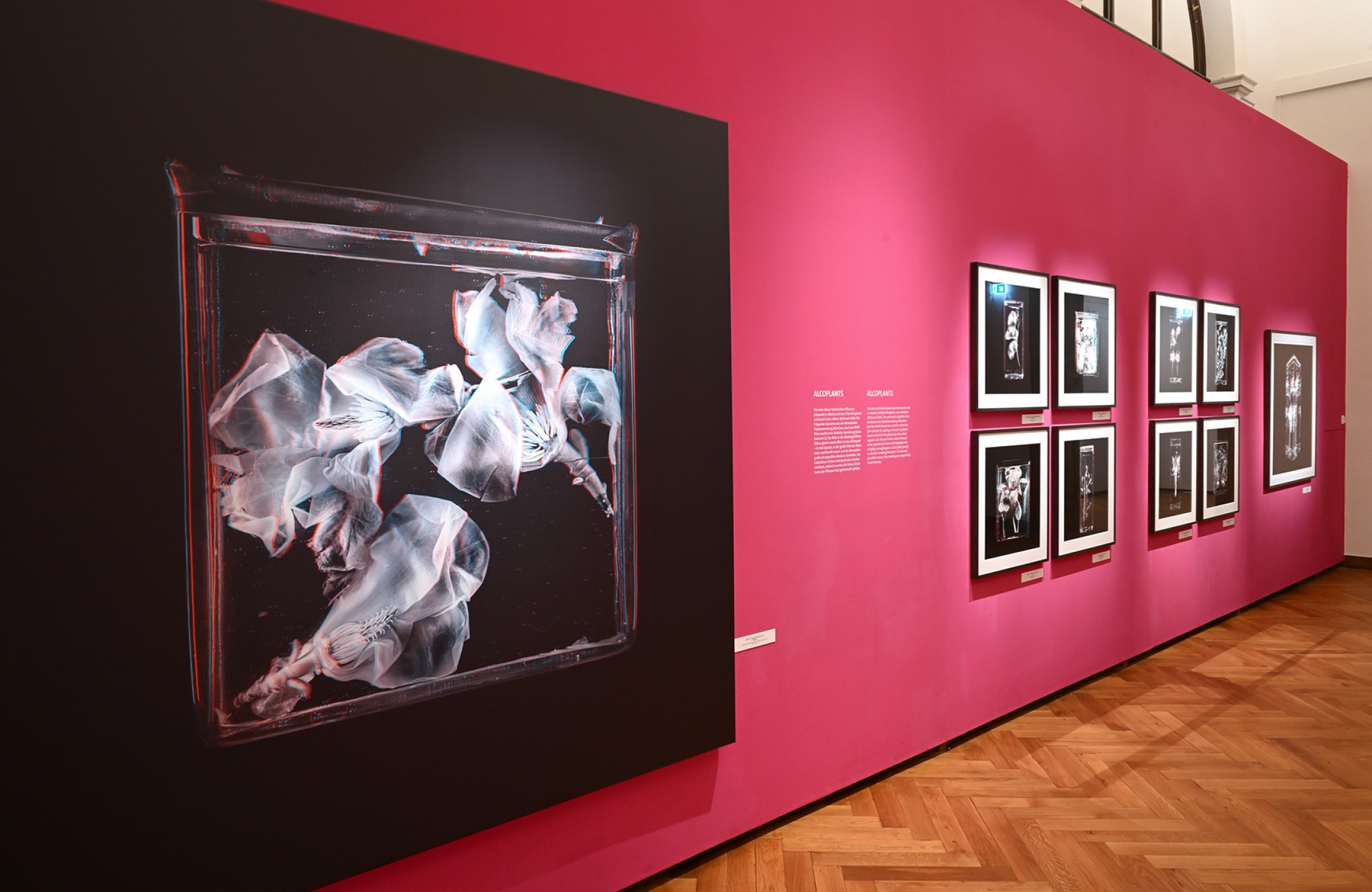
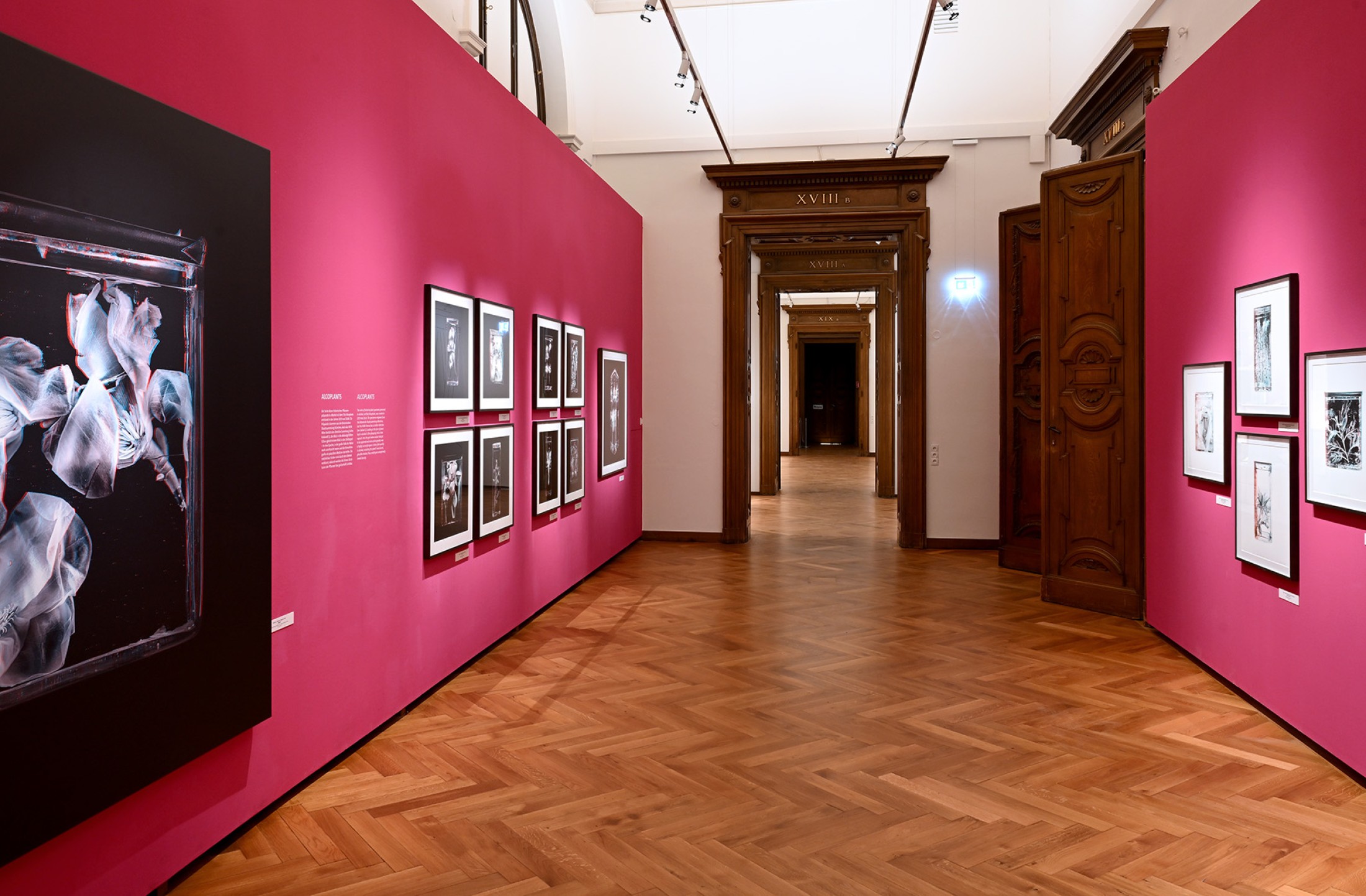
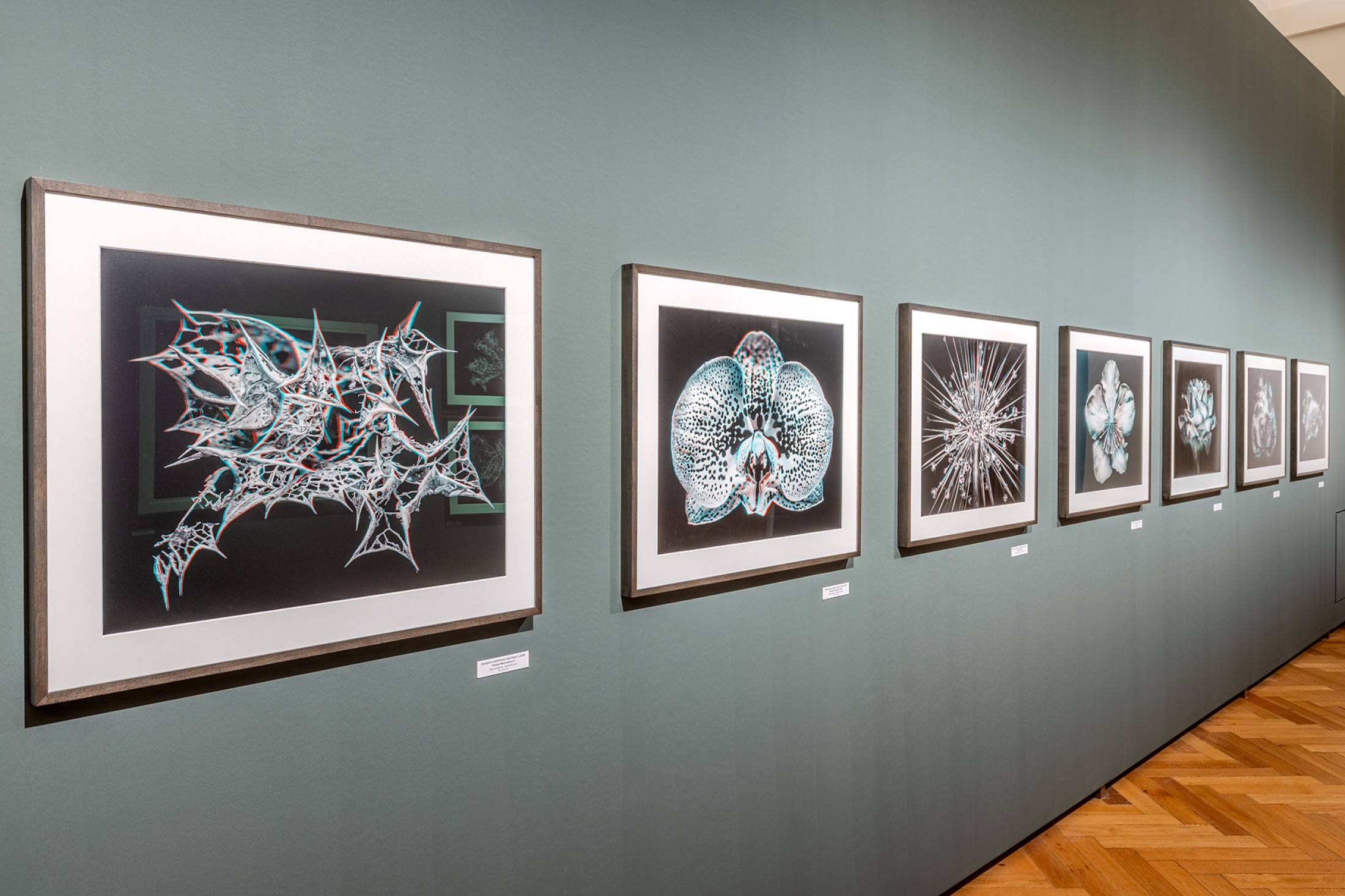
Alcoplants includes 3D photos of historical liquid preparations of plant documents in alcohol, as they are available in many scientific collections; This also applies to the Herbarium and other departments of the NHM Vienna. The alcohol prevents mold formation and allows the long-term storage of such preparations. The presentation in large glasses was often used in teaching in the 19th century, as this, in contrast to "conventional" herbarium specimens, preserves the three-dimensionality of the plant and features for species determination are more vivid. However, the alcohol destroys the plant color pigments and breaks down the tissues something that gives them a wobbly, ghostly appearance.
Alcohol preparations continue to be used in research, as they facilitate anatomical and morphological studies, but are hardly applied in this appealing, historical form. Due to their fragility, alcohol preparations of plants can hardly be seen in museums and will be presented on a larger scale for the first time in the show at the NHM Vienna.
The Alcoplants series was created in 2019 and 2020. The preparations come from the Botanical State Collection Munich, but the NHM Vienna has a similar collection (see Cabinet 3). Looking into the alcohol-filled glasses is like looking into a time capsule – an era in which large parts of nature were still unexplored and stereophotography was a popular medium.
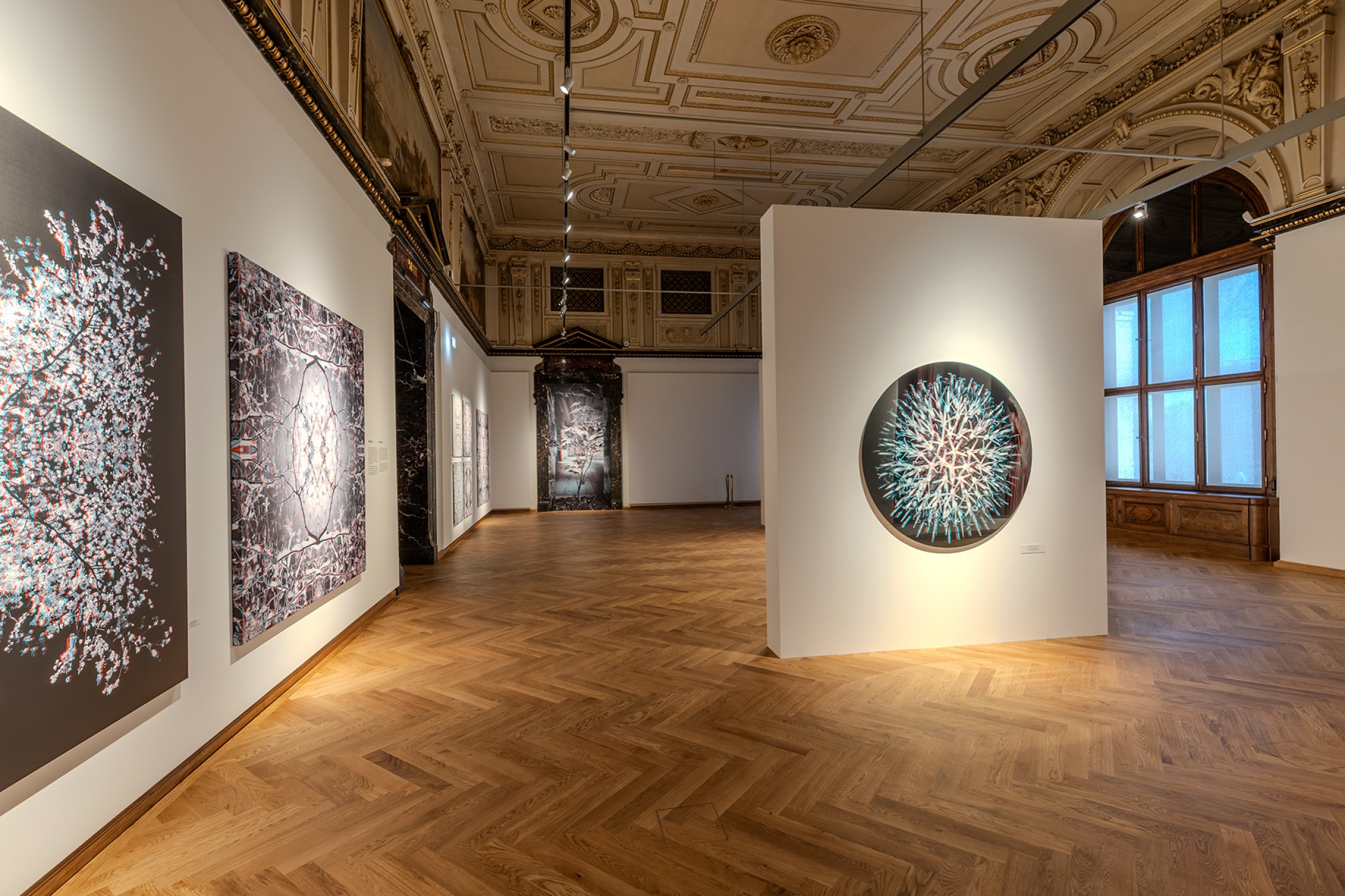
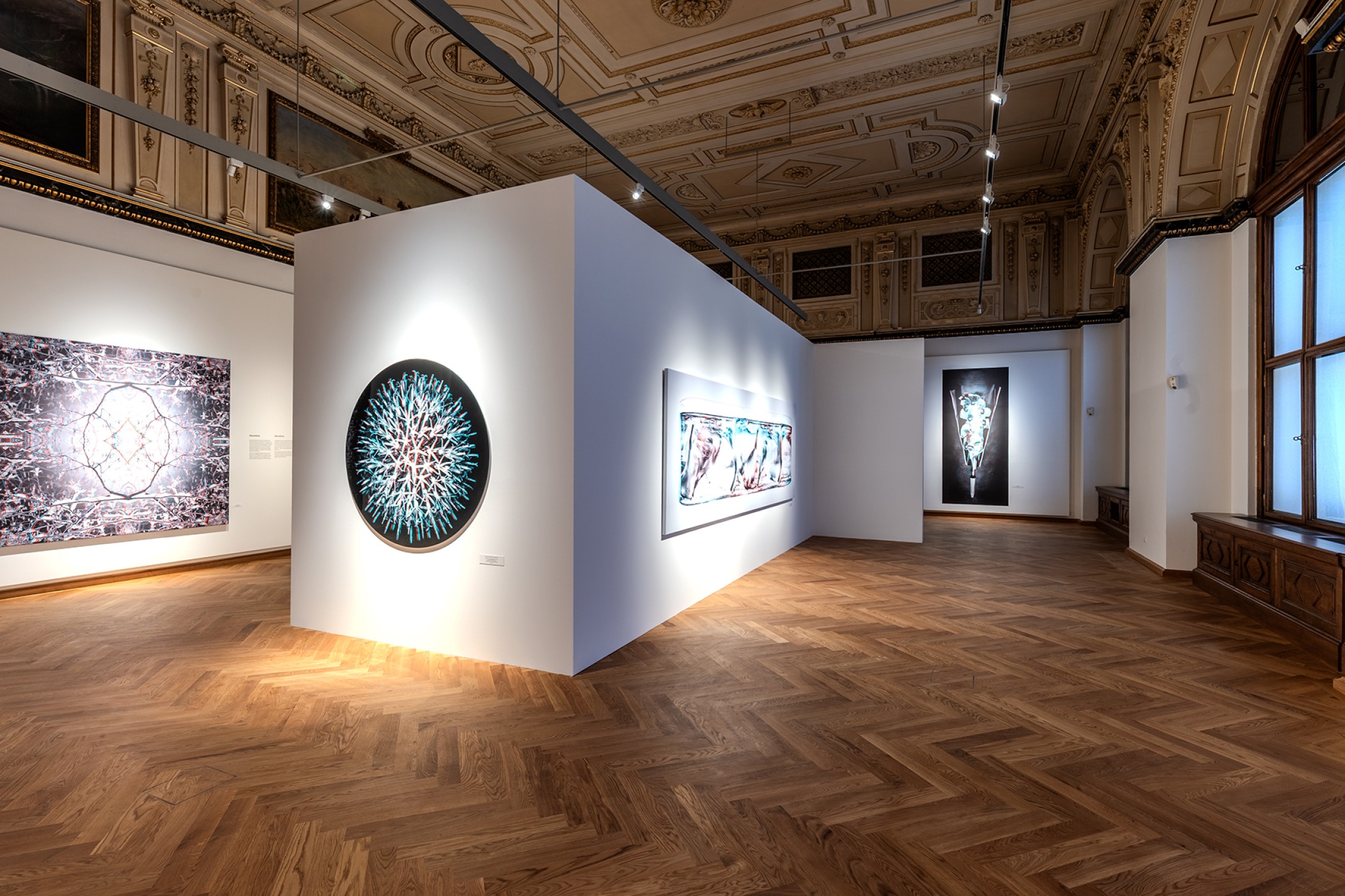
In the series Mandalas Sebastian Cramer deals with symmetry, repetition and spatial depth. The images are mirrored along a vertical and a horizontal axis. This creates symmetrical structures reminiscent of classic mandalas. The motifs – flowering branches, fine branch interweavings, organic patterns – retain their legibility despite reflection. With anaglyph glasses, the motifs can be experienced as three-dimensional sculptures and a paradoxical sense of space is created: The pictorial space appears at the same time real and unreal, physical and ornamental.
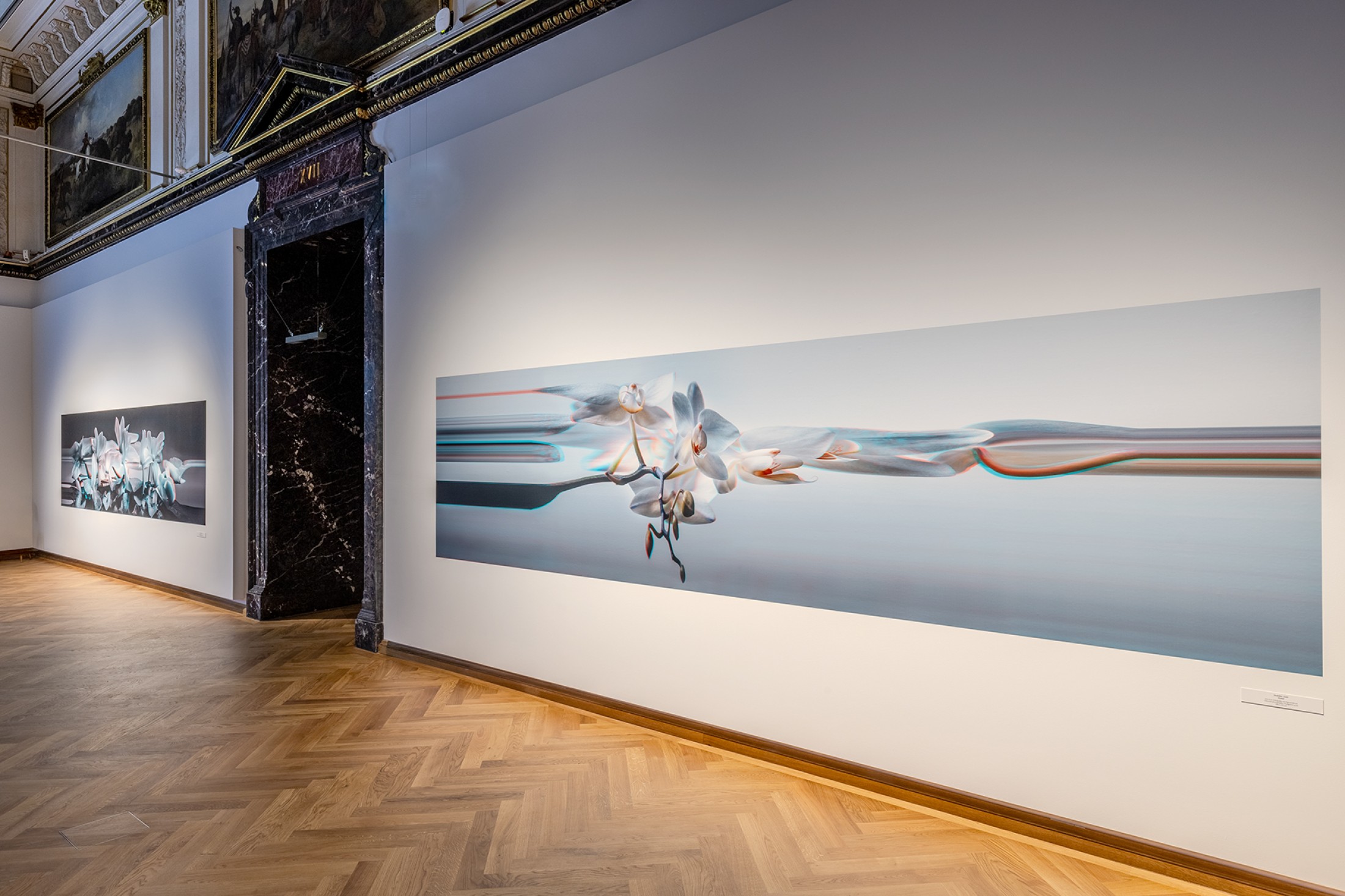
The Linescan photographs of the series Between Machine and Poetry depict space, and above all the flow of time. In industrial image processing, this technique captures objects in high resolution, e.g. by moving evenly past a camera on an assembly line. The final image is merged line by line. "It is only from movement, only from change that forms emerge, that things take shape," Sebastian Cramer explains his intention behind it.
The video installation Time Passages in the last room of the exhibition forms the dormant center. It is closely linked to the photographic series – in particular the Mandalas series and the Slitscan photographs. Time Passages combines these approaches: The camera is not an observer from a distance, but part of a space that unfolds anew with each subject. Time is not frozen, but made visible as a process.
Sebastian Cramer
Sebastian Cramer is a Berlin-born photographer, director and cameraman for commercials, content productions, documentaries, music videos and feature films. For his work he has been awarded more than thirty international prizes. Cramer has always been driven by the claim to combine image design and complex technical aspects. His invention of the Skater-Mini Dolly was honored with a technical Oscar (Academy Award) and an Emmy Award. In 2009, he founded Screen Plane, a company that develops and distributes stereoscopic film equipment. Screen Plane's technology has already been used in numerous international productions. As Director of Photography, Cramer has worked on 3D projects for directors such as Wim Wenders and Michel Comte. He also shot the Grammy Award-winning 3D Blu-ray The Catalogue for Kraftwerk, the pioneers of electronic music.
In 2013, Sebastian Cramer initiated the Two Views project – a contemporary evolution of traditional stereophotography. The works of this series will be presented comprehensively for the first time at the NHM Vienna. All works in this exhibition come from the artist's studio collection.
Contact the artist:
info@sebastiancramer.com
https://sebastiancramer.com
@studiosebastiancramer
Scientific contact:
Dr. Tanja Schuster
Research assistant, curator for cryptogaming, botanical department, NHM Vienna
https://www.nhm.at/tanja_schuster
Tel.: +43 (1) 52177-248 I tanja.schuster@nhm.at
General request for information:
Mag. Irina Kubadinov
Head of Press & Public Relations, Press Spokesperson
https://www.nhm.at/irina_kubadinow
Tel.: + 43 (1) 521 77-410 I irina.kubadinow@nhm.at
In his work, Sebastian Cramer focuses on the beauty of plants and also shows how they are preserved in herbaria. Herbariums are scientific collections that document plants. The exhibition in the special exhibition rooms on level 1 therefore also gives an insight into the diversity of the botanical collection of the NHM Vienna, which is one of the ten largest in the world with an estimated 5.5 million documents.
The special exhibition will be on view until 1 March 2026.
We would like to thank the Vienna Chamber of Labour for promoting the exhibition.
Press information
"This is a rare opportunity,
to understand that seeing has not yet been learned to the end,
even if – or even if – one believes,
that this process has long since been completed
and 'everything has already been seen'
...
Never give up the willingness,
Seeing beauty and wonder for the first time."
Wim Wenders, from the preface to the book TWO VIEWS on Plants
Plants in focus – on the importance of plants
The exhibition TWO VIEWS ON PLANTS focuses on plants. Plants are the basis of life for many other living beings and influence the physical and mental well-being of people to a large extent. Plants and other organisms that also do photosynthesis can produce their own food: They produce sugar in a chemical reaction using sunlight as an energy source and the green dye chlorophyll.
Living beings who cannot produce their own food draw the energy to survive from the plants they feed on. Even pure carnivores depend on plants because their prey consumes plants. Another product of photosynthesis is the oxygen we breathe. The positive influence on the human psyche has also been proven: It has been shown, for example, that we recover faster from stressful situations when we look at plants. In the case of humans, plants significantly influence our physical and mental well-being.
In addition to well-being, oxygen and food, we rely on plants for fuels, elastomers, building materials, textiles, dyes, medical agents and other chemical compounds. As an example of the opium poppy (the poster motif of the exhibition): Its name suggests that it contains special active ingredients; The milky juice of the plant contains alkaloids, which are the source of opiates. These are used in medicine as painkillers and narcotics, but are also the basis for the production of illegal drugs such as heroin. Opioids are associated with severe drug addiction, and trafficking in them finances terrorism and wars. On the other hand, surgery and dental treatments without pharmaceutical opium derivatives would be much more traumatic. Every plant portrait in the exhibition contains such contexts and stories.
The Botanical Collection (Herbarium) of the NHM Vienna
Because this knowledge is essential for our survival, the Botanical Department of the NHM Vienna is involved in documenting plants in the herbarium and making them available for research.
With around 5.5 million specimens, it is one of the largest botanical collections in the world. In addition to flowering plants, it contains many specimens of spore plants such as ferns, foliage, liver and horn mosses, but also other organisms such as algae, lichens and fungi (called Kryptogamen in the collective). The herbarium is rich in historical collections from the 19th and 20th centuries and contains many type documents, which are a kind of "birth certificate" for a scientific plant name. The collection includes plants from all over the world, with a focus on Austrian, Mediterranean and neotropical species. In addition, there are important collections from Asia Minor, Australasia and South Africa.
The evidence, mostly pressed and dried parts of plants mounted on strong sheets of paper, sheds light on the shape and distinctive features of different species. The data associated with the herbarium documents on the label of the document document document organisms across space and time. They are recorded when collecting a document in the terrain and include, for example, flowering or fruiting season, features such as color or smell, the location, other plant species occurring in the habitat, information about collectors, expeditions and more. Herbarium documents are therefore physical documents of biodiversity. Worldwide, herbaria contain more than 400 million specimens. They are used to describe and identify species, map their occurrence and study their evolutionary history, e.g. through DNA analyses, and show how plants are affected by climate change by the information contained about the shift in flowering times in correlation with climate data. Selected herbarium specimens can be seen in the exhibition and also tell stories of adventurous collective journeys, the economic and artistic interest in them and how they advance research.
For example, herbarium evidence is now often a source of material for DNA analysis. Here, a small part of a leaf is removed and the DNA is isolated and sequenced in the laboratory. Phylogenetic analyses of the DNA sequences yield a phylogeny, a pedigree that graphically illustrates the evolutionary relationships with respect to common ancestors of the analyzed groups. It is about understanding which groups are more closely related to each other compared to others, as this information is useful, for example, to find out which groups contain similar chemical compounds, and subsequently, medical agents (e.g. for bioprospecting). Such analyses show, for example, that fungi are more closely related to animals than to plants. In TWO VIEWS ON PLANTS we show the first phylogenetic pedigree in an exhibition of the NMH Vienna, whereby in the course of the redesign of the permanent showrooms further of these representations are to be shown to illustrate the evolutionary relationships of organisms.
About the exhibition
"I was fascinated by the fact that generally valid design principles had to be questioned when adding a new aspect to the image design: The third dimension. What does a picture have to look like in order to be equally interesting in 2D and 3D?"
Sebastian Cramer
Cooperation Tanja Schuster with Sebastian Cramer
Sebastian Cramer and Tanja Schuster met at the Botanical Institute in Munich, where the photographer gained access to the collection of liquid preparations from the Herbarium of the Botanical State Collection of Munich. For Cramer, plants are symbols of transience and he touches their fragility, while Schuster finds their resilience and longevity interesting in terms of evolutionary periods. Both, however, cast a spell over their beauty. Cramer and Schuster have subsequently collaborated on the book TWO VIEWS ON PLANTS and continue the cooperation in this exhibition designed exclusively for the NHM Vienna in order to interest even more people in the topics of botany and stereophotography.
Sebastian Cramer is a photographer, director and cameraman. He began his career as a editor and director in commercial film before specializing in stereoscopic film projects from 2009. As a cameraman, he worked on 3D productions with directors such as Wim Wenders and Michel Comte. For the pioneers of electronic music, Kraftwerk, he shot the Grammy-winning 3D Blu-ray The Catalogue.
Since 2013 he has been dedicating himself to the long-term photographic project TWO VIEWS. The works of this series will be presented comprehensively for the first time at the NHM Vienna. My photographs consciously move on the threshold between documentation and imagination. The clarity of the presentation is reminiscent of botanical studies, of the scientific precision of historical Herbar documents. But due to the spatial effect, what initially appears to be a scientific object becomes a scene, a composition, an event," explains the artist.
The exhibition is dedicated to an almost forgotten form of photography, stereoscopy: Two slightly offset images convey a spatial visual experience that goes far beyond the flat surface of traditional photography. The combination of stereoscopic technology and botany creates an artistic space that reinterprets questions about nature, perception, memory and the present.
Stereoscopy became popular around 1850 with the invention of the stereoscope by David Brewster and the development of stereoscopic cameras. In the Victorian era, it became a mass medium, but in the 20th century it increasingly fell into the shadows of new media such as cinema, television and digital imagery.
In the digital age, the illusion of depth is omnipresent – in 3D films, virtual reality worlds and computer simulations. But classical stereoscopy requires a different look, a calm, concentrated act of contemplation. It demands time, attention, an engagement with the seemingly incidental, the growing, the silent.
The exhibition includes Sebastian Cramer's series of photographs Alcoplants (2019-2020), Mandalas (2017-2023), Zwischen Maschine und Poesie (2024-2025) and the video installation Time Passages (2024-2025).
Alcoplants includes 3D photos of historical liquid preparations of plant documents in alcohol, as they are available in many scientific collections; This also applies to the Herbarium and other departments of the NHM Vienna. The alcohol prevents mold formation and allows the long-term storage of such preparations. The presentation in large glasses was often used in teaching in the 19th century, as this, in contrast to "conventional" herbarium specimens, preserves the three-dimensionality of the plant and features for species determination are more vivid. However, the alcohol destroys the plant color pigments and breaks down the tissues something that gives them a wobbly, ghostly appearance.
Alcohol preparations continue to be used in research, as they facilitate anatomical and morphological studies, but are hardly applied in this appealing, historical form. Due to their fragility, alcohol preparations of plants can hardly be seen in museums and will be presented on a larger scale for the first time in the show at the NHM Vienna.
The Alcoplants series was created in 2019 and 2020. The preparations come from the Botanical State Collection Munich, but the NHM Vienna has a similar collection (see Cabinet 3). Looking into the alcohol-filled glasses is like looking into a time capsule – an era in which large parts of nature were still unexplored and stereophotography was a popular medium.
In the series Mandalas Sebastian Cramer deals with symmetry, repetition and spatial depth. The images are mirrored along a vertical and a horizontal axis. This creates symmetrical structures reminiscent of classic mandalas. The motifs – flowering branches, fine branch interweavings, organic patterns – retain their legibility despite reflection. With anaglyph glasses, the motifs can be experienced as three-dimensional sculptures and a paradoxical sense of space is created: The pictorial space appears at the same time real and unreal, physical and ornamental.
The Linescan photographs of the series Between Machine and Poetry depict space, and above all the flow of time. In industrial image processing, this technique captures objects in high resolution, e.g. by moving evenly past a camera on an assembly line. The final image is merged line by line. "It is only from movement, only from change that forms emerge, that things take shape," Sebastian Cramer explains his intention behind it.
The video installation Time Passages in the last room of the exhibition forms the dormant center. It is closely linked to the photographic series – in particular the Mandalas series and the Slitscan photographs. Time Passages combines these approaches: The camera is not an observer from a distance, but part of a space that unfolds anew with each subject. Time is not frozen, but made visible as a process.
Sebastian Cramer
Sebastian Cramer is a Berlin-born photographer, director and cameraman for commercials, content productions, documentaries, music videos and feature films. For his work he has been awarded more than thirty international prizes. Cramer has always been driven by the claim to combine image design and complex technical aspects. His invention of the Skater-Mini Dolly was honored with a technical Oscar (Academy Award) and an Emmy Award. In 2009, he founded Screen Plane, a company that develops and distributes stereoscopic film equipment. Screen Plane's technology has already been used in numerous international productions. As Director of Photography, Cramer has worked on 3D projects for directors such as Wim Wenders and Michel Comte. He also shot the Grammy Award-winning 3D Blu-ray The Catalogue for Kraftwerk, the pioneers of electronic music.
In 2013, Sebastian Cramer initiated the Two Views project – a contemporary evolution of traditional stereophotography. The works of this series will be presented comprehensively for the first time at the NHM Vienna. All works in this exhibition come from the artist's studio collection.
Contact the artist:
info@sebastiancramer.com
https://sebastiancramer.com
@studiosebastiancramer
Scientific contact:
Dr. Tanja Schuster
Research assistant, curator for cryptogaming, botanical department, NHM Vienna
https://www.nhm.at/tanja_schuster
Tel.: +43 (1) 52177-248 I tanja.schuster@nhm.at
General request for information:
Mag. Irina Kubadinov
Head of Press & Public Relations, Press Spokesperson
https://www.nhm.at/irina_kubadinow
Tel.: + 43 (1) 521 77-410 I irina.kubadinow@nhm.at
Exhibition TWO VIEWS ON PLANTS
© NHM Wien, Chloe Potter
Exhibition TWO VIEWS ON PLANTS
© NHM Wien, Chloe Potter
Exhibition TWO VIEWS ON PLANTS
© NHM Wien, Chloe Potter
Exhibition TWO VIEWS ON PLANTS
© NHM Wien, Chloe Potter
Exhibition TWO VIEWS ON PLANTS
© NHM Wien, Chloe Potter
Exhibition TWO VIEWS ON PLANTS
© NHM Wien, Chloe Potter
Exhibition TWO VIEWS ON PLANTS
© NHM Wien, Wilhelm Bauer-Thell
Exhibition TWO VIEWS ON PLANTS
© NHM Wien, Wilhelm Bauer-Thell
Exhibition TWO VIEWS ON PLANTS
© NHM Wien, Wilhelm Bauer-Thell
Exhibition TWO VIEWS ON PLANTS
© NHM Wien, Wilhelm Bauer-Thell
Exhibition TWO VIEWS ON PLANTS
© NHM Wien, Wilhelm Bauer-Thell
Exhibition TWO VIEWS ON PLANTS
© NHM Wien, Wilhelm Bauer-Thell
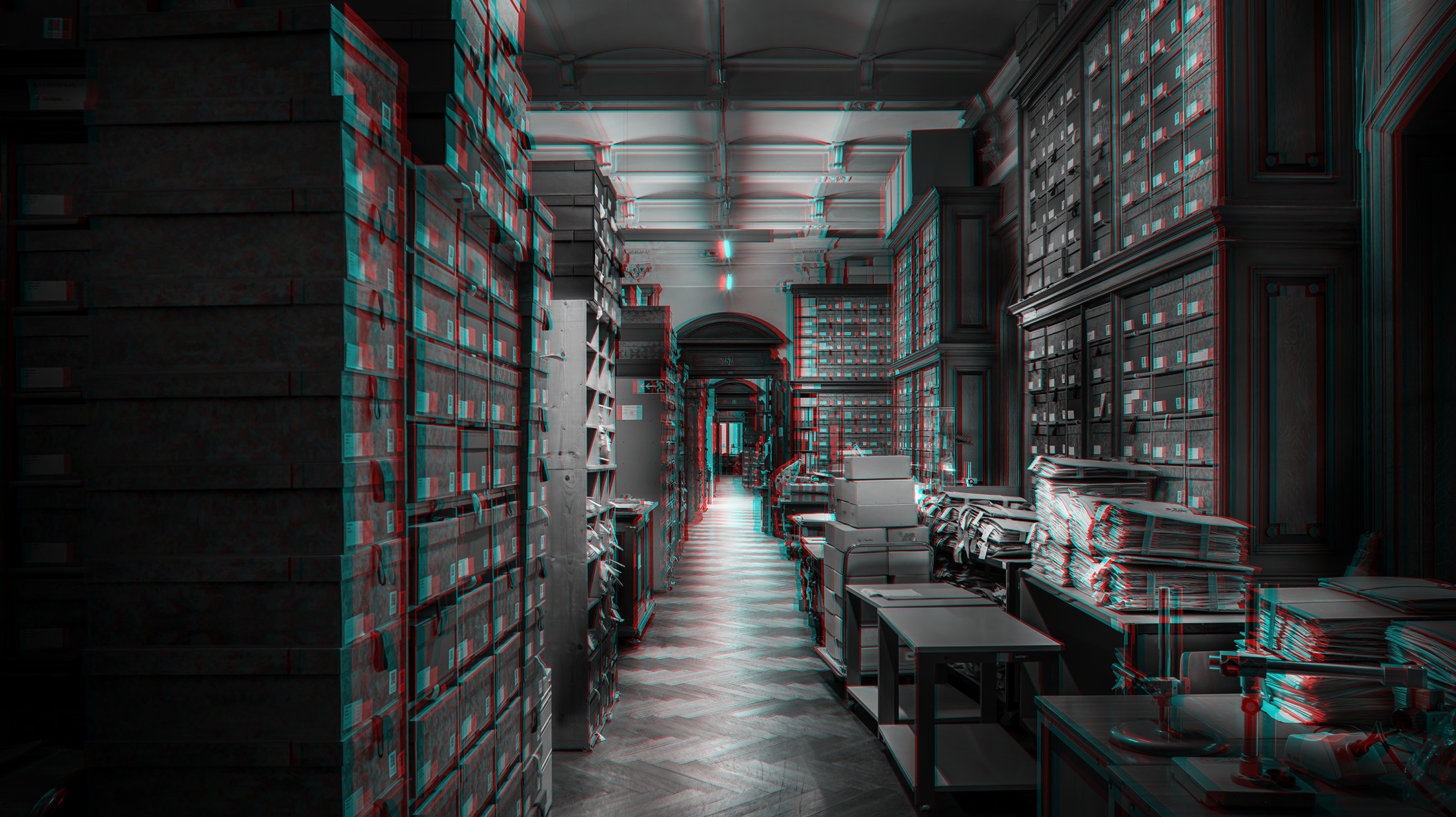
Herbarium
© Sebastian Cramer
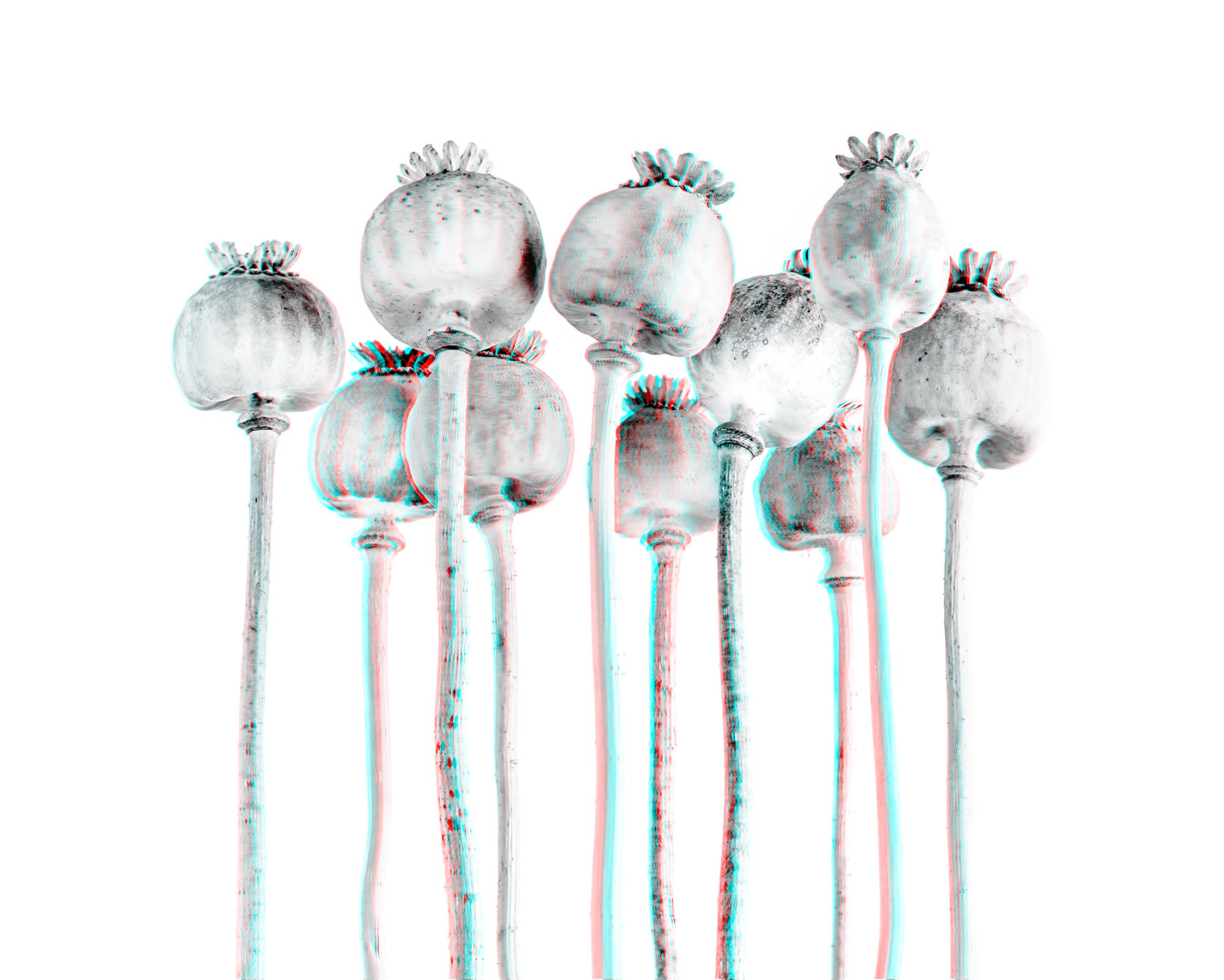
3D-Photography of Poppy (Papaver somniferum)
© Sebastian Cramer
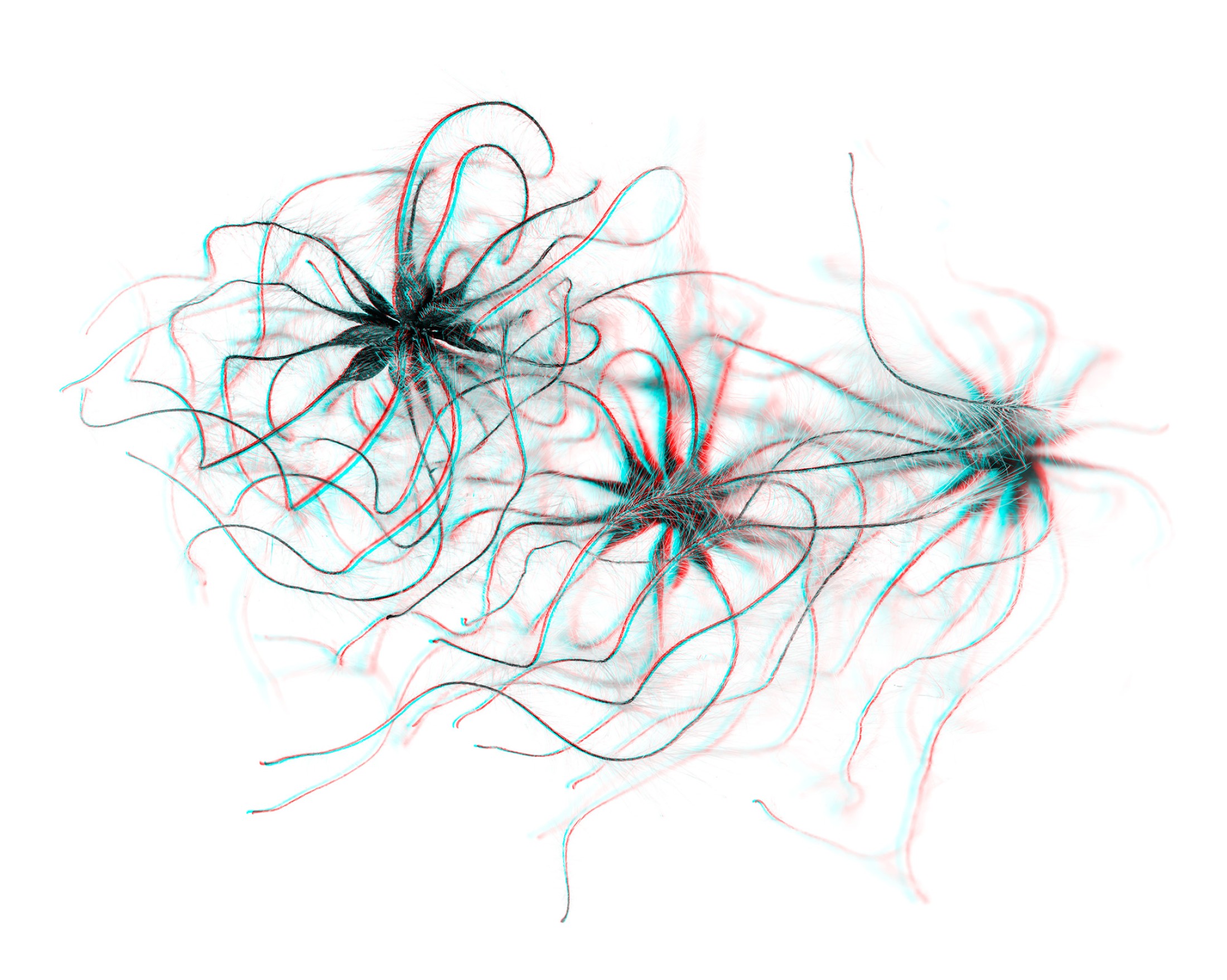
3D photography of an ordinary forest vine (Clemantis vitalba)
© Sebastian Cramer
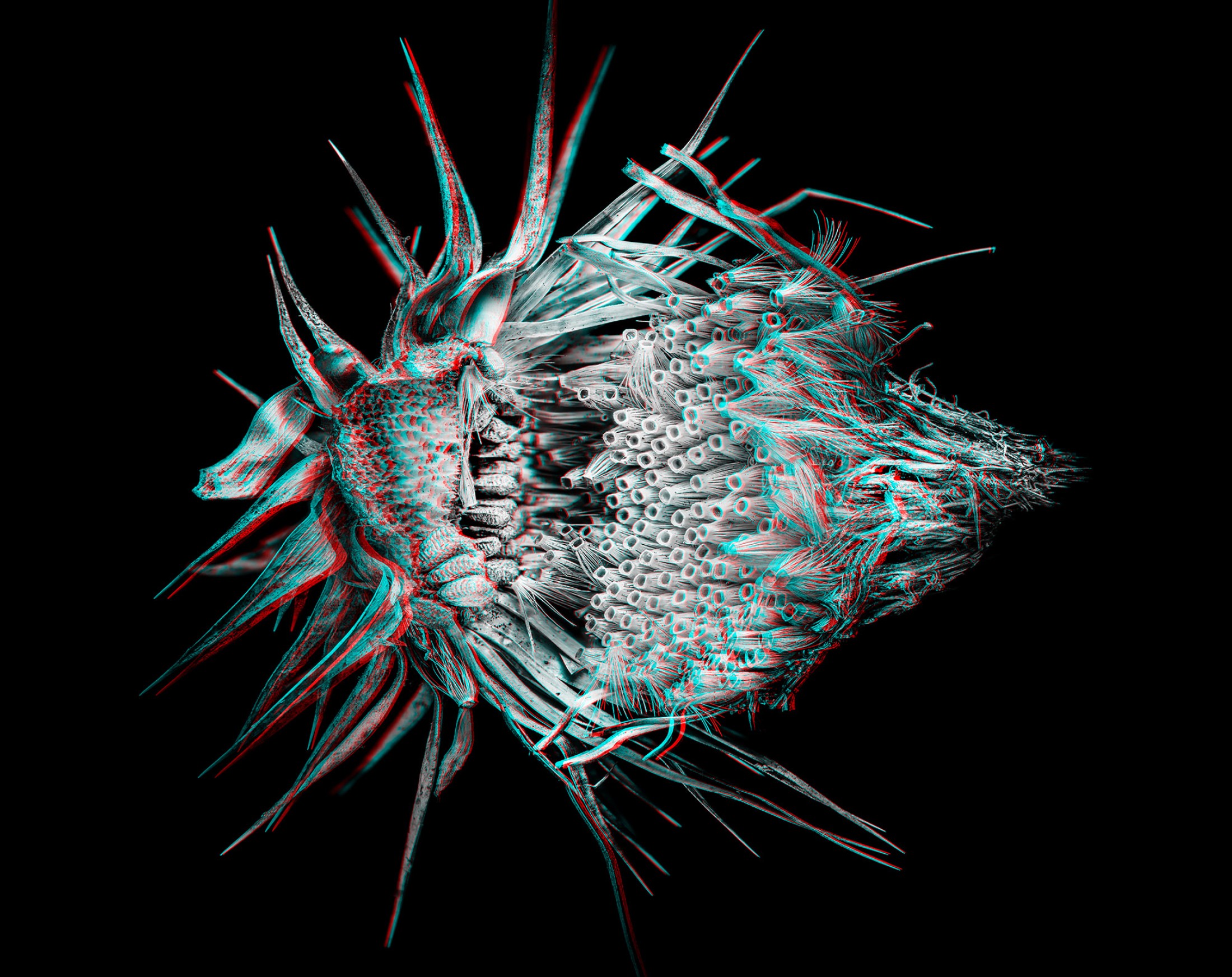
3D photography of a thistle (Asteraceae)
© Sebastian Cramer
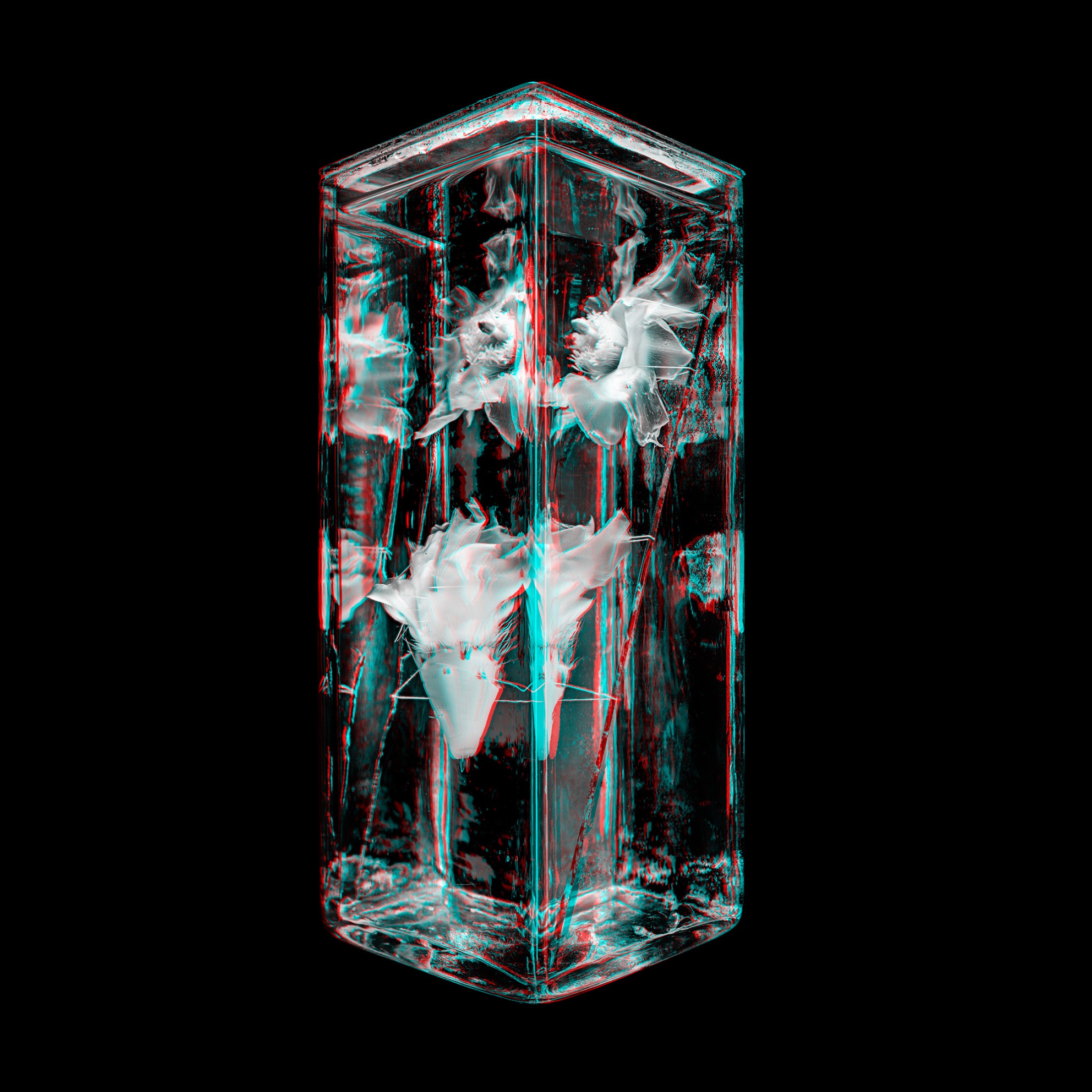
3D photography of a fig cactus (Opuntia dillenii)
© Sebastian Cramer
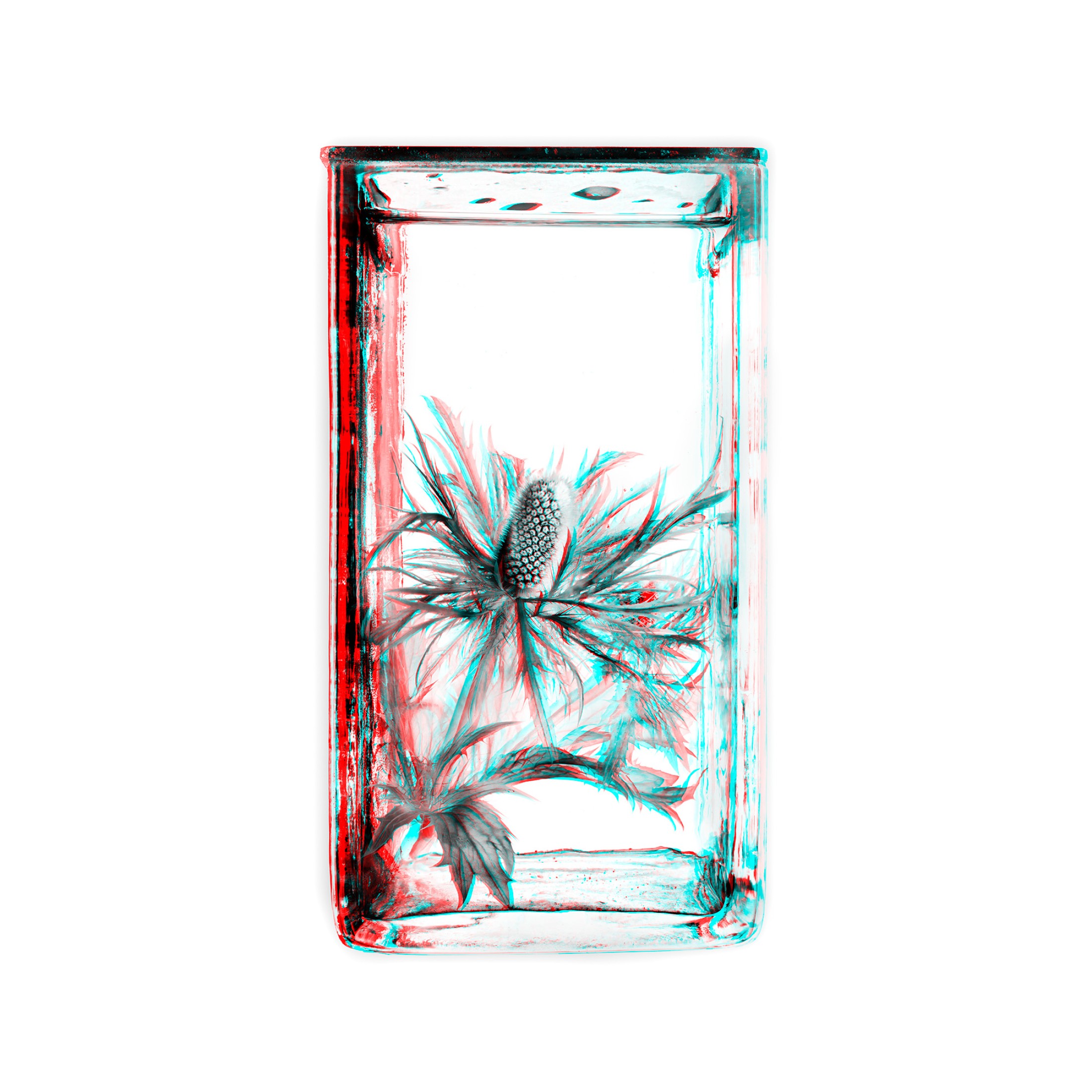
3D photography of the Alpine Manor (Eryngium alpinum)
© Sebastian Cramer
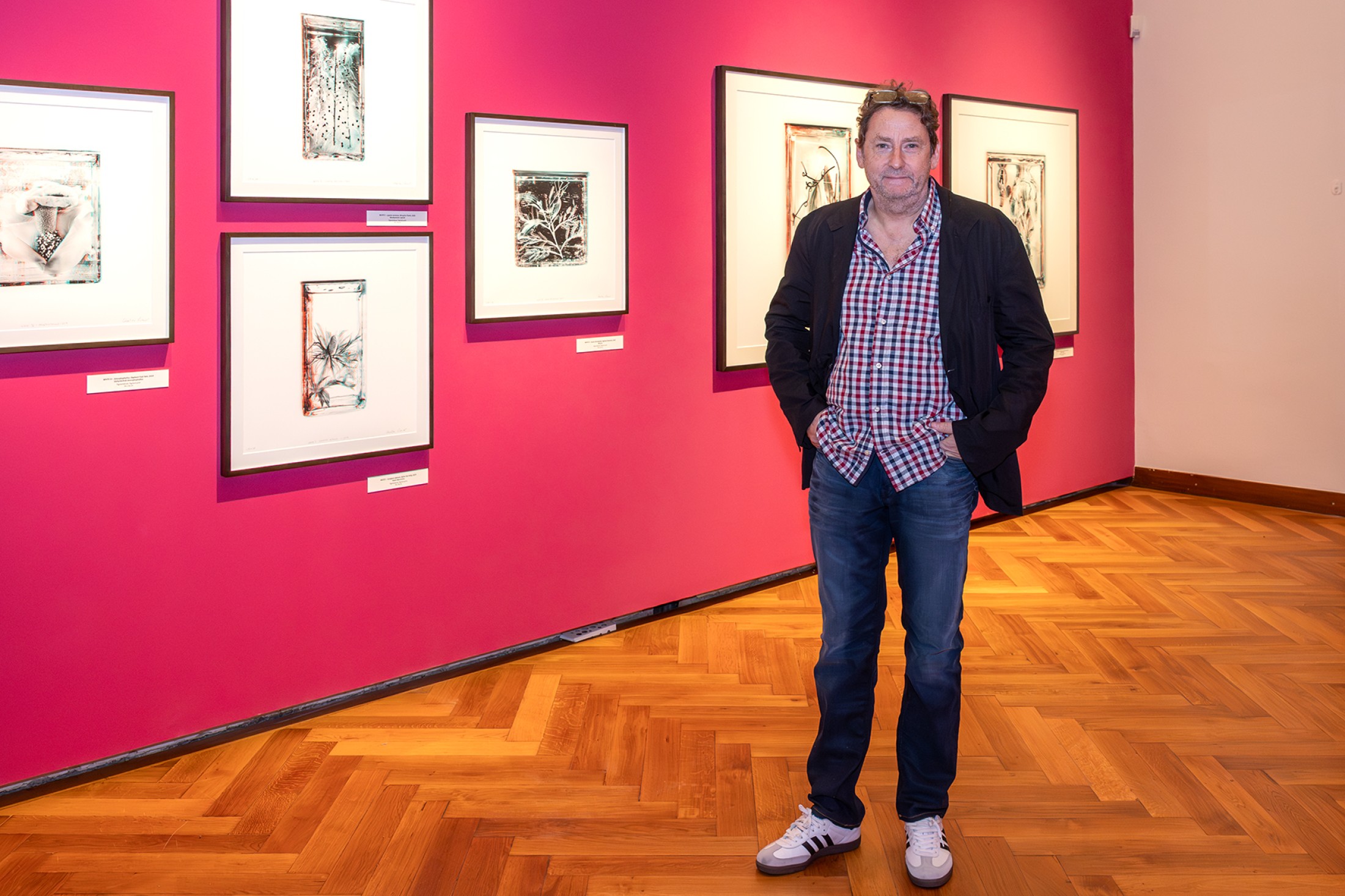
Sebastian Cramer
© NHM Wien, Wilhelm Bauer-Thell
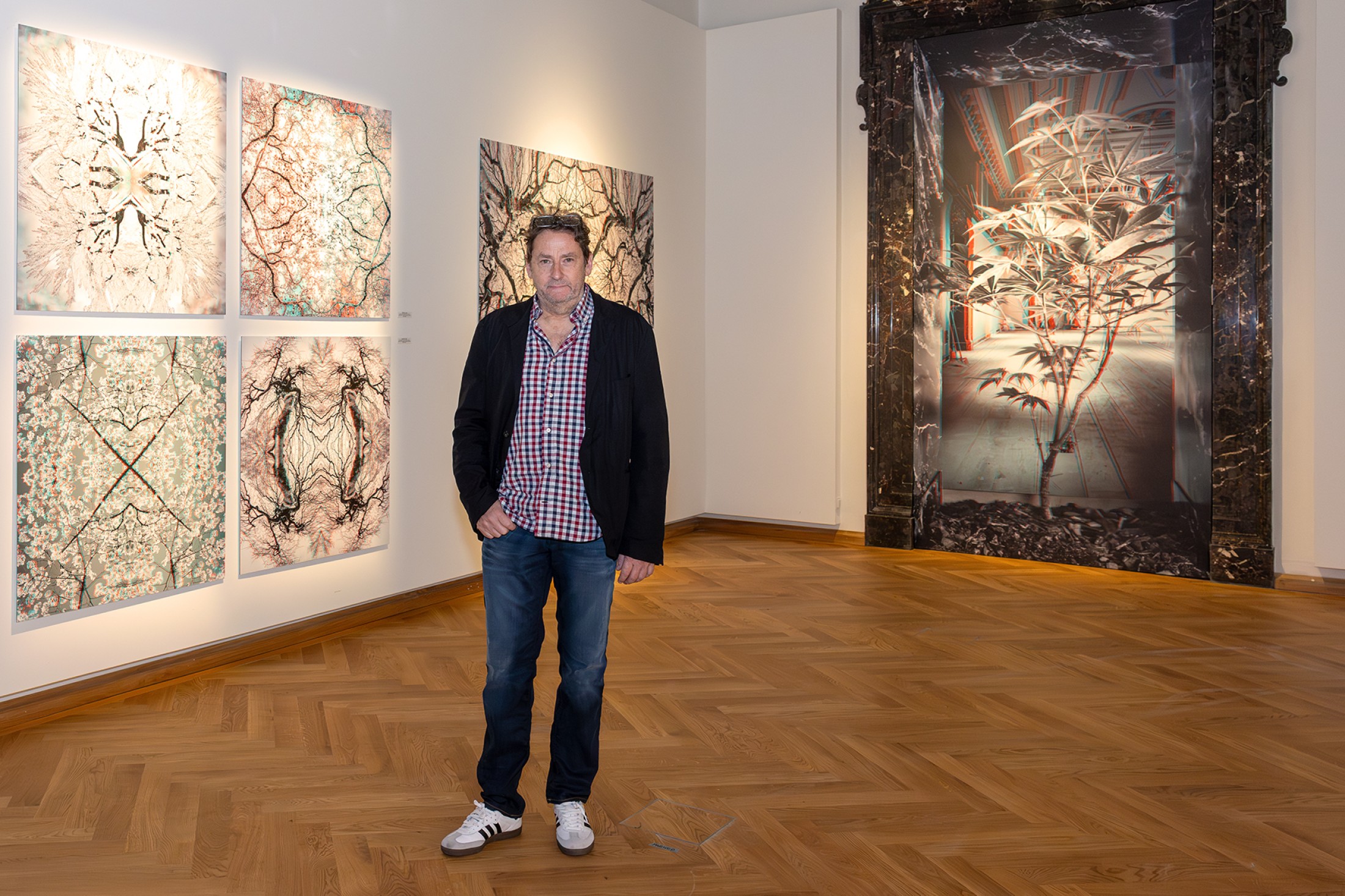
Sebastian Cramer
© NHM Wien, Wilhelm Bauer-Thell

