The Ore Deposit Collection

The ore deposit collection of the Department of Mineralogy and Petrography is part of the mineral collection and currently comprises about 3,000 ore samples, often from mines long abandoned and ore deposits completely extinct nowadays. The historically valuable samples are mainly from Austria and the area of the former Austro-Hungarian Monarchy, but also from Brazil and New Zealand.

However, representative samples are also present from many other countries in the world, in which they are continuously collected. Some of the ore deposit suites also contain samples of country rocks as well as processing and metallurgical products, including slags.
 

Until the present, we endeavour to enlarge this part of the collection, for example by field trips.


The ore deposit collection is not accessible to the public, but is a very important reservoir of samples for modern investigations (geochemistry, isotopy, age determination, ore microscopy, electron microscopy, archaeometallurgy) and is continuously used for these purposes by national and international geoscientists.


We gladly accept any donations of ore samples!
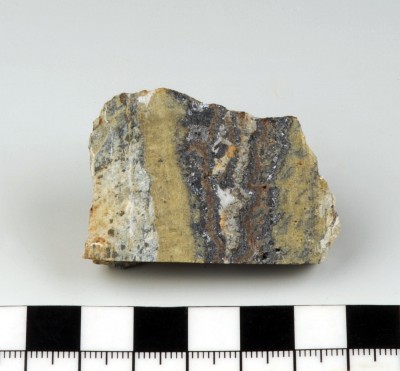
Ore vein (cut and polished) from the Plaka mine no. 80, Lavrion, Greece (catalogue no. O 692).: Cut and polished ore vein sample from the Plaka Mine with distinct, parallel layers and a scale bar at the bottom. (AI-generated alt-text, generated with GPT-4.1-mini)
Ore vein (cut and polished) from the Plaka mine no. 80, Lavrion, Greece (catalogue no. O 692)., © Alice Schumacher / NHM Wien
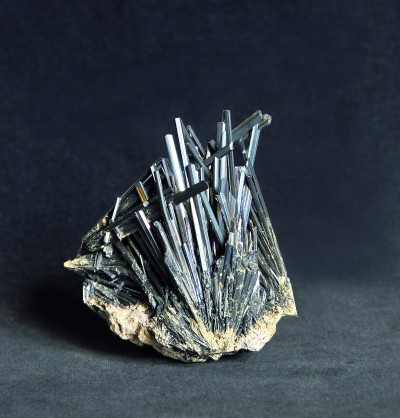
Historical specimen with stibnite crystals from the famous gold-silver ore deposit Kremnica (formerly Kremnitz) in Slovakia (catalogue no. A.k. 109).: Antimonite crystal cluster with multiple elongated, lustrous crystals on light rock against a dark background. (AI-generated alt-text, generated with GPT-4.1-mini)
Historical specimen with stibnite crystals from the famous gold-silver ore deposit Kremnica (formerly Kremnitz) in Slovakia (catalogue no. A.k. 109)., © Ernst Hausner / Edition Hausner
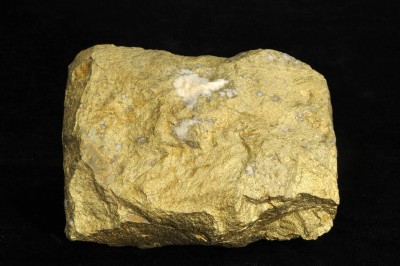
Massive rich chalcopyrite ore from the 19th century. Locality: Kitzbühel, Tyrol, Austria. Size: 10.5 x 8 x 3.5 cm (catalogue no. C 5705).: Massive gold-colored chalcopyrite ore with some white crystal inclusions, irregularly shaped. (AI-generated alt-text, generated with GPT-4.1-mini)
Massive rich chalcopyrite ore from the 19th century. Locality: Kitzbühel, Tyrol, Austria. Size: 10.5 x 8 x 3.5 cm (catalogue no. C 5705)., © Alice Schumacher / NHM Wien
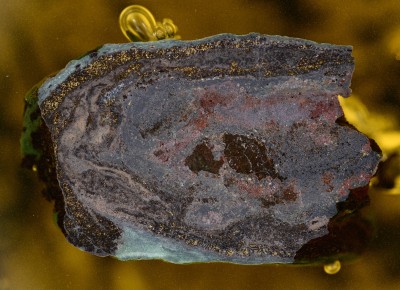
Polished ore section (embedded in resin) with chalcopyrite and rare silver selenides. Locality: Lorüns limestone quarry, Montafon, Vorarlberg, Austria (catalogue no. O 1971).: Polished ore section from the Lorüns cement quarry with gold-colored, metallic chalcopyrite veins and dark layers, embedded in clear resin. (AI-generated alt-text, generated with GPT-4.1-mini)
Polished ore section (embedded in resin) with chalcopyrite and rare silver selenides. Locality: Lorüns limestone quarry, Montafon, Vorarlberg, Austria (catalogue no. O 1971)., © Harald Schillhammer / NHM Wien
  
Ticket Shop